
Iran Claims Missiles Hit US Navy Destroyer and 18 Hormuz Ships, Is Brent Crude About to Experience Violent Repricing?

Huitong Network, September 9—— The Iranian Revolutionary Guard Corps has claimed to have launched missile attacks against two US Navy destroyers and 18 vessels in the Strait of Hormuz. Brent crude oil climbed sharply during Wednesday's Asian session, reaching $99.64/barrel, the highest since July 27. The statement has not yet been confirmed by the US side but has triggered high alert over maritime security in the world’s most critical oil chokepoint.
On Wednesday (September 9) during the Asian session, Brent crude futures briefly rose to $99.67/barrel, setting a new high since July 27.
The Iranian Revolutionary Guard Corps claimed on Wednesday (September 9) that its Aerospace Force launched ballistic missiles at two US Navy destroyers and simultaneously attacked 18 ships attempting to transit the Strait of Hormuz, saying this was in retaliation for US strikes on Iranian oil tankers.
If these attacks are verified as true—especially if there is direct impact on US Navy destroyers—it would mark a significant escalation of the Middle East conflict, with profound implications for the security of shipping through the world's most critical oil chokepoint, the Strait of Hormuz, and for insurance costs.
As the global benchmark for seaborne crude, Brent is set to respond faster and more directly to any credible transit disruptions in Hormuz compared to WTI.
The safe-haven response of gold is another variable worth monitoring—over the past week, gold prices have mostly tracked interest rate expectations rather than geopolitical risk demand, but an event involving direct attacks on US naval assets could catalyze a break in this pattern.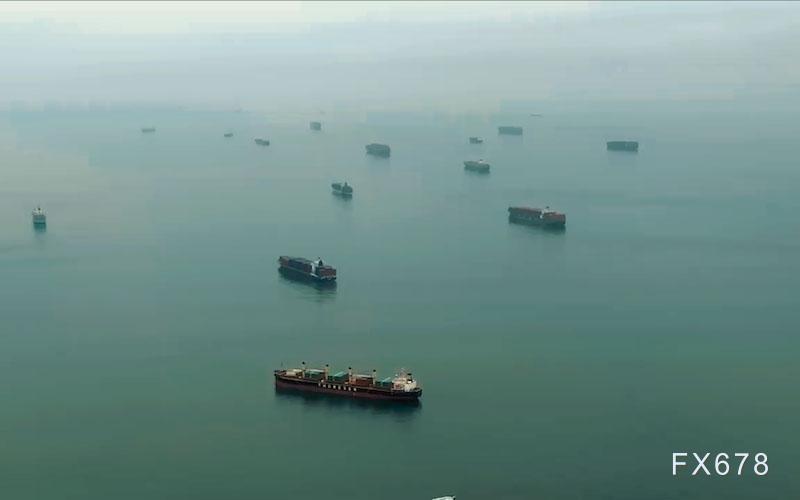
Iran’s Claimed Two-Wave Attack: Destroyers + 18 Vessels
The Iranian Revolutionary Guard Corps said earlier Wednesday its Aerospace Force launched ballistic missiles at two US Navy destroyers—the USS Delbert D. Black and the USS John Paul Jones. Both destroyers are equipped with cruise missiles and Aegis defense systems. The Guard claimed the attack caused severe damage to the vessels and warned Washington against further misjudgment, suggesting this may not be a one-off response but a sign of continued escalation.
In another statement, the Revolutionary Guard claimed attacks on 8 oil tankers and 10 other vessels, accusing them of attempting to cross the “restricted and dangerous zones” of the Strait of Hormuz.
Iran has previously stated repeatedly that the Strait is an area it can restrict or close in response to what it calls hostile actions from the US and its allies.
The latest statements indicate Iran’s range of attacks has expanded from targeting military objectives to broad strikes on shipping through the Strait.
Key Uncertainties for the Market: Verification and Confirmation
Neither of the above statements has been independently confirmed by the United States. The actual extent of damage to the two destroyers, as well as the identity and flag status of the 18 commercial and oil vessels, still need to be verified.
This pattern is consistent with the trajectory of recent weeks' conflicts—statements and reprisals from Iran often precede confirmed US assessments, and the full picture usually takes hours to emerge, possibly changing in the interim.
Prior to this attack, US forces had just launched a new round of strikes against Iranian oil tankers near Khark Island and Jask. Combined with earlier Iranian missile attacks on US bases in Jordan this week, this has become one of the most intense periods of exchanges since the escalation began.
Brent’s Sensitivity to Hormuz Disruptions: Structural Factors
If the attack is confirmed, the reaction in Brent crude will be sharper than in WTI—a direct reflection of structural differences between the two benchmarks.
The Strait of Hormuz is the world’s most critical oil shipping choke point, with about one-third of global seaborne crude trade passing through this route.
Brent benchmarks seaborne crude, and its underlying physical spot must pass through such routes, so any material disruption to passage through the Strait is directly reflected in Brent prices.
WTI is anchored to Cushing land deliveries, so its supply chain does not involve maritime transport. Its reaction to Hormuz disruptions is mainly through overall risk appetite, not direct logistical impact.
The Safe-Haven Response of Gold: Will This Break the Old Pattern?
On Wednesday, spot gold rebounded and is currently trading near $4,380/ounce, potentially ending a previous three-day losing streak.
In the past week, gold has shown an intriguing pattern: despite escalating Middle East tensions, prices have been driven more by US Federal Reserve rate expectations than by heightened geopolitical safe-haven demand—over the past two weeks, gold prices have fallen by 5.5%.
Direct attacks on US Navy assets represent a material escalation, and compared with earlier attacks this week on tankers and bases, are on a different scale in terms of conflict nature and geopolitical risk premium pricing.
If this news is confirmed, it will serve as a key test for whether gold breaks the “rate-tracking rather than risk-tracking” pattern, and could also trigger volatility in equity futures and the US dollar.
Summary
The Iranian Revolutionary Guard Corps claims to have launched a large-scale attack on US Navy destroyers and 18 vessels in the Strait of Hormuz in retaliation for US strikes on Iranian oil tankers. Although these statements have not been confirmed by the US, even the claim alone is enough to prompt heightened market caution over the security of passage through the Strait of Hormuz. Brent’s pricing efficiency for such maritime chokepoint risks is inherently higher than WTI, and the safe-haven response of gold will be another indicator to monitor closely. The market will remain in a highly uncertain state until the situation clarifies, and any substantive confirmation or US response could trigger rapid cross-asset repricing.
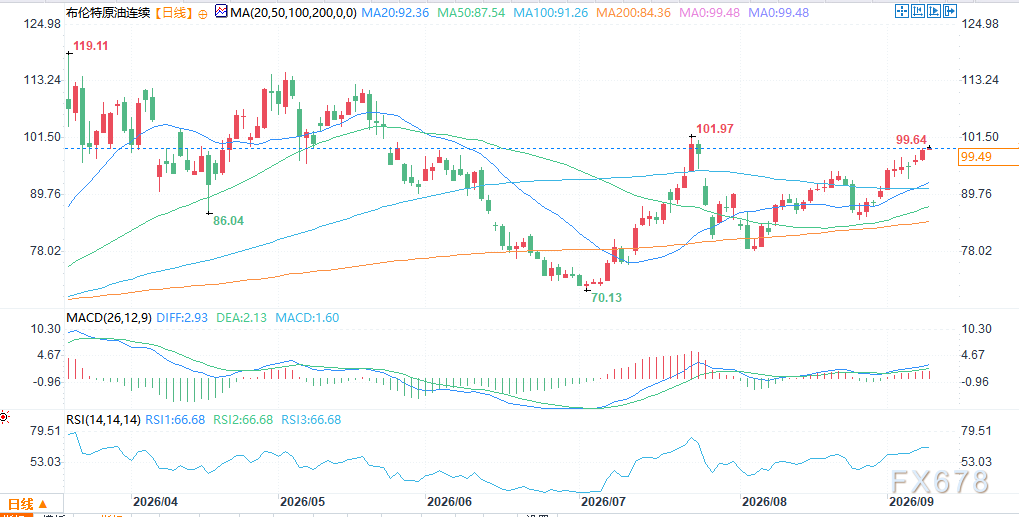
(Brent Crude Futures Daily Chart, Source: EasyHuitong)
Beijing Time 11:25, Brent crude futures reported at $99.44 per barrel.
Disclaimer: The content of this article solely reflects the author's opinion and does not represent the platform in any capacity. This article is not intended to serve as a reference for making investment decisions.
You may also like
From AI to gold and U.S. Treasury bonds: almost everything is surging to new highs, the market welcomes “Everything High”
AI capital expenditure and corporate earnings expectations continue to rise, while energy, gold, US Treasury yields, and market positions are also climbing. On the surface, this suggests a comprehensive increase in growth and risk appetite; however, when inflation, interest rates, and crowded trades are all at high levels, the market's tolerance for the sustainability of the AI boom is also narrowing.
Trump pushes Fed to cut rates, but Waller may go the opposite way: Next week’s meeting faces a “three-way choice”
Bloomberg columnist Claudia Sahm believes that as Trump continues to pressure for rate cuts while inflation remains well above the 2% target, raising rates is becoming an option again, leaving Waller facing a tough decision next week. The Federal Reserve has three paths: raising rates without Waller’s support, which could trigger rare internal divisions; holding steady, which may invite criticism of political interference; or Waller leading a rate hike, which could withstand White House pressure and defend policy independence.
AI Researchers Fear AI Could Destroy Humanity: Why Is Wall Street Betting Big on It?
Bitcoin eyes $82,000 resistance as golden cross forms, targets $85,000 breakout
Crypto prices
More


