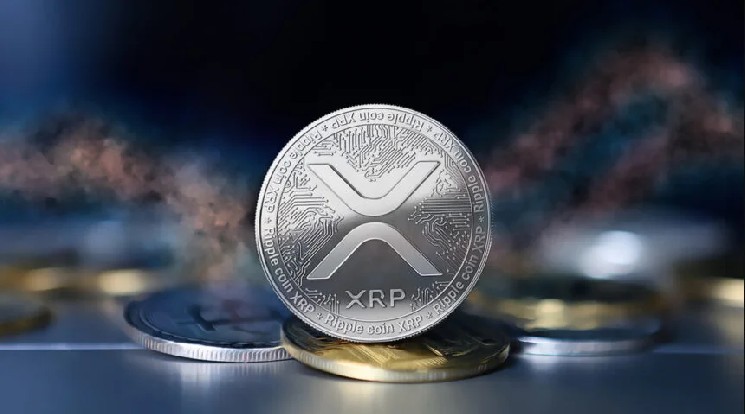
According to the analyst, $XRP is trading approximately 62.5% below its peak of $3.55 recorded in January 2018, while Bitcoin has risen by 314%, $ETH by 66%, and BNB, which has a similar market capitalization to $XRP, has increased by approximately 2800% during the same period.
Circulating Supply Increased by 63%!
One of the main reasons cited for $XRP’s weak price performance is the increase in its circulating supply.
Speaking to Coindesk, Nicolai Sondergaard, senior research analyst at analytics firm Nansen, noted that $XRP’s circulating supply increased from 38.7 billion in 2017 to 63.1 billion. According to the analyst, despite this approximately 63% increase, $XRP’s total market capitalization only decreased by about 3%, which is a key factor explaining the pressure on the price per token.
Tesseract Group Marketing Director Oliver Carding pointed out that growth in circulating supply can reduce the value a token represents, even if the total market capitalization remains similar. He added that the situation with $XRP is similar.
ETF Inflows Lag Behind Bitcoin and Ethereum!
According to analysts, $XRP continues to face challenges on the demand side as well. Paul Howard, senior director at market maker Wincent, stated that interest in $XRP mutual funds remains limited compared to BTC and $ETH funds.
According to SoSoValue data, $XRP funds received approximately $1.8 billion in inflows, remaining far below the levels seen in Bitcoin and Ethereum ETFs during the same period.
Paul Howard, a senior director at Wincent, also noted that Ripple’s business strategy is putting pressure on $XRP. According to the analyst, Ripple is focusing on cross-border money transfers and payment infrastructure rather than areas that attract more investor interest, such as DeFi and artificial intelligence. This is cited as one of the factors limiting $XRP’s investor narrative.
Nansen analyst also noted that $XRP spot trading volume decreased by 53.5%, perpetual futures volume by 44%, and the number of active addresses by 10.7%.


 en.bitcoinsistemi.com