
UK names 6 banks to lead first digitally native government bond

The UK government has appointed six major banks to lead the issuance of its first digitally native government bond, with the pilot expected by the first quarter of 2027.
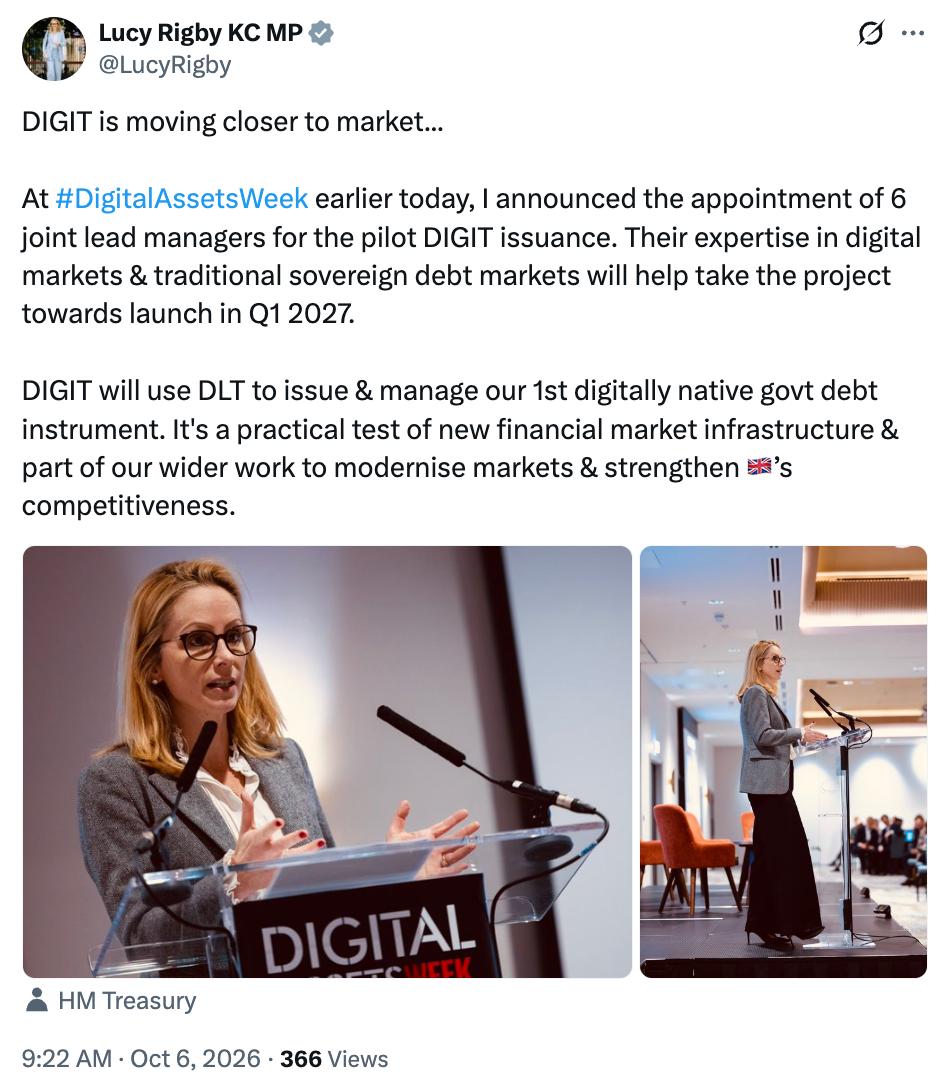
Barclays, HSBC, Lloyds, Morgan Stanley, NatWest and RBC Capital Markets were named joint lead managers for the Digital Gilt Instrument (DIGIT) following a competitive procurement process. Economic Secretary to the Treasury Lucy Rigby announced the appointments Tuesday during a keynote at UK Digital Assets Week.
The banks will provide underwriting, investor engagement and distribution services for the pilot issuance.
DIGIT will be issued on a platform operating within the UK’s Digital Securities Sandbox and will test the use of distributed ledger technology (DLT) across the bond’s issuance and lifecycle, including onchain settlement. The government said the pilot is intended to explore the use of DLT in sovereign debt markets while encouraging the development of digital financial infrastructure in the UK.
The project follows HSBC’s appointment in February as the pilot’s DLT supplier and a July agreement between HSBC and the London Stock Exchange Group to develop a digital securities depository link.
In an X post on Tuesday, Rigby said the appointments mark an important step toward issuing the digital gilt early next year, calling DIGIT “a practical test of new financial market infrastructure.”
Disclaimer: The content of this article solely reflects the author's opinion and does not represent the platform in any capacity. This article is not intended to serve as a reference for making investment decisions.
You may also like
Japan’s Takaichi to review policies, revenue and spending if rate shifts differ from expectations
Who is dominating the AI hardware sector
2.0%: Germany's Industrial Production rises faster-than-expected in August
Middle Eastern oil flow restored to about 80% of pre-war levels; Shell CEO Sawan says energy security is the cornerstone of national security.
According to reports, Shell (SHEL.US) CEO Wael Sawan said on Tuesday that Middle East oil flows have recovered to about 80% of pre-war levels.
Crypto prices
More


