
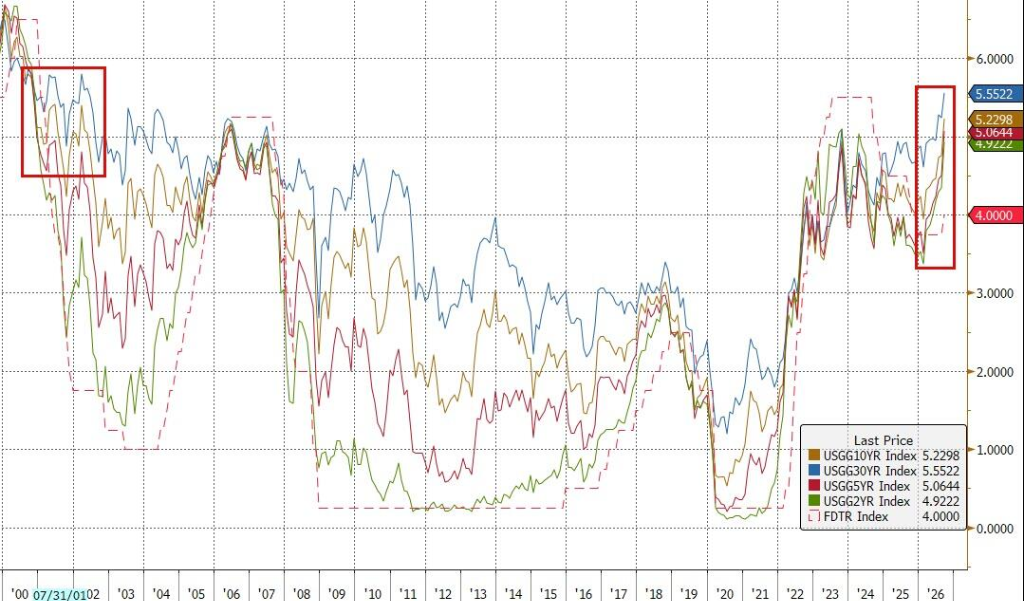
Global bonds approach 4% for the first time since 2007, and overall US Treasury yields have reached their highest level in twenty years.

Global bond yields are approaching the key 4% threshold for the first time since 2007, while the yield on the 30-year US Treasury has simultaneously risen to its highest level since 2004, as global bond markets undergo a wave of synchronized cross-market selloffs.
On Monday, as oil prices climbed, US Treasury yields rose across the curve by 7 to 8 basis points, pushing the Bloomberg Global Aggregate Bond Index close to 4%—the first time since 2007.
Currently, overall US interest rates have reached their highest level in 20 years, with the real yield on the 10-year Treasury breaking to a new high since the collapse of Lehman Brothers.
Persistently high energy prices are putting even greater pressure on the Federal Reserve to raise rates. Since 2021, US inflation has remained above target levels, and the current external cost pressure from energy is making the fight against inflation even more severe.
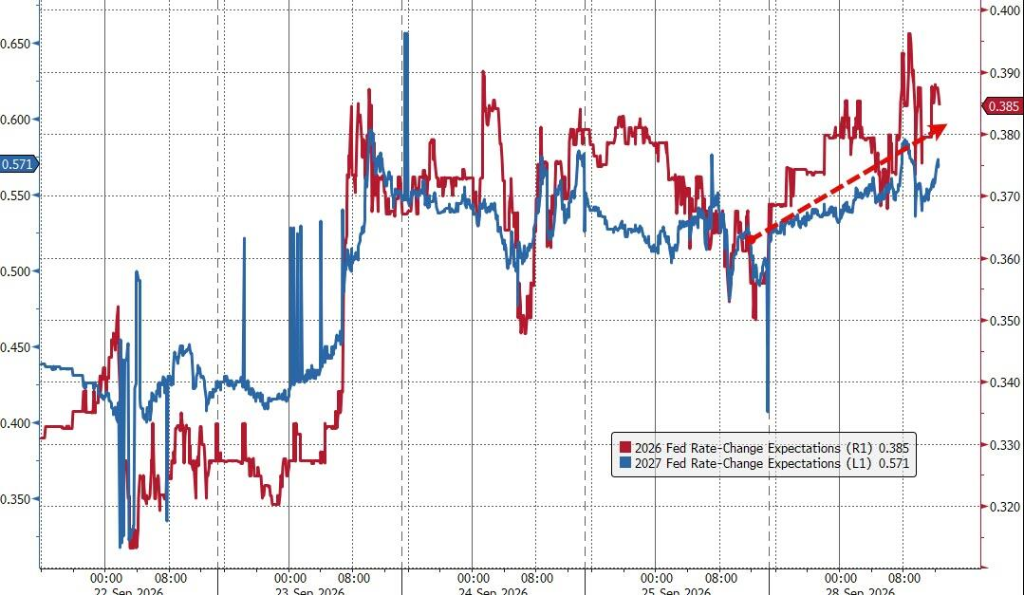
Swap market data show investors have now fully priced in at least three more 25 basis-point rate hikes by the Federal Reserve over the next 12 months, with even a possibility for a fourth increase.
Geopolitics Dominate Macro Narrative, Commodity Price Surge Could Destroy Demand
According to Bloomberg, global bonds are nearing 4% yields for the first time since 2007. This threshold is critical because the market’s focus on it amplifies price volatility, driving yields even higher.
The yield on the 30-year US Treasury has risen to its highest level since 2004, indicating that the ultra-long maturity segment is bearing the brunt in this round of selloffs. Ultra-long bonds are more sensitive to rate expectations, and their yields have broken multi-year highs first, reflecting a market repricing of the long-term rate trajectory.
Although monetary policy and economic data once masked the oil market’s volatility, current geopolitical tensions have again become the dominant market force.
Ian Lyngen, Head of US Rates Strategy at BMO Capital Markets, said that the potential spillover effects of the Iran war on the global economy remain one of the key driving forces in the current macro narrative. This concern over external shocks is being transmitted directly to the bond market, fueling broad-based increases in US Treasury yields.
The sustained surge in oil prices is directly aggravating the risk of persistently high inflation. Given that inflation has yet to fall back within the target range since 2021, elevated energy prices further constrain the Federal Reserve’s room to maneuver on monetary policy.
As reflected in swap market pricing, expectations for the rate path over the next year are turning more aggressive, with markets preparing for the Federal Reserve to maintain tighter policy for a longer period and with greater intensity.
As investors trade in response to conflict-related headlines, some institutions warn that the market may be overlooking deeper economic risks. Brij Khurana, a Portfolio Manager at Wellington Management, noted that participants are mainly trading yield moves based on news about the Iran war. He warned:
They may be ignoring the bigger macro picture, which is that commodity prices staying this high for such a prolonged period will start to lead to negative real income growth and ultimately trigger demand destruction.
Disclaimer: The content of this article solely reflects the author's opinion and does not represent the platform in any capacity. This article is not intended to serve as a reference for making investment decisions.
You may also like
After years of waiting and another delay, Tesla (TSLA.US) postpones the Roadster debut to October 15 as severe weather forces the event to stop.
Tesla has rescheduled the unveiling event for its next-generation Roadster, originally planned for this week, to October 15.
Debt and inflation become the biggest constraints! Deutsche Bank warns: The global market "policy safety net" is failing and future volatility may intensify
Deutsche Bank Research stated in its latest report that the era of large-scale policy interventions used to cushion global economic shocks over the past decades is coming to an end. The continuous rise in sovereign debt, high interest rates, and persistent inflation are all weakening the traditional “safety net” relied upon by governments and central banks.
Bellock executive Lee Young Hoon lifts stake to 0.99% from 0.56%
BUZZ - Australia's Maas Group hits all-time high after Meta Firmus deal
Crypto prices
More


