
CNY: How to resolve the dilemma between bulls and bears?

In late September, USDCNH and USDCNY stabilized and rebounded around the 6.69 level, with short-term momentum leaning bullish, while the divergence between spot pricing and interest rate differentials has become extremely pronounced. Going long or short on the Renminbi directly is now uncomfortable for both sides.
Going long Renminbi: ultra-short-term daily swap points are around -4.9 pips, bearing a heavy negative carry each day, and facing the reality of a “mild appreciation slope with limited upside.” Going short Renminbi: despite record-high trade surpluses and heavy settlement flows providing support, any reversal in direction is punished as both sides get caught out.
Exchange rates are repeatedly struggling between appreciation forces and depreciation constraints, making it hard to chase either long or short. In my view, rather than forcing a position in direction, it’s better to sell gamma on rallies or use combination options to collect premiums, turning the “long-short dilemma” into stable income for the sellers.
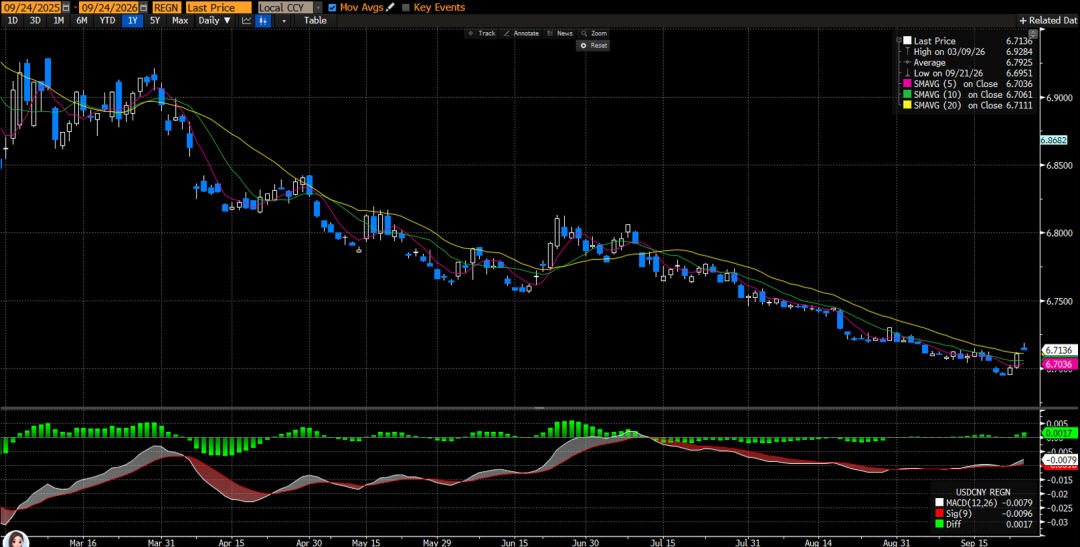
First from a technical perspective, short-term momentum is bullish and there is still room for recovery. After hitting a yearly low of 6.6912 on September 21, USDCNH rebounded for three consecutive days, closing at 6.7115 on September 23, climbing back above MA10 (6.706) and MA20 (6.711); on September 24 it closed further at 6.7159, and as of the evening of the 27th, remained above 6.711. RSI(14) rebounded from a low of 29 on September 21 to around 50, well away from the oversold zone; the MACD red bars have widened each day since the bullish crossover on September 10, with DIF crossing above DEA. Resistance is expected at 6.73–6.75 (with the 60-day moving average at 6.74 and a major round number), and a break would open the door to 6.80; on the downside, 6.70 and 6.69 provide double support.
USDCNH spot short-term momentum is bullish
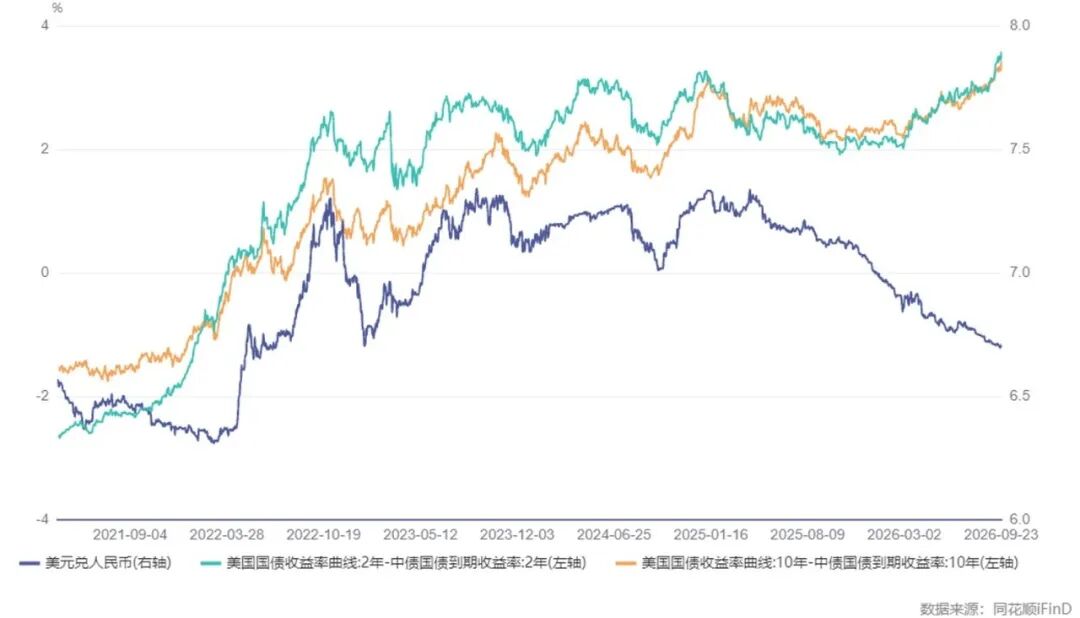
Additionally, the interest rate differential is the main constraint at present. With China bond yields staying low and stable, and US 10Y and 2Y treasury yields breaking above 5.1% and 4.8% respectively, the 10Y nominal China-US yield spread has deepened to about -340bp, while the 2Y nominal spread inverted to around -360bp, pushing the one-year USDCNH and USDCNY swap points further negative to about -2100 points. The divergence between spot and interest rate pricing is already extremely wide; continuing to bet on spot falling is unattractive in terms of risk-reward.
USD/CNY exchange rate and China-US yield spread are widely diverging
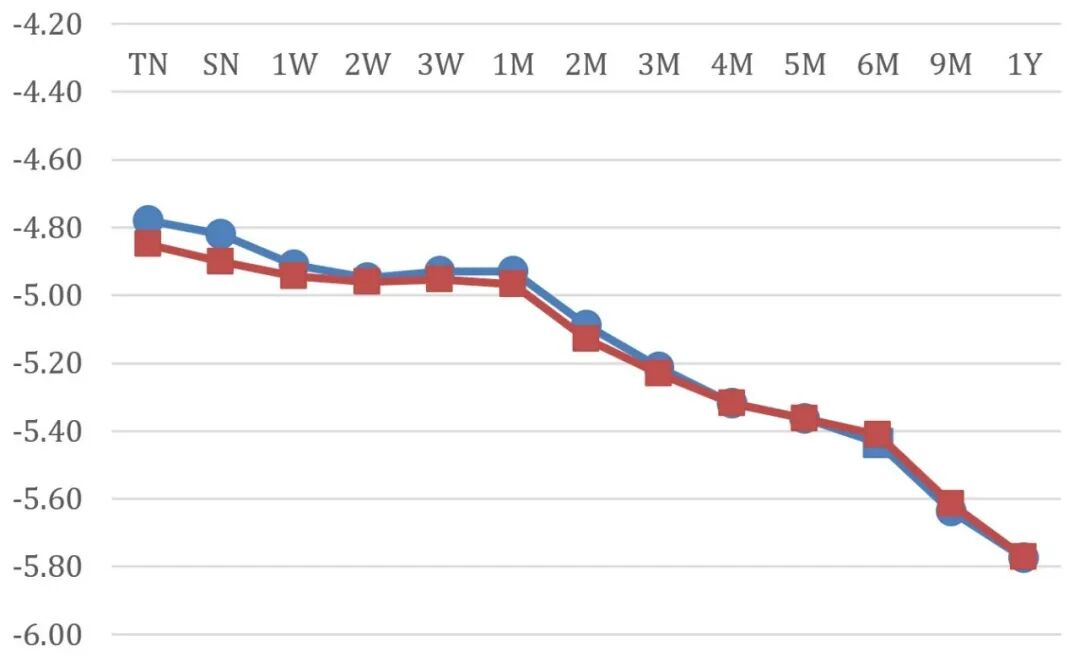
After the 25bp FOMC rate hike in September, the ultra-short-term implied daily swap points reached about -4.9 pips, meaning that going long Renminbi entails paying a carry of about 4.9 pips per day. If the market does not fall or falls only modestly over months, this negative carry will erode most of the gains. Conversely, while going short Renminbi can earn this carry, upward movement in the spot rate is also constrained by central bank policy and fundamentals, limiting both range and speed; so it’s hard to fully capitalize on the carry. Both long and short sides are punished by “time”: one pays and waits for gains, the other collects but gains are slow — so directional bets offer little value.
Implied daily points for various USDCNY and USDCNH swap tenors
In summary, a choppy USDCNH and USDCNY spot market is more probable in the short term, and continuing previous trend-following short strategies lacks reward. Recommended strategies: First, it's not advisable to keep a sustained spot short position; wait for a rebound to the 6.73–6.75 area before reassessing short spot risk-reward; Second,the low volatility environment for the Renminbi is unlikely to change in the near term, so volatility strategies are a better choice—sell gamma on short-term vol rebounds; Third, considering that even if the appreciation trend for the Renminbi continues, the magnitude is limited, so consider buying medium- to long-term risk reversal combination options at dips to structure positions.
BFC FX Dialogue
With You Throughout 2026
Welcome to leave us a message backstage
Communicate with us
Disclaimer: The content of this article solely reflects the author's opinion and does not represent the platform in any capacity. This article is not intended to serve as a reference for making investment decisions.
You may also like
Swiss Franc declines as US Dollar rises on Fed rate hike bets

South Korean stocks dropped over 1%
"Big short" Michael Burry: The AI bubble may burst "earlier than expected," replacing short positions with put options to increase leverage
Michael Burry suggested that the AI bubble could burst as early as next summer and has replaced all his short positions on Micron, Nebius, SOXX semiconductor ETF, and Palantir with put options to obtain lower cost and higher leveraged short exposure. He believes the AI boom is built on the unproven assumption of "sustained capital expenditure," and once revenues disappoint, capital will quickly flee.
Variational open interest has exceeded $2 billions.
Crypto prices
More


