- TRON combines stablecoin payments, smart contracts, staking, and decentralized applications within a large blockchain ecosystem.
- Cardano uses research-driven development, proof-of-stake consensus, smart contracts, and structured blockchain design.
- Bitcoin Cash prioritizes peer-to-peer electronic payments and maintains a strong digital cash focus.
TRON, Cardano, and Bitcoin Cash represent three distinct crypto approaches with strong market relevance. TRX emphasizes payments, stablecoins, and smart contracts through a high-throughput network. ADA combines proof-of-stake security with research-led blockchain development and smart contract support. BCH keeps peer-to-peer payments at the center of digital cash adoption.
TRON Targets Payments and Smart Contracts
 Source: Trading View
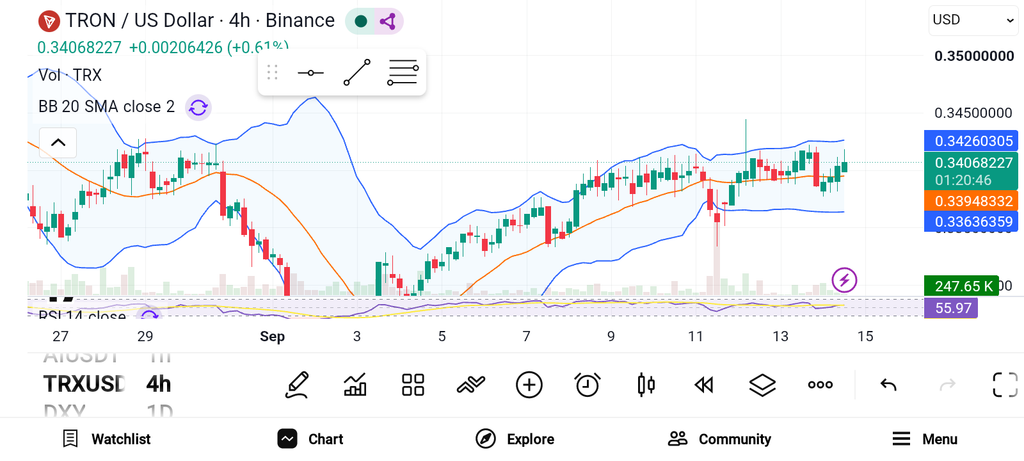
TRON has built a major blockchain network around digital assets and decentralized applications. The network also places strong emphasis on stablecoin settlement and payment activity. TRON uses the TRON Virtual Machine to execute smart contract code across network nodes. The TVM provides a deterministic environment for developers building decentralized applications. TRX also supports staking through network resources such as Bandwidth and Energy. Recent CoinGecko data places TRX near $0.34 with a market cap above $32 billion. CoinGecko also lists an all-time high near $0.4313. These figures highlight the scale TRON has reached within the crypto market. Strong stablecoin activity also gives the network an important role in blockchain-based payments. Developers can use TRON for applications that require smart contracts, token transfers, and digital asset settlement.
Cardano Brings Research Into Blockchain Development
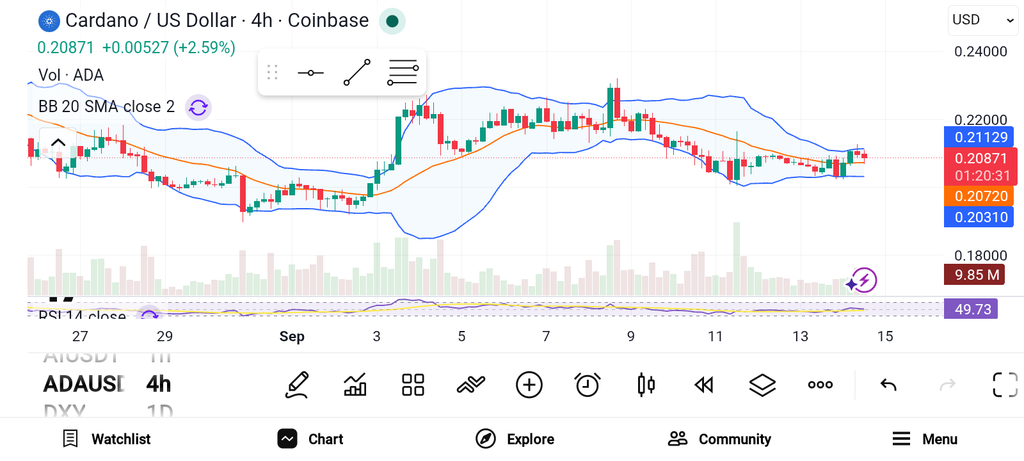
Cardano follows a research-driven path that separates ADA from many competing blockchain projects. The network uses Ouroboros, a proof-of-stake consensus system backed by peer-reviewed research. Stake pools help maintain the ledger and produce new blocks across the network. Cardano also supports smart contracts, giving developers tools for building decentralized applications. ADA trades near $0.21 based on the supplied market data. CoinGecko lists ADA’s all-time high at $3.09 and market capitalization near $7.9 billion. The project remains relevant among developers who value structured research and formal blockchain design. Cardano has also focused on scalability, network governance, and long-term ecosystem development. These priorities give ADA a distinct position among established proof-of-stake cryptocurrencies.
Bitcoin Cash Keeps Digital Payments Central
 Source: Trading View
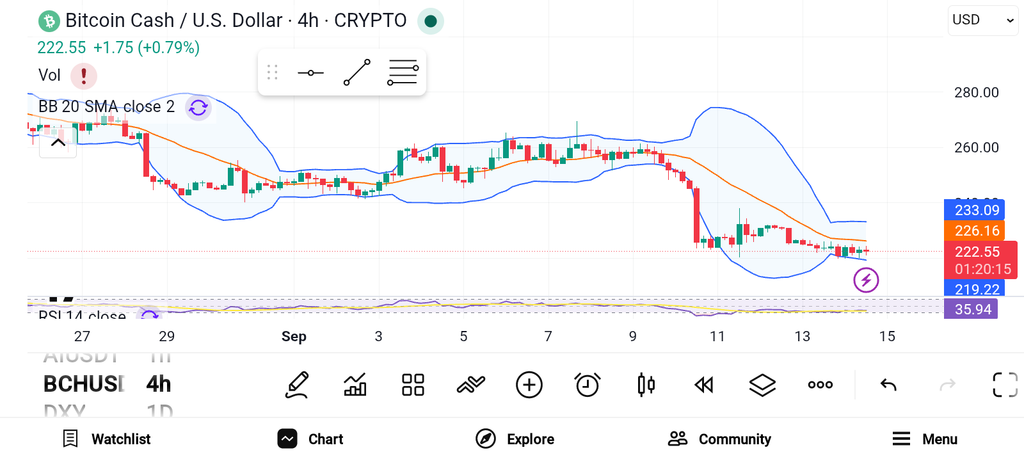
Bitcoin Cash takes a different route by focusing on peer-to-peer electronic cash. The project aims to support direct digital payments without relying on traditional financial intermediaries. BCH therefore remains closely connected to cryptocurrency’s original payment-focused vision. The approach gives Bitcoin Cash a clear identity within a crowded crypto market. Bitcoin Cash can also serve as a useful case study for students studying digital finance. The project shows how blockchain networks can prioritize payments instead of complex smart contract ecosystems. BCH demonstrates that cryptocurrency utility can focus on fast and accessible transfers rather than broader application development. This payment-centered model continues to distinguish Bitcoin Cash from networks such as TRON and Cardano.
Summary
Together, these projects offer different strengths for investors exploring established crypto assets with practical use cases. Each project serves distinct roles across payments, decentralized applications, and blockchain infrastructure, giving investors exposure to varied networks, technologies, adoption trends, and market opportunities.