
US stocks are approaching new highs, but funds are still on the sidelines? Nomura reveals the "negative risk triangle"

The US stock market is hovering near historical highs, but market sentiment has formed a rare divergence from price movements— with low positioning, rising hedging demand, and institutional investors largely staying on the sidelines. Nomura strategist Charlie McElligott attributes the core pressure behind this phenomenon to a triple overlapping "negative risk triangle" and warns of potential market de-leveraging triggers.
In his latest research report, McElligott points out that the so-called "negative risk triangle" refers to the current market suffering simultaneous suppressive effects from three concurrent risks: geopolitical tensions, upward pressure on interest rates, and uncertainty about the inflation outlook. These three hidden dangers stack up, causing institutional investors' net exposures to remain at extremely low levels—according to Goldman Sachs Prime Brokerage data, the net leverage ratio of US fundamental long-short funds is only at the 6th percentile of the past year, falling back to lows close to those seen around "Liberation Day." Meanwhile, Goldman Sachs sentiment indicators have returned to negative territory, hitting a new low since March. 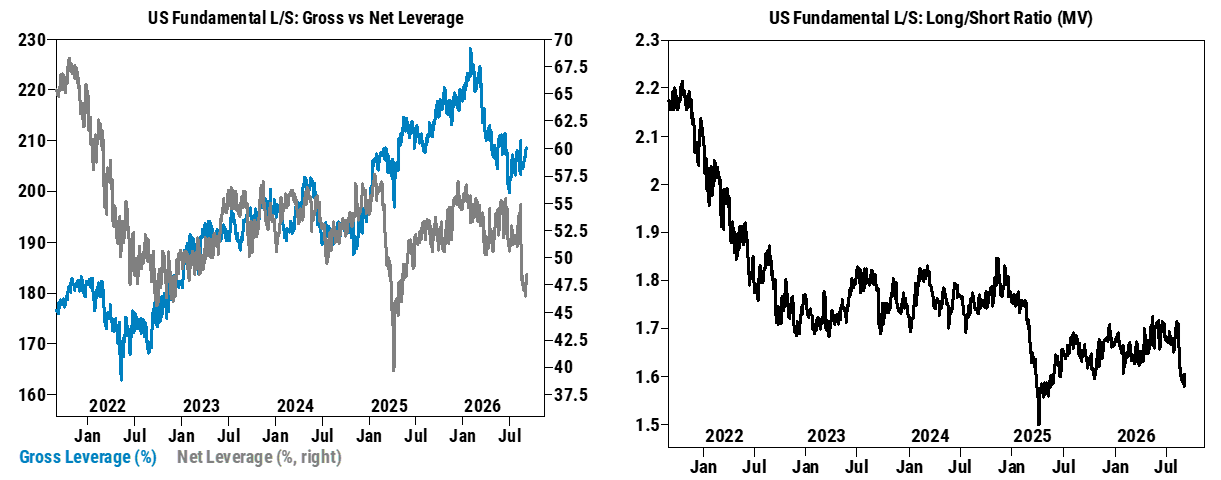
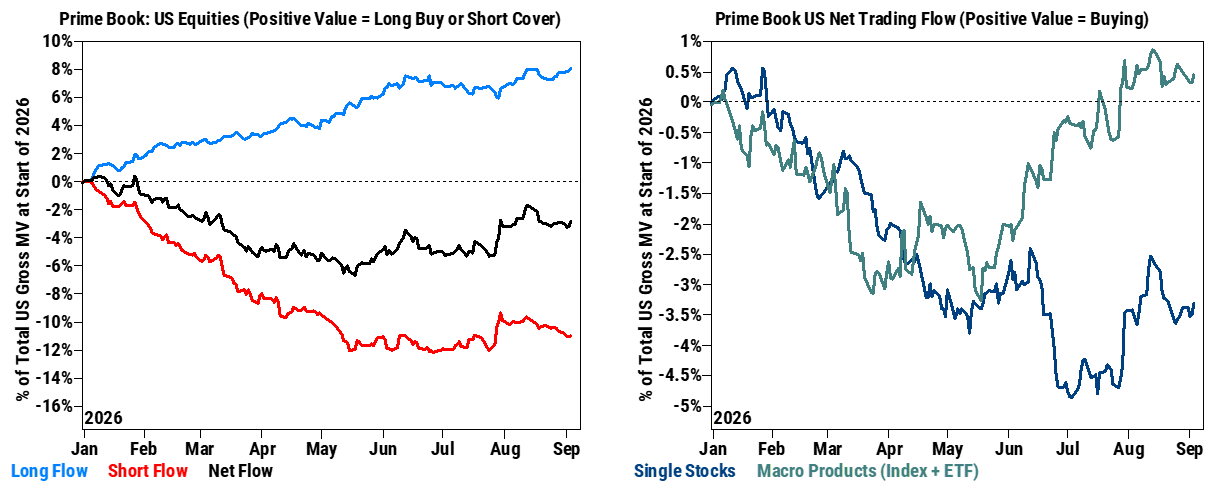
The low market sentiment is also evident in the derivatives market. John Flood, Head of Americas Equity Sales & Trading at Goldman Sachs, points out that each time the S&P 500 attempts to break new highs, the intraday volatility of upward moves is nearly double that of downward moves, and the correlation between implied volatility of call options and spot is significantly above historical averages— this is not characteristic of a "fully loaded" market. In addition, Nasdaq futures shorts have risen 35% since mid-June, and the median short interest among S&P 500 components is also elevated.
"Negative Risk Triangle": Triple Pressures Suppress Sentiment
McElligott clearly identifies the root of the current depressed market sentiment as a combination of three concurrent downside risk pressures: geopolitical tensions, the threat of persistently higher interest rates, and uncertainty about the inflation path.
This judgment closely aligns with observations from Goldman Sachs. John Flood notes that these three concerns come up in almost every conversation he has with clients. After the historic momentum crash in July and weak performance in August, investors generally lack "offensive intent," with both positioning and sentiment suppressed.
John Schlegel, Head of Position Intelligence at J.P. Morgan, also points out in his latest report that, although there was volatility in the market last week, overall positioning changed little, and both retail and institutional sentiment have shown signs of reversing downward or stalling. Goldman Sachs Prime Brokerage shows the total and net leverage of US fundamental long-short funds at 207% and 49.8%, placing them, respectively, at the 20th and 6th percentiles over the past year, and at the 59th and 10th percentiles over the past three years.
Yen Carry Trade Unwinding: Another Source of "Invisible Pressure" for Stocks
In addition to the triple risk narrative, McElligott and several Goldman Sachs traders also point to another potential source of pressure: the accelerated unwinding of yen carry trades.
Rich Privorotsky, Head of Delta-One at Goldman Sachs, noted that US Treasury Secretary Bessent recently made unusually clear comments, stating, "I am the dealer now... you can bet against me," and claiming that the Treasury has an information edge regarding Japanese policymakers and the Bank of Japan's moves. Against this backdrop, the market is betting on the BOJ tightening policy and capital returning to Japan, sending the yen steadily higher.
Privorotsky believes that, for equities, the more noteworthy second-order effect is: as yen-funded carry positions are closed and capital flows back to Japanese bonds and equities, associated funds will flow out of US stocks. He bluntly stated, "The S&P 500 and large-cap tech sectors have recently exhibited a mysterious heaviness with no clear fundamental explanation— this may simply be a silent fading of leverage and carry trades."
AI Tech Options "Mysterious Buyer" Returns to the Market
Despite the overall cautious sentiment, some corners of the market are showing contrarian signals worth watching. McElligott revealed that since last Friday and after the Labor Day holiday re-opening, Nomura's trading desk has observed large volumes of Flex Call options trading on several "concentrated AI" stocks—the very names that saw large-scale unwinding during the summer crash.
According to Nomura tracking data, this "mysterious buyer" has so far accumulated about $315 million in option premiums, $110 million in Delta exposure, and $5.8 million in Vega exposure. In the past 48 hours, the relevant stocks have rebounded sharply, including AMD (+10.9%), INTC (+14%), and CRWV (+18%).
The phenomenon of "AI/tech options buying returning" is once again driving a dynamic where spot prices and volatility rise in tandem. After a period where single tech stock volatility was heavily hit, this dynamic is bringing renewed positive contributions to dispersion trades (short correlation strategies).
Korean Market Simultaneously Picks Up, Funds Accelerate into Semiconductors
The same "adding exposure" logic is also being confirmed in Asian markets. McElligott notes that, after reopening on Sunday/Monday, the Korean market recorded its second-largest single-day foreign net inflow on record (combined with record stock buybacks), second only to the large "buy the dip" day on July 31.
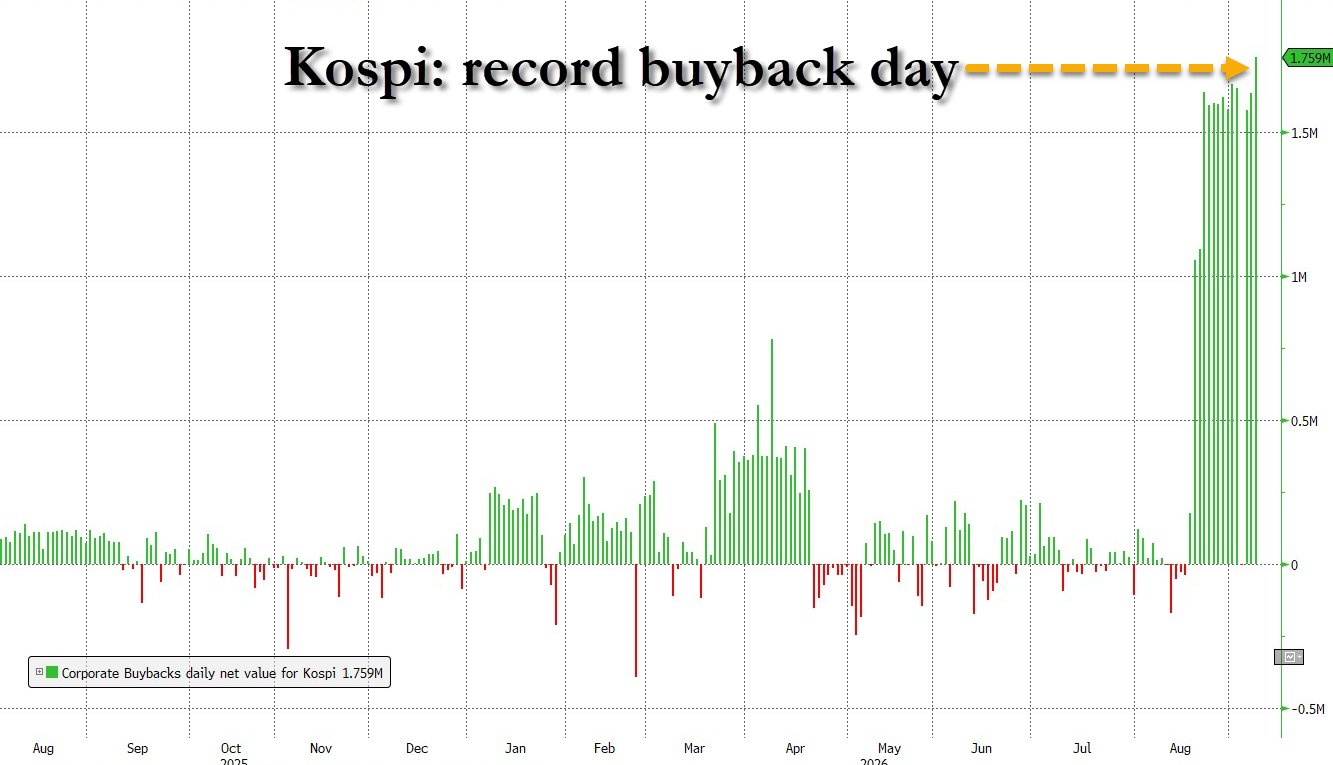
This echoes the signal of revived AI options buying in the US market— institutional funds are accelerating flows into Korea, semiconductors, and the memory sector. McElligott believes this phenomenon "deserves close attention."
However, he also notes that as net exposure rises from very low levels, investors now have "something to hedge." Currently, three-month call option skew has risen to the 91st percentile on record, indicating that the market is beginning to buy insurance for a potential upside breakout, but the overall de-leveraging trigger threshold still remains near at hand.
Goldman Sachs Holds a More Optimistic View: Fundamentals and IPOs May Be Catalysts
In contrast to McElligott’s cautious conclusion, Goldman Sachs' John Flood holds a clearly more optimistic view, believing that current cautious sentiment has already over-priced risks.
From a fundamentals perspective, Flood points out that S&P 500 components’ earnings per share growth in Q2 2026 (the latest full reporting quarter) is about 30% year-on-year; hyperscale cloud service providers and AI infrastructure companies’ earnings are up 54% year-on-year, accounting for about 50% of overall S&P 500 earnings growth; excluding the energy sector, the rest of the components have earnings growth of 14% year-on-year.
However, the market’s response to these robust fundamentals is noticeably insufficient: mutual fund cash allocations, although low, are still above historical averages in absolute size; institutional investors are generally underweight AI-related stocks; individual investor sentiment remains in bearish territory. Flood believes the upcoming wave of IPOs is likely to act as a catalyst to rekindle "offensive" behavior by institutions and retail investors alike.
At the same time, McElligott issues a further warning: if momentum-driven CTA strategies continue to lose trend signals amid range-bound equity index futures, the gap between the multi-futures long signals and the "de-leveraging trigger point" is narrowing; if the market weakens, it could trigger a pro-cyclical "synthetic negative Gamma" selloff effect.
Disclaimer: The content of this article solely reflects the author's opinion and does not represent the platform in any capacity. This article is not intended to serve as a reference for making investment decisions.
You may also like
Macy's Raises Full-Year Outlook Following Fiscal Second-Quarter Beat
Global Forex and Fixed Income Roundup: Market Talk

Can raising interest rates tame US inflation? The CPI report sets the tone for the Federal Reserve's decision next week, but tariffs, oil prices, and AI investment may cast doubt on policy effectiveness.
Federal Reserve officials have previously signaled that they are prepared to raise interest rates if inflation does not improve soon. However, some analysts believe that, in hindsight, they may find that the effectiveness of this key policy tool is quite limited in addressing the multiple factors currently driving up prices.

Crypto prices
More


