Key takeaways
- Referendum 1944 proposes dotUSD, a protocol-owned stablecoin, and is running at roughly 97.5% approval on OpenGov’s Root track.
- This is Polkadot’s third attempt at native stable liquidity, following Acala’s aUSD collapse in 2022 and the stalled pUSD proposal in 2025.
- The rollout is deliberately staged: USDT-backed issuance first, DOT collateral vaults and liquidations only in phase two.
- Treasury commitment is $5 million, split between minting reserves and a dotUSD pair on Asset Hub.
- DOT gained 42.5% on the week, but the real test is adoption after the vote, not the vote itself.
Polkadot is not launching a stablecoin because stablecoins are fashionable. It is launching one because the last attempt in its orbit failed badly enough to leave a scar – and the network has spent four years living with the consequences.
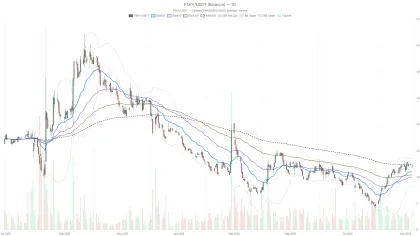
Referendum 1944, titled “dotUSD: A Native Stablecoin for Polkadot,” went on-chain Monday at 11:49 a.m. ET and sits on OpenGov’s Root track, reserved for decisions that touch the protocol itself. Support is close to unanimous: roughly 2.3 million DOT in favor against under 60,000 opposed, about 97.5% approval. DOT responded with a 16.7% single-day move and a 42.5% weekly gain, the strongest among the fifty largest tokens.
The part most coverage skips
This is Polkadot’s third pass at the problem. Acala’s aUSD collapsed in 2022 after an exploit minted billions of unbacked tokens, and the fallout effectively removed native stable liquidity from the ecosystem. In 2025, a proposal called pUSD – built on Acala’s Honzon stack – cleared 75% support but stalled amid community objections about who would build it and who would supervise risk. Gavin Wood had already laid out his conditions publicly: full DOT collateralization, governance control by Polkadot itself, and DAI-grade security assumptions.
dotUSD reads as a direct answer to those objections. The design borrows from Liquity v2 rather than Honzon, and the rollout is deliberately staged. Phase one issues dotUSD against a capped USDT-backed buffer – no oracles, no liquidation engine, no DOT price dependency. Only in phase two do DOT vaults, real-time price feeds, and liquidations arrive. The treasury commitment is modest by design: $2.5 million in USDT for minting and $2.5 million in DOT seeding a dotUSD pair on Asset Hub.
Why the sequencing matters more than the peg
Overcollateralized CDP stablecoins fail in a predictable way. Collateral drops, liquidations queue up, thin exchange liquidity turns orderly unwinding into a cascade, and the peg breaks before the mechanism can respond. By deferring DOT collateral until liquidity exists and the machinery has been tested, Polkadot avoids the exact failure mode that killed its predecessor. A stability pool absorbs liquidated positions instead of dumping collateral into open markets.
There is a reflexive economic story too, and traders clearly noticed it. Every dollar of dotUSD minted in phase two locks up more than a dollar of DOT, converting stablecoin demand into structural demand for the collateral asset. That mechanism is real, but it only activates in phase two – and only if anyone actually wants to hold dotUSD.
The harder question
Sovereignty is the strategic case: if Tether or Circle ever restricted access on Polkadot, the ecosystem currently has no fallback. That argument is sound. Adoption is the unsolved part. Native stablecoins do not win on ideology; they win on liquidity depth, integrations, and yield. Polkadot’s DeFi footprint remains small, and $5 million buys a beginning, not a market.
Conclusion
The vote will pass. The interesting period starts afterward, when dotUSD has to earn usage rather than approval – and when phase two decides whether Polkadot learned the right lesson from aUSD or merely rewrote it.