
Copper prices hit new highs as global copper mine supply expectations weaken: Morgan Stanley lowers production growth forecast, output may see first annual decline since 2017

Copper prices set a new record high, with expectations of tightened supply becoming an important support for the market.
On September 8, London Metal Exchange (LME) three-month copper touched $14,694 per ton during trading hours, marking a new all-time high, and closed at $14,673, up 1.5% on the day. As copper prices broke through previous highs, mining stocks rallied in tandem—Freeport McMoRan rose more than 7% intraday, with year-to-date gains expanding to about 44%.
More notably, global copper mine supply expectations are shifting. Morgan Stanley has cut its forecast for global mine supply growth to basically flat or even a slight decline; if this materializes, global copper mine production may register its first annual drop since 2017. Meanwhile, Chile has lowered its annual production expectations for the second consecutive quarter, and the US’ potential tariffs have triggered a “scramble for supplies,” further aggravating the misallocation of global inventories.
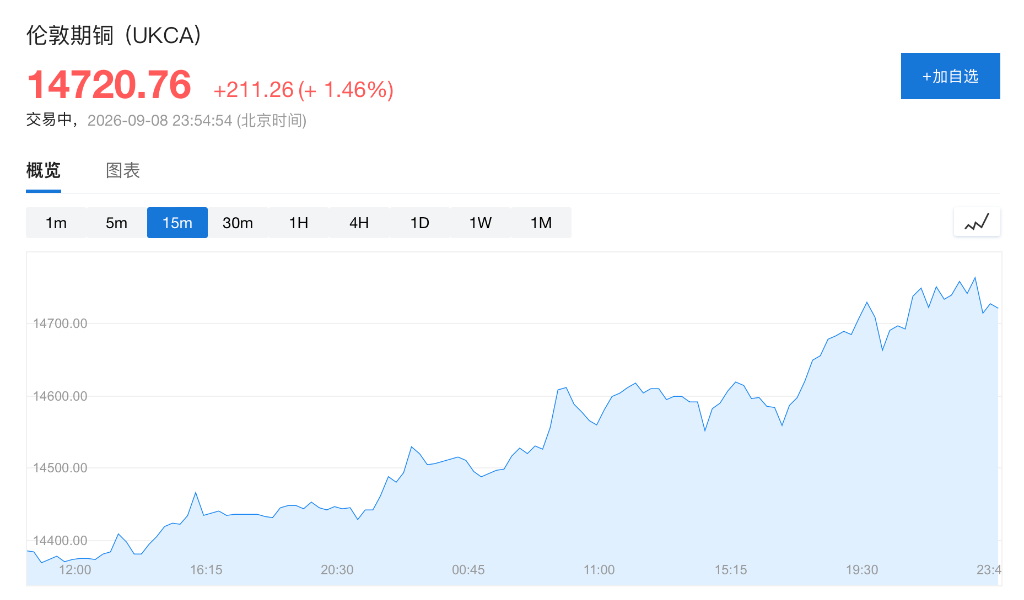
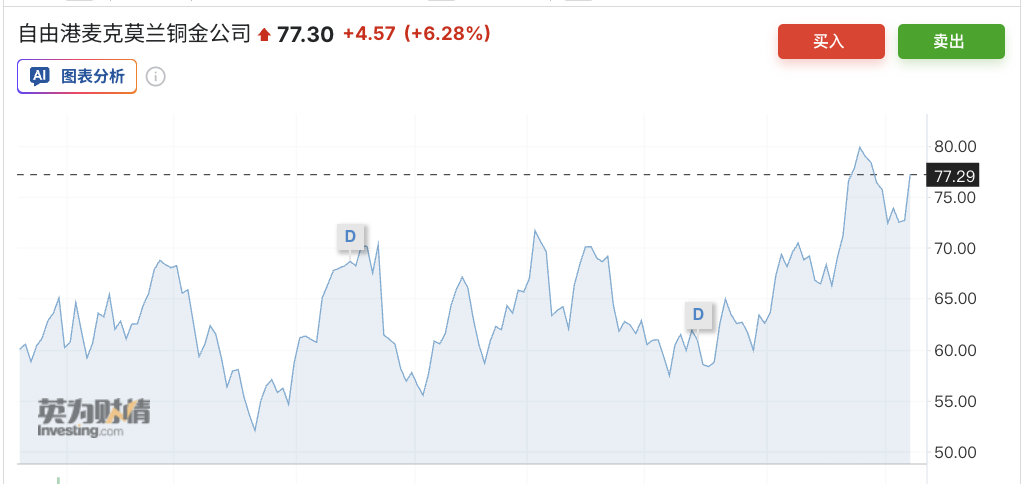
Copper prices hit new record highs as Morgan Stanley lowers global supply expectations
Changes on the supply side are becoming a major catalyst for copper breaking through historical highs.
Chile is the world’s largest copper producer, but its recent output remains under pressure. In the second quarter, the country saw its lowest copper production in at least 19 years, and for a second consecutive quarter, it has cut annual output forecasts—production is expected to drop by 2.6% for the full year. Against this backdrop, Morgan Stanley reversed its previous expectation of global mine supply expansion, instead forecasting supply to remain basically flat or decline slightly.
If this forecast is realized, it would mean global copper mine supply will see its first annual decline since 2017. Anglo American COO Ruben Fernandes also noted that supply will eventually increase, but the key question is the speed of incremental releases.
Meanwhile, potential US tariff policies are creating a short-term supply mismatch. The market is concerned that the US might impose tariffs on copper in the future, which has pushed copper to flow into the US ahead of time, with inventories in other regions being continuously transferred to US ports. Slowing mine supply growth, combined with this inventory reallocation, has intensified the tightness in the spot market.
Supply contraction combined with demand expectations leaves upside for copper prices
Copper’s record highs are also rapidly translating into improved earnings expectations for mining companies. Freeport McMoRan’s management estimates that for every 10-cent increase in copper prices, the company’s annual EBITDA would rise by about $390 million. If copper prices remain at $5 per pound, EBITDA is expected to reach $13 billion in 2027-2028; if prices climb to $7 per pound, it could rise to $20 billion.
The demand side also features potential catalysts. Citi analyst Tom Mulqueen expects copper prices could reach $15,000 per ton by the end of the year; should manufacturing recover, energy transitions accelerate, or data center construction and strategic reserve demand exceed expectations, copper prices could even rise further to $17,000.
Thus, the rationale behind current copper prices is no longer just a short-term “scramble for supplies.” Slowing or negative mine supply growth, US tariff expectations leading to inventory mismatches, and structural demand growth from data centers and energy transitions are all strengthening the market’s expectation of a tight balance in copper.
Disclaimer: The content of this article solely reflects the author's opinion and does not represent the platform in any capacity. This article is not intended to serve as a reference for making investment decisions.
You may also like
Strive adds 1,375 bitcoin as SATA approaches 'billion-dollar' milestone
Japanese Yen: Intervention risk and key levels in focus against US Dollar – Scotiabank
Mexican Peso flatlines as traders brace for Mexico’s fiscal package
GPS sees controlling shareholder boost stake by R$ 11.92 million via share purchases
Crypto prices
More


