

The political landscape in Germany surrounding cryptocurrency taxation has intensified after the right-wing Alternative for Germany (AfD) party won the recent state election in Saxony-Anhalt. The AfD has promoted the retention of a favorable 12-month tax exemption for Bitcoin, aligning its platform with a growing segment of crypto investors and enthusiasts.
AfD wins Saxony-Anhalt election, intensifies row over Germany’s crypto tax rules
By:Cointurk
Bitget offers one-stop trading for cryptocurrencies, stocks, and gold. Trade now!
A welcome pack worth 6200 USDT for new users! Sign up now!
AfD’s election victory shakes Berlin
AfD secured 43.8% of the party list votes and 44.3% of first votes across 2,661 polling districts in Saxony-Anhalt. This result grants the party 39 out of 83 seats in the state parliament, just three shy of an outright majority. In contrast, the center-right Christian Democratic Union (CDU), led by Chancellor Friedrich Merz, saw its vote share decline sharply to 17.2%, a drop of nearly 20 percentage points compared to the 2021 election. Voter turnout rose notably, reaching 77.8%.
Despite the strong showing, the results have no immediate impact on federal law or AfD’s representation in the Bundestag. However, they give the party a bigger stage to advance its policies as national debates continue around proposed changes to crypto-tax regulations. The German crypto market recorded $24.1 billion in on-chain taxable activity in 2025, according to Chainalysis estimates.
Merz ruled out any cooperation with AfD following the election, describing the outcome as shaking the CDU “to its very foundation.”
AfD’s co-head, Tino Chrupalla, pushed CDU lawmakers to join in creating a “center-right conservative majority.” Meanwhile, Alice Weidel, another AfD leader, labeled the result a breakthrough and stated a target of achieving at least 40% of the vote in the 2029 federal elections.
Mini dictionary: AfD (Alternative for Germany): A right-wing political party in Germany, known for its anti-immigrant platform and often critical of European Union policies. The party has become increasingly vocal on issues related to finance and cryptocurrency regulation.
AfD’s position on Bitcoin and crypto taxes
AfD has maintained a pro-Bitcoin stance for several years. In an October 2025 Bundestag motion, the party described Bitcoin as “decentralized, non-manipulable, and limited-availability,” urging policymakers to differentiate it from other digital assets. AfD advocated for Bitcoin to remain outside the scope of the European Union’s Markets in Crypto-Assets (MiCA) regulation, supported retaining the 12-month holding period for tax exemption, and opposed classifying private mining and Lightning node operations as commercial activities.
AfD reiterated its position in May, voicing opposition to a Greens initiative that sought to abolish the holding period. The party argued for fewer tax regulations and a government focus on essential functions rather than expanding crypto taxes.
Berlin considers ending the tax exemption
Under current guidance from Germany’s Finance Ministry, profits from cryptocurrency sales are subject to tax if assets are held for less than a year. Sales after 12 months are generally tax-free for private individuals. The 2027 budget plan, recently approved by the German cabinet, indicates that new cryptocurrency tax rules are forthcoming, but the document stops short of outlining specifics.
Berlin aims to eliminate the one-year exemption, seeking to generate at least €1 billion annually in additional tax revenue. The Green Party previously advanced legislation to tax all private disposals of crypto at personal income rates, regardless of holding period. Although a study by the Frankfurt School suggested up to €11.4 billion in potential extra revenues, lawmakers halved this estimate for conservative budgeting. The Greens’ proposal ultimately failed in committee in May 2026.
Current Rule Proposed Change Potential Annual Revenue
| Tax-free after 12-month holding | All disposals taxed, regardless of duration | €1 billion (Berlin estimate) |
Germany’s crypto market in focus
Germany is one of the leading cryptocurrency markets globally. Chainalysis estimated $24.1 billion in taxable crypto activity for 2025, which includes $2.4 billion in income, $6.1 billion in gains, and $15.6 billion in payments. In the 12 months through June 2025, Germany received $219.4 billion in crypto, a 54% increase. TRM Labs ranks Germany tenth worldwide in Q1 2026 for retail crypto volume, with $25.3 billion, though this figure was down 20% year-over-year.
Metric 2025 Value Year-over-Year Change
| Taxable Activity | $24.1 billion | +54% |
| Retail Crypto Volume | $25.3 billion | -20% |
Ongoing discussions over tax policy could shape long-term investor strategies, drive competitive dynamics across European crypto markets, and have implications for cross-border investments. Although the Saxony-Anhalt results do not change federal tax rules, AfD’s gains put significant pressure on policymakers as debate over exemptions and cryptocurrency taxation intensifies nationwide.
AfD’s influence in Saxony-Anhalt adds new momentum to opposition against the removal of tax exemptions as Berlin prepares for policy changes.
0
0
Disclaimer: The content of this article solely reflects the author's opinion and does not represent the platform in any capacity. This article is not intended to serve as a reference for making investment decisions.
Understand the market, then trade.
Bitget offers one-stop trading for cryptocurrencies, stocks, and gold.
Trade now!
You may also like
DOGE Explodes Higher as Short Squeeze Pushes Price Toward $0.10
Cryptonewsland•2026/09/08 10:09

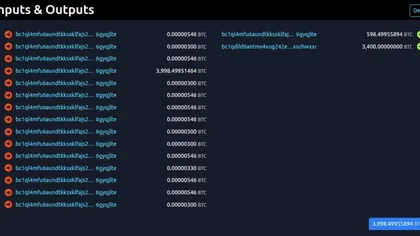
Hack Rocks Bitcoin News: Liquid Network Gets 3,400 BTC But Peg Services Stay Halted
Coinspeaker•2026/09/08 10:06
Solana records $348 million in RWA inflows, total tokenized assets reach $720 million
Cointurk•2026/09/08 10:00
South Korea Prepares Large-Scale Securities Tokenization Market Reform
Coinspaidmedia•2026/09/08 09:51
Crypto prices
More
Bitcoin
BTC
$78,730.88
-0.83%

Ethereum
ETH
$2,488.81
+0.03%

Tether USDt
USDT
$0.9998
-0.01%

BNB
BNB
$754.77
+1.56%

XRP
XRP
$1.4
+0.12%

USDC
USDC
$1
+0.01%

Solana
SOL
$103.62
-1.21%

TRON
TRX
$0.3386
+0.57%

Hyperliquid
HYPE
$84.25
-3.71%

Zcash
ZEC
$1,146.16
-3.64%
How to buy BTC
Bitget lists BTC – Buy or sell BTC quickly on Bitget!
Trade now
Become a trader now?A welcome pack worth 6200 USDT for new users!
Sign up now