
Modi Urges Public to Stop Buying Gold, Analysts Say It's Actually a Buy Signal

Huitong Network, September 2—Recently, Indian Prime Minister Modi once again made statements aimed at curbing private gold consumption, marking his second public call this year for citizens to reduce gold purchases. Analyst Jon Lindau believes that, based on the global precious metals market and India's domestic economic situation, these official efforts to strongly discourage citizens from buying gold are not a bearish signal at all. Instead, they send a clear bullish signal for gold allocation to the market, serving as a highly valuable contrarian investment indicator.
Recently, Indian Prime Minister Modi once again made statements aimed at curbing private gold consumption, marking his second public call this year for citizens to reduce gold purchases. Analyst Jon Lindau believes that, based on the global precious metals market and India's domestic economic situation, these official efforts to strongly discourage citizens from buying gold are not a bearish signal at all. Instead, they send a clear bullish signal for gold allocation to the market, serving as a highly valuable contrarian investment indicator.
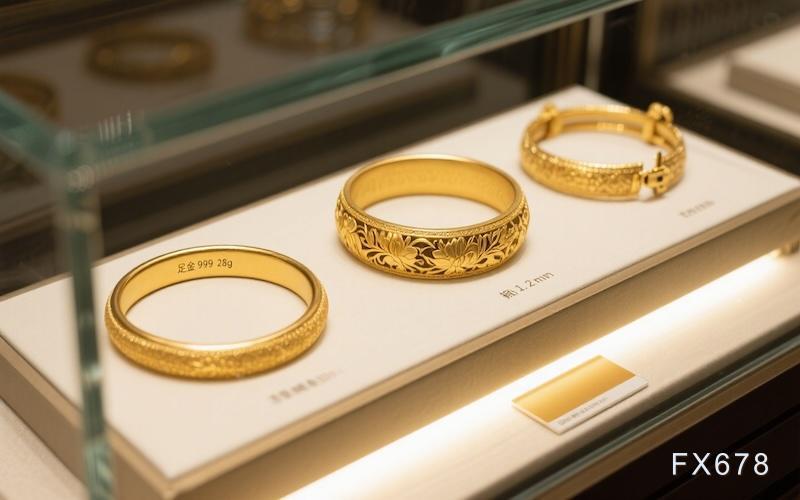
This time, Modi made a public statement in a short video during the Shanghai Cooperation Organization summit. He first celebrated India's impressive 7.8% GDP growth in Q1, then called on the public to abandon non-essential expenditures such as overseas vacations and weddings, and to strictly limit non-essential gold purchases—allowing citizens to only buy gold jewelry for essential needs, thus drastically cutting back on private gold spending.
These remarks were packaged by the Indian government as a campaign to promote national self-reliance, and mainstream domestic media interpreted the policy as being aimed at stabilizing the rupee exchange rate and improving the current account deficit. The media pointed to the 2026 fiscal year's record high gold imports of $71.98 billion, noting that the massive import volume has heightened pressure on foreign exchange outflows. Influenced by this official narrative, Indian jewelry sector stocks weakened, and the market briefly entered a risk-off mode.
However, from a financial investment perspective, this event should be reconsidered based on the underlying logic of asset allocation and currency credibility. For global gold investors, India's official persuasion is in essence a straightforward bullish signal, reflecting the weakening of emerging market currency credibility and the persistent demand for physical gold.
As the issuer of its currency, the Indian government maintains fiscal and economic functioning through the authority to print money, yet now publicly advises citizens not to convert rupees into gold assets. The core reason is that gold is the only hard asset that can withstand economic cycles and exists independently from sovereign currencies; its value stability far exceeds that of the rupee and, through India's various economic plans, fiscal deficits, and policy shifts, gold has maintained its value, serving as a core asset for hedging against currency depreciation.
Data shows that even with existing 15% gold import duties and tightened import controls, India's gold imports still rose over 24% year-on-year in FY2026, setting a new record—with only a minor drop in physical volume. This clearly demonstrates that private gold demand in India is not a short-term speculation or a trend driven by influencer marketing but a rational choice for wealth preservation for millions of families. Most Indians perceive continuous currency devaluation and eroding purchasing power, while gold jewelry, as a centuries-old household asset and safe haven, requires no complex securities account or professional investment skills, making it the most convenient and reliable tool for ordinary families to resist inflation.
The Indian government's rationale is straightforward: massive amounts of foreign exchange are used to import gold, depleting reserves, widening the trade deficit, and pressuring the rupee. Therefore, officials urge citizens to recycle old jewelry and pledge gold assets, actively reducing new gold purchases. However, this seemingly reasonable "patriotic financial logic" is essentially an expedient for maintaining foreign reserve stability, entirely ignoring ordinary people's need to preserve their wealth.
In stark contrast, India applies double standards to itself and the populace: while advising citizens to cut gold consumption and sell reserves, the Reserve Bank of India has never reduced its official gold reserves—in fact, it continues to accumulate physical gold. Globally, central banks have recently been ramping up gold reserves to optimize reserve structures and hedge dollar and local currency risks, while promoting the narrative to the masses that "gold is useless" and pitching government bonds and bank deposits as safe assets.
Ultimately, India's gold-control policy is not a long-term measure for economic transformation or improving livelihoods, but a passive reaction to pressured foreign reserves and an unbalanced trade account, superficially cloaked as “national self-reliance.” This disconnect between official rhetoric and market behavior is a classic case of emerging-market currency credibility challenges, further highlighting gold’s irreplaceable hedging value.
Investors familiar with precious metals know a key rule: when sovereign governments want citizens’ money to stay in the banking system and circulate in local currency, gold is labeled “irrational consumption” or a “social liability asset.” But when nations need to shore up reserves and stabilize the financial system, gold is positioned as a core strategic asset and ballast for finance.
In fact, Modi had already made a similar appeal back in May this year, calling on citizens to reduce gold consumption amid energy price volatility and foreign exchange pressure. That he is reiterating this stance just four months later indicates the initial initiative failed—private sector demand for gold has not been suppressed. If public persuasion and policy constraints could sway market demand, there would be no need for repeated official messaging; these double announcements actually underscore the extraordinary resilience of grassroots gold demand in India.
The investment markets always follow “contrarian thinking.” When a national leader publicly urges the public to abandon a certain asset, taking a contrarian position is often the more rational choice. This doesn't point to any political conspiracy, but rather, market incentive mechanisms are always more reliable. Under the threefold pressure of tariffs, policy controls, and official opinion, Indians are still buying gold against the current—not from blind consumption, but as a true and sound market response hedging against rupee devaluation.
India's 7.8% high GDP growth and the thriving gold-buying trend among the public may seem contradictory, but actually make perfect sense: impressive economic data cannot offset citizens’ concerns about currency devaluation. The market acknowledges India's economic expansion, but no longer trusts the sovereign currency behind the reported numbers—a common credibility issue for emerging markets.
True “national self-reliance” should be about supporting domestic gold mining, improving the local gold-refining industry, and allowing citizens to own locally produced gold assets for true financial independence. Yet, the official guidance is the exact opposite—attempting to dissuade people from traditional wealth-preserving methods. In the face of risks such as frozen bank deposits, surging inflation, and unmet policy expectations, gold remains the ultimate guarantee for household wealth. Official slogans like “keep weddings and travel local,” are merely superficial—while the call to “ban non-essential gold purchases” is, in essence, aimed at keeping private wealth locked within a financial system subject to taxation, control, and inflation.
From a market logic standpoint, there is no need to over-interpret conspiracies; the reasoning is straightforward: fiduciary currencies rely on the public’s faith to maintain value, whereas gold, owing to its physical nature, requires no endorsement from any party and is unaffected by policies or rhetoric. When a country's top leader denies the value of a millennia-old hard currency to over a billion people, it underlines a weakening of sovereign currency credibility, while market investors have already quietly shifted toward gold—an undeniable market signal.
From a global commodities and precious metals investment perspective, ordinary investors today can follow the trend, compliantly allocating small gold bars, coins, and other physical gold via legitimate channels.
The high gold import figures that worry Indian authorities are fundamentally the result of rational choices by private investors: as central banks globally cut fiat assets and increase gold reserves, the general public is similarly moving away from single sovereign assets and embracing gold, which carries no credit risk. Whether in sovereign reserves or personal asset allocation, gold’s core value has never changed, and official efforts to suppress positive market sentiment about gold can only further boost its price.
Disclaimer: The content of this article solely reflects the author's opinion and does not represent the platform in any capacity. This article is not intended to serve as a reference for making investment decisions.
You may also like
XRP breaks resistance, eyes $7.07 as Dark Defender projects new impulse
Thailand’s SEC finalizes crypto Travel Rule, effective February 2027
Suspects remain at large as French couple become crypto theft targets
GLOBAL MARKETS-Stocks rise after recent declines; Japanese yen jumps against US dollar
Crypto prices
More


