
Federal Reserve Governor Barr says a rate hike may be supported at the September FOMC meeting

As the title indicates, the content of this speech is not a major concern for capital market investors. However, Barr briefly discussed his view on inflation at the beginning. He noted that the September FOMC meeting is approaching, “If the data trend gives me confidence that inflation is returning to the 2% path, I believe we can take more time to assess policy stance. However, if inflation does not appear to be sufficiently moderated, then I believe we should act decisively to raise rates.”
For more than a week, I have been analyzing Walsh’s views on inflation and interest rates in detail. At present, the vast majority in the market believe that when Walsh talked tough at the Jackson Hole meeting on August 28, he was just posturing. He won’t raise rates; he wants to cut rates and deflate the debt. I believe he actually cannot deflate the debt. At Jackson Hole, he meant what he said—he is truly carrying out the Fed’s dual mandate, and the current focus is on fighting inflation. If the August U.S. PPI, released at 20:30 on September 10 Beijing time, and the CPI, released at 20:30 on September 11, show that inflation has not eased, he really will support a rate hike.
At the July 29 FOMC meeting,three voting members (Cleveland Fed PresidentBeth M. Hammack,Minneapolis Fed PresidentNeel Kashkari,Dallas Fed PresidentLorie K. Logan)recommended a 25bp rate hike. The other nine did not advocate for a hike, but that doesn’t mean they’re against it. I believe most of them, like Barr, are thinking: If prices are falling, we won’t hike for now—let’s wait and see; but if prices are not clearly falling, we’ll support raising rates.
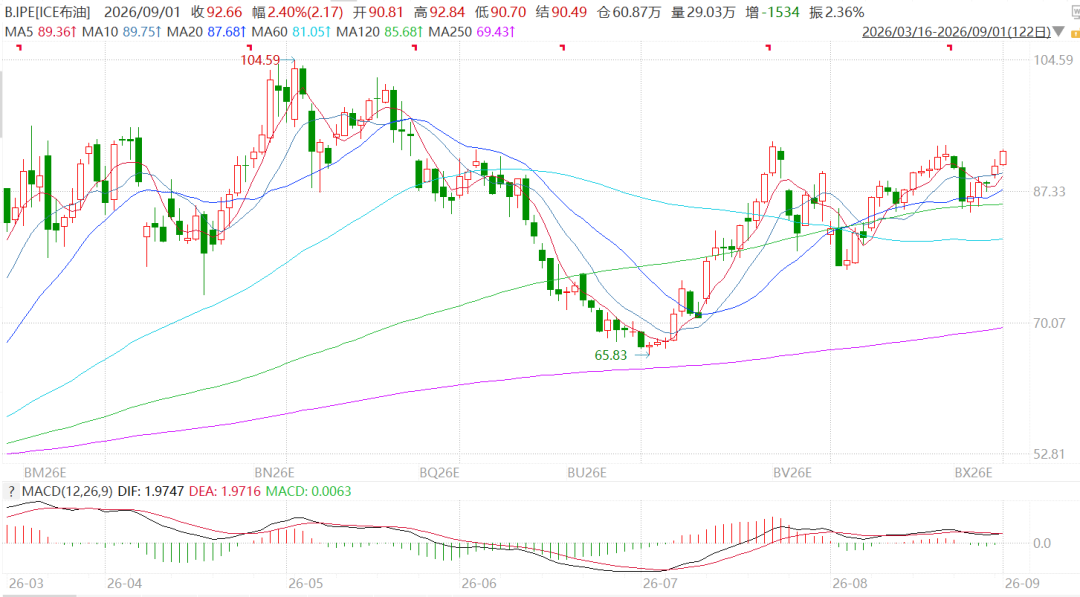
But looking at the international oil price trend in August, is there any sign that PPI and CPI are going to decline? So I think there’s a high probability that rates will be raised at the mid-September FOMC meeting.
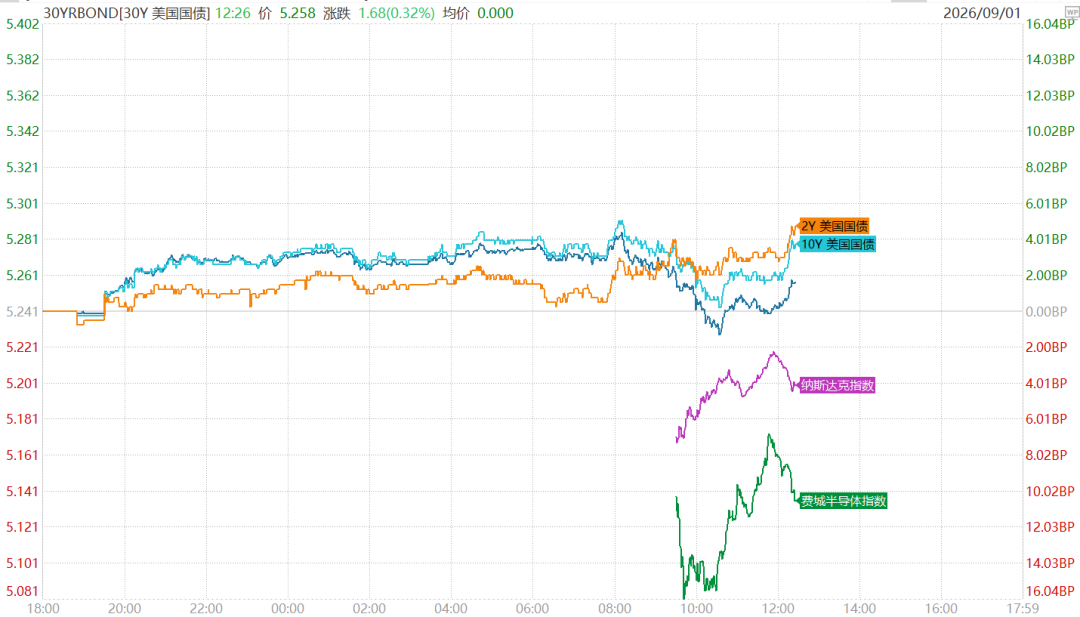
Tonight (September 1, 2026), the U.S. 2Y Treasury yield reached a new high, the 10Y continued to set records, and the 30Y is close to the record, while the stock market fell (see chart below). I believe the market is already pricing in a rate hike in mid-September. This is actually a good thing; when the hike finally comes, the market won’t fall any further.
The full text of Barr’s speech follows:
Thank you to the organizers of this important event for giving me the opportunity to participate.1 This meeting brings together several policy issues I consider crucial for the future of the U.S. economy—entrepreneurship, financial inclusion (Financial Inclusion, i.e. inclusive finance), technological innovation (including artificial intelligence), and most importantly, how to strengthen these forces to support employment, raise living standards, and promote economic development that benefits everyone.
The Federal Reserve is deeply tied to these sectors by its mission. Achieving full employment relies on a labor market in which everyone can participate productively, including those previously incarcerated or with a record in the judicial system. Perhaps partly because these individuals face barriers to employment that others do not, many opt for self-employment; thus offering opportunities also means providing the chance to start businesses. For them, inclusive finance is vital, and meeting their banking and financial needs is equally essential to a healthy economy.
Before I continue, I want to share some views on the current economy. The labor market remains stable, with relatively low unemployment rates. The economy continues to grow strongly, partially driven by a boom in AI-related business investment and capacity-building. Productivity and business creation have remained robust for years. Consumer spending has shown solid resilience so far.
But inflation remains too high—and has persisted for over five years.(Note: On the evening of August 28, Federal Reserve Chair Walsh also noted this in his Jackson Hole speech, specifying that inflation has been present for 65 months, with the Fed fully responsible.)
We have come down sharply from the 2022 inflation peak above 7% to slightly above 2% in 2024, but this progress stalled in 2025. A series of shocks—from tariffs to Middle East conflicts, and the rapid build-out of AI—knocked us off course. Core non-housing service inflation remains elevated. Persistently high inflation above target risks broader price pressures becoming entrenched, a risk I am watching closely. At our September FOMC meeting, we will once again discuss the inflation outlook and our policy stance. If the data trend gives me confidence that inflation is returning to the 2% path, I believe we can take more time to assess policy. However, if inflation is not sufficiently moderating, then I believe we should act decisively to raise rates.
Now, returning to today’s topic. My interest in inclusive finance predates my time at the Federal Reserve and has been a major focus throughout my 30-year career. While at the University of Michigan, I helped launch the Detroit Neighborhood Entrepreneurs Project with several colleagues to help entrepreneurs start and grow businesses, spurring the city’s recovery from its struggles over a decade ago. I’ve also researched how exclusion from basic banking makes it harder for people to find stable housing and employment.2 Today I’ll discuss the financial wellbeing and entrepreneurship of those with a criminal or arrest record, encourage further research, and talk about how new technologies can improve financial access and business opportunity for this group.
Challenges
Individuals with a criminal record face major barriers to employment, severely limiting their options for formal work and resulting in much lower employment rates than others.3 These labor market penalties partly stem from socioeconomic disadvantages associated with having a criminal record, but largely from the effects of criminal justice intervention—loss of skills and human capital during incarceration or court proceedings, as well as employer reluctance to hire those with records.4
Research shows that incarceration leads to persistently lower employment rates and income trajectories after release.5 According to one metric, employment propensity falls by about 7% to 26% after an initial criminal charge, and remains depressed even six years later.6 A 2018 study found that those who had been incarcerated had unemployment rates nearly five times higher than the general population.7 Studies also show that people of color are disproportionately affected by the presence of a criminal record.8 Despite sweeping initiatives in recent years like “ban the box” and record expungement, employment gaps remain, and criminal records continue to pose lasting barriers.9
Another barrier amplifying these challenges comes from certain occupational licensing requirements.10 Nearly a quarter of American jobs require a government-issued license.11 Some states allow licensing boards to reject applicants with a criminal record, regardless of the crime’s relevance to the occupation or any material public safety risk.12 These barriers not only carry economic consequences for individuals but also reduce the available workforce in communities.13 Some studies suggest that reducing licensing burdens may help lower recidivism and improve employment outcomes for those with records.14
In addition to labor market outcomes, these individuals face multifaceted financial vulnerability. A 2022 report from the Consumer Financial Protection Bureau highlighted how those with records face systematic barriers. Financial obligations and high basic service costs—including bail and remittances—expose them to costly debt, credit default, and lower credit scores.15 These credit challenges make it harder for them to access affordable loans, stable housing, and job opportunities.
The Federal Reserve’s 2023-2024 Survey of Household Economics and Decisionmaking (SHED) shows that those with records report significantly lower financial wellbeing, less access to credit, and higher proportions unbanked. These gaps persist even after accounting for demographic and economic differences, and widen with longer incarceration or greater contact with the system.16 For example, SHED found that among those without records, 75% said they were at least okay or comfortable financially, compared to 60% among those convicted and incarcerated.
Those with records, especially convictions, are also less connected to the financial system. According to SHED, people with prior convictions are less likely to have bank accounts or credit cards; instead, they rely more on alternative financial services like payday and pawn loans. This disconnect from mainstream credit appears to stem from limited supply, not weak demand. Those who have been incarcerated are 16 percentage points less confident they’ll be approved for credit, yet 10 percentage points more likely to apply for credit in the past year. This tells us they face huge barriers to getting the mainstream credit they need. Improvements in underwriting, like cash-flow or alternative data-based underwriting, may help expand inclusion for this group which often has thin or damaged credit records.
Entrepreneurship: A Pathway to Opportunity
Those with records may be an underutilized source of talent and drive. "Second chance" hiring initiatives can help connect these individuals to the labor market. Entrepreneurship is another path to better economic outcomes. One estimate found that among previously incarcerated people, those who started businesses earned up to 24% more than those in traditional jobs.17 The same study found that entrepreneurship may lower five-year recidivism rates compared to standard employment, with a greater scale of reduction.
This opportunity is not lost on those with records. Studies find that about 20% to 30% of individuals with a criminal record report being self-employed business owners.18 According to research conducted in 2021, about 1.1 million small business owners nationwide (nearly 4% of all small business owners) have a criminal record.19 Entrepreneurs with records may have the same drive and talents, but are less likely to access the professional networks and support on which other entrepreneurs rely—mentors from major companies, fellow founders, industry contacts—the channels that help people connect to funding and financing options and business opportunities.
Loans and Support That Make Entrepreneurship Possible
The difference between a good idea and a business with enduring success usually comes down to three things: access to credit, access to business networks and opportunities, and help gaining missing skills or technical assistance.20 Entrepreneurs with criminal justice involvement face the same needs, but have fewer chances to meet them. Loans are a key input to support second-chance entrepreneurs, and are most effective when combined with training and networks that help a business succeed once its credit need is met.21
In 2024, the Small Business Administration (SBA) finalized a rule removing many criminal history restrictions from small business lending and lending guarantee programs. It eliminated automatic ineligibility for people on parole or probation from SBA loan programs, citing research on the prevalence and viability of entrepreneurship among people with records.22
There are specialized models for those considering second-chance loan programs. For example, Texas’ Prison Entrepreneurship Program (PEP) loan subsidiary, a Community Development Financial Institution (CDFI), was established to provide business loans to entrepreneurs with records.23 PEP graduates have launched more than 500 companies, some with annual revenues over $1 million. It’s just one example, but it shows that combining lending with structured, accessible support can be effective.
Beyond second-chance lending programs, there is a broader small business network supporting access to credit, and encouraging those with records to participate might be a path forward. Small Business Development Centers (SBDCs)—a national network of business counselors and technical assistance providers supported by SBA—do not directly lend, but play a direct role in helping businesses connect to lenders and funding. SBDC advisers help entrepreneurs craft lender-required business plans, financial projections, and loan paperwork, frequently referring clients to SBA-approved lenders, CDFIs, microlenders, and other suitable sources. CDFIs and state, regional, or local economic development organizations often serve a key role. Local chambers of commerce support and help build business networks and local relationships, referring loan business, supplier relationships, or informal credit references meeting the need for business network access. These resources—as well as others that offer technical and business development support—should be as open to entrepreneurs with records as to any small business owner.
In addition to Texas’ PEP, there are other effective programs, such as multi-state organizations that have helped thousands of aspiring second-chance entrepreneurs launch companies through mentorship and business coaching. Likewise, other nonprofits provide entrepreneurship mentoring and core business skills, with high completion rates.24 Businesses founded by program alumni continue to employ others, including many with records, extending the impact beyond initial participants.
Looking Ahead
I hope this meeting finds ways to better serve second-chance entrepreneurs and help foster a labor market where everyone can productively participate.
Evidence from programs supporting entrepreneurship among those with records suggests that starting a business can reduce recidivism rates. We need more data on the broader economic impacts for individuals and the fiscal and other social benefits. Scaling up pilot programs helps build data on what makes small businesses succeed. We also need data on the credit performance of these individuals and their businesses to support underwriting decisions. We need long-term program evaluations to determine which entrepreneurship training and development programs succeed most. Rigorous evaluation helps identify scalable best practices and drives ongoing improvement. Solid evaluations can also attract the funding and backing needed to expand these programs.
Technology can help support entrepreneurship and improve financial inclusion for all underserved groups, including those with records. Technological innovation—including artificial intelligence—always brings risks and opportunities, but technology has broadened access to business expertise and information, which may be especially important for those with criminal justice involvement. While the overall effects of technology remain to be measured, we’re seeing promising examples of how it can widen financial inclusion.
AI-driven cash-flow underwriting or alternative financial data underwriting can help consumers gain access to credit and financial products. This is especially valuable for people who have been incarcerated and may have thin or low traditional credit scores. Alternative data can support “second look” initiatives for this population.
AI is also being used to deliver financial advice and answer consumers’ common questions. This is a useful tool because it can deliver information quickly in a non-judgmental setting. Of course, it is important that the advice be accurate and comply with consumer and investor protection laws.
In terms of business support, AI can help entrepreneurs with records launch and manage their businesses. AI can act as a writing partner—drafting business plans, guiding users through structured templates, helping them think about legal structures, conduct market analysis, and suggest and answer other core business questions. AI tools can scan industry reports and market data, giving entrepreneurs data-driven snapshots of their market and competitors—work that would otherwise require costly research or consulting. Obviously, AI can’t replace real thinking and execution of business plans; it should be seen as a tool to augment entrepreneurial skills, not a substitute.
Many small businesses are already using AI to automate tasks, improve customer experience, and identify growth opportunities. AI is in effect acting as a marketer, social media manager, or financial planner for owners who can’t pay for such staff. If democratized through easy access, affordability, and strong security protocols, AI can help support entrepreneurship for those with records and for other small businesses across the economy.
Conclusion
One of the great promises of technology and innovation is that they help us tackle persistent challenges and unlock opportunities. The word "unlocking" is particularly apt for expanding opportunities for those who, even after incarceration or other system involvement, still face obstacles. Inclusive finance can help them succeed as workers, consumers, and entrepreneurs. Removing barriers for them allows their talents to be fully realized, benefiting both themselves and the broader U.S. economy. Helping those with records build a better future for themselves and their loved ones helps build a better future for all of us.
Thank you. (Notes omitted)
Disclaimer: The content of this article solely reflects the author's opinion and does not represent the platform in any capacity. This article is not intended to serve as a reference for making investment decisions.
You may also like
XRP ETF Inflows Hit 2026 High as Demand Returns

DFDV uses CHAD stock to buy more SOL: A new catalyst for Solana’s $150 target?
Gold collapses as US-Iran strikes send Oil, US yields higher
XRP could target $2.10 if breakout above $1.43 confirmed, analyst says
Crypto prices
More


