
Swiss Franc: Are Bears Fleeing or Is This a Buying Opportunity?

Morning FX
On August 19, as the U.S. Treasury announced increased buybacks of long-term bonds, the U.S. Dollar Index plummeted. Among non-U.S. currencies, the Swiss franc stood out as the top gainer, breaking below the 0.80 level during the session.
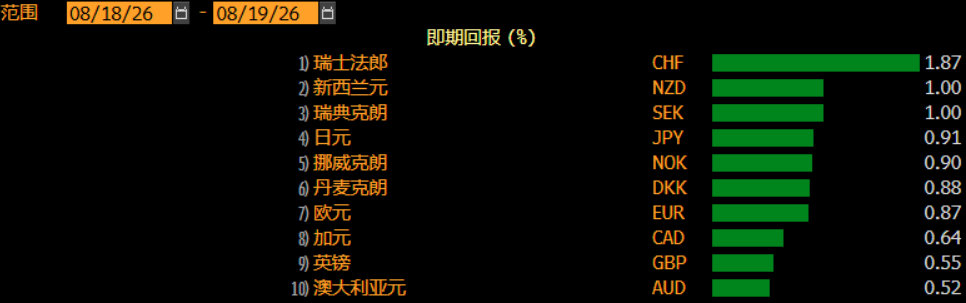
As one of the most preferred funding currencies in the FX market, since 2024 the CFTC net position in the Swiss franc has only been either "major short" or "extreme short." After the surge on August 19, weekly net shorts in CHF sharply decreased by 16%. Is a squeeze rally in CHF about to happen?
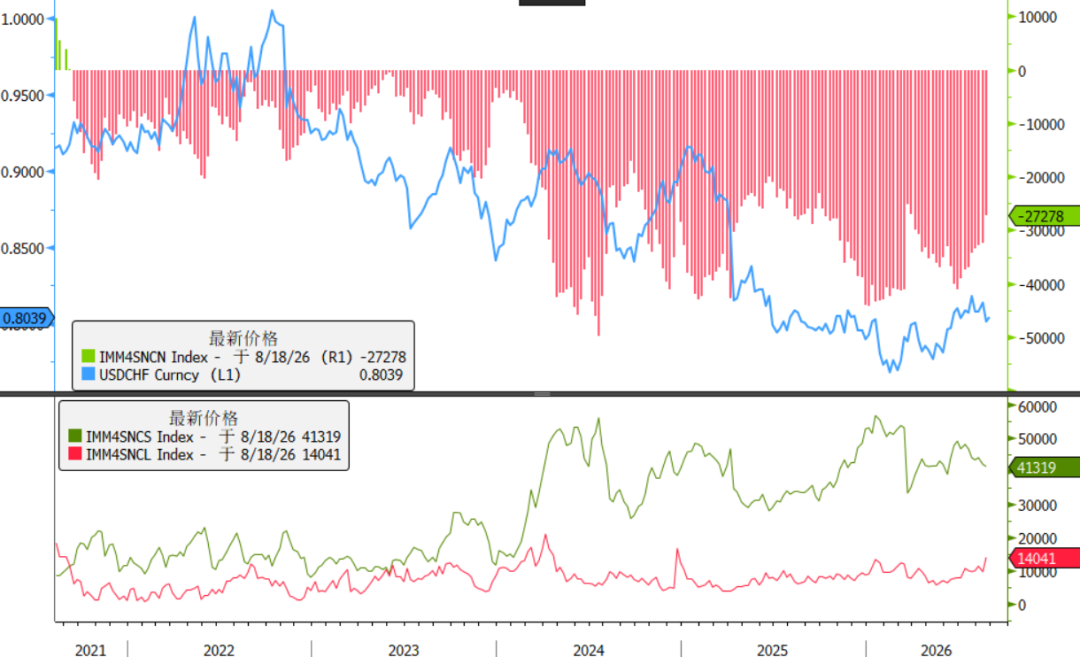
First, let’s clarify the short-term logic behind the rapid appreciation of the Swiss franc this time:
Interest rate differential: The U.S. Treasury is attempting to suppress long-term yields, capping dollar interest rates. USD carry trades are taking profits, and CHF, with the heaviest short positions, benefits the most.
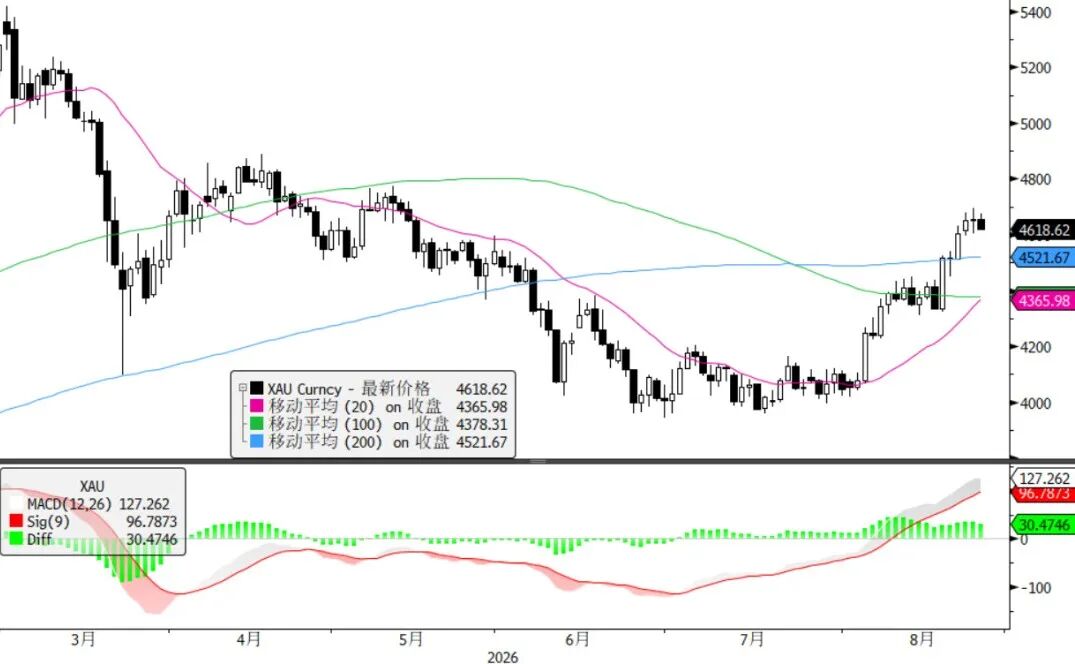
Resonating with gold: The credibility of the USD is under pressure, gold acts as an alternative. In just one week it surged from 4,330 to 4,700, providing price support to the Swiss franc.
But looking ahead, has the medium-term logic of the Swiss franc as a funding currency reversed? Possibly not.
Low interest rate stance: At the end of July, Swiss media reported that the Swiss National Bank expects to maintain zero rates until the end of 2027. Both the central bank governor and voting members have stated that rates could go below zero if necessary.
-
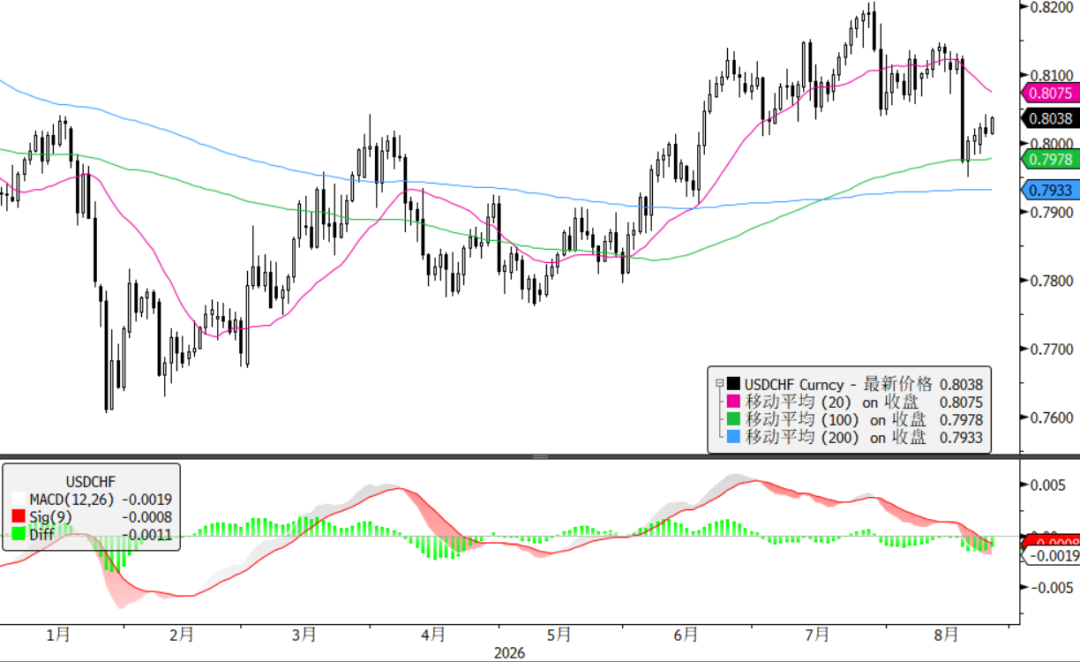
Central bank FX stance: At the June policy meeting, the Swiss National Bank made clear its increased willingness to intervene in the FX market, and the current USDCHF level is almost identical to that time.
Replacing yen as funding currency: Joint intervention by the U.S. and Japan has curbed much of the FX market’s yen-funded positioning. As an alternative to the yen, the Swiss franc is the obvious choice.
Weaker gold effect tailwind: Gold's rapid rally means that further upward movement from here will face greater resistance, so continued support for the Swiss franc from gold will be limited.
Therefore, in my view, CHF remains a key funding currency. On the bearish USD side, it makes sense to hold some long USDCHF to hedge longs in EUR, AUD, etc.—the 0.80 level may be an entry point worth watching.
Summary:
The U.S. Treasury's plan to ramp up long-term bond buybacks, combined with a favorable rate differential and rising gold prices, drove a rapid rally in the Swiss franc and a decrease in net short positions.
However, medium term, the Swiss National Bank's stance on low interest rates and intervention against franc appreciation, coupled with reallocation from yen shorts, still supports the Swiss franc as a funding currency. Even with gold rising, further upside for CHF is limited.
Consider going long USDCHF around the 0.80 mark to hedge short USD exposure (EUR or AUD).
Disclaimer: The content of this article solely reflects the author's opinion and does not represent the platform in any capacity. This article is not intended to serve as a reference for making investment decisions.
You may also like
After Waller's hawkish speech, the market focuses on "rate hikes", but Morgan Stanley says balance sheet reduction is more likely.
After the Jackson Hole meeting, the market's focus has shifted to interest rate hike expectations. However, Morgan Stanley economist Carpenter pointed out that Walsh's long-standing stance on reducing the $7 trillion balance sheet should not be overlooked. It is expected that the Federal Reserve may begin a balance sheet reduction of more than $1.5 trillion next year, partially replacing rate hikes.
BTC surpasses $78,000
AON plans to acquire USI for 17 billion USD, aiming at the SME insurance brokerage market.
According to informed sources, AON.US is close to reaching a deal valued at around $17 billion, including debt, to acquire insurance brokerage USI from private equity firm KKR.

2-Yr Benchmark Govt Yields - Germany vs Other Nations
Crypto prices
More


