
US Dollar Index Price Forecast: Bears prevail with the 200-day SMA capping rallies

The US Dollar (USD) nurses marginal gains on Wednesday and holds a mild recovery attempt from the three-month highs hit last week, but seems unable to extend gains past the 200-day Simple Moving Average (SMA), just above 99.00, which keeps the broader bearish structure intact.
Market volatility remains subdued this week, with investors awaiting US Personal Consumption Expenditures (PCE) Price Index data, due later on Wednesday, and the Jackson Hole summit later in the week, to make USD investment decisions.
Strategists at BNY observe that overall "U.S. exposures have stabilized," with the latest weekly update to their cross-border net U.S. asset positioning indicating that non-U.S. domiciled investors are no longer "pushing to further reduce their exposures." They also note that "outright FX hedges, measured by cross-border dollar holdings, have remained largely unchanged over the past two weeks."
Looking ahead, BNY experts advise investors to "watch dollar cash flows, FX hedging, inflation expectations and U.S. data," warning that "a sustained deterioration across these signals would confirm a shift from tactical diversification to structural U.S. exposure reduction."
Technical Analysis: Bulls need to breach the 200-day SMA
The Dollar Index is attempting to bounce up from three-month lows, but upside attempts remain capped below the 200-day simple moving average (SMA), at 99.15, which keeps the bearish trend in play. Momentum indicators remain within bearish territory with the Relative Strength Index (14), around 34, and the Moving Average Convergence Divergence (MACD) remains below zero, hinting at waning bearish momentum but not yet a clear reversal.
A clear break of the mentioned 200-day SMA and above a previous support area between 99.25 and 99.40 would improve bulls' confidence, shifting the focus to the August 18 and 19 highs, at the 99.70 area.
On the downside, bears were capped above the late May lows in the 98.70 area. A bearish reaction below that level would bring the May lows, at the 97.65 area, into focus.
Disclaimer: The content of this article solely reflects the author's opinion and does not represent the platform in any capacity. This article is not intended to serve as a reference for making investment decisions.
You may also like
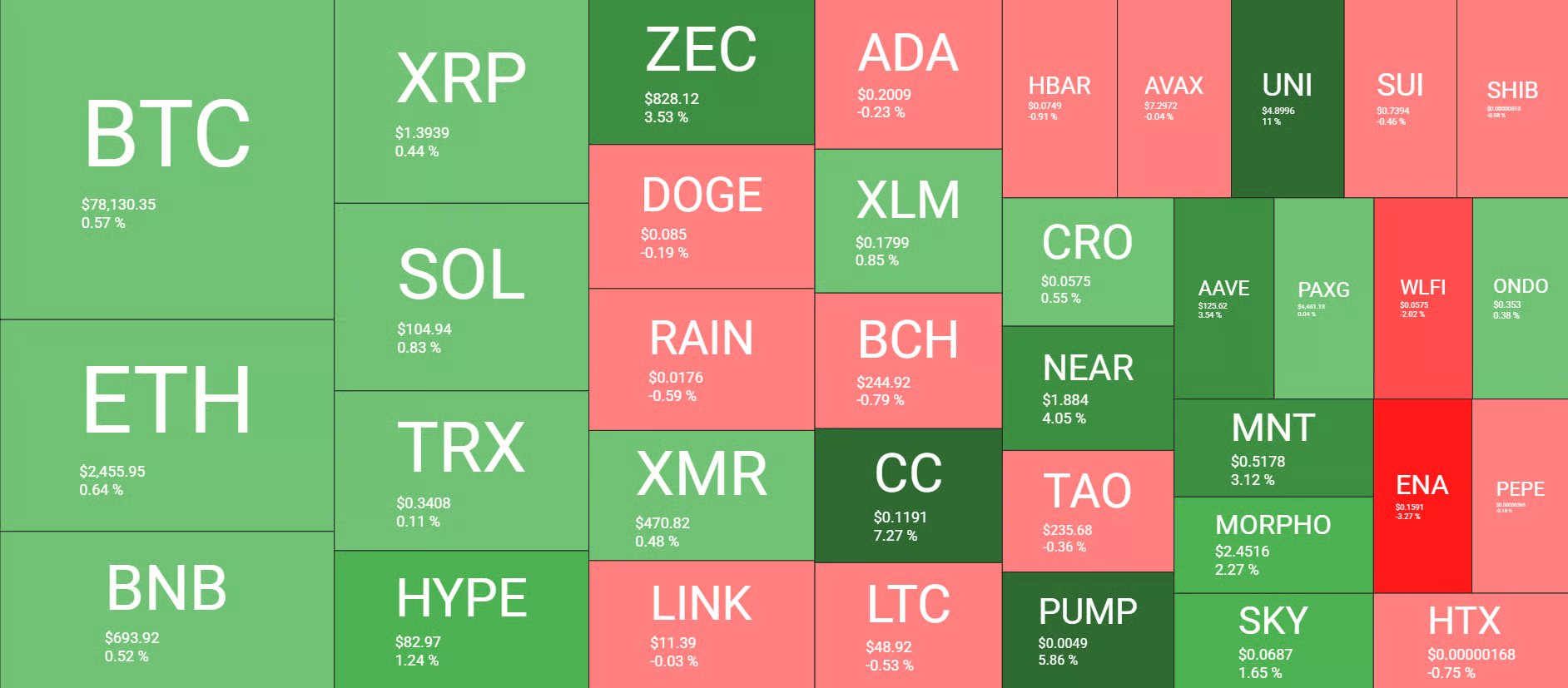
Pi Network’s PI Defends a Critical Support, Bitcoin (BTC) Reclaims $78K: Weekend Watch
Pons: $20.93 million has been paid to token creators over the past 47 days
XRP’s Crazy August Is Almost Over – September Could Be Even Bigger
Crude oil is "coming back", but refined oil is "not coming back"; the global refining gap is widening.
According to Goldman Sachs, global refined oil exports have declined by about 6 million barrels per day year-on-year, with the Gulf region and Russia contributing three-quarters of the decrease. Unlike crude oil, which can be rerouted, damaged refineries cannot be relocated, and the Gulf region's refined oil exports have only recovered to 40% of pre-war levels. Goldman Sachs expects global refinery utilization rates to recover only by the second half of 2027; based on this, it has more than doubled its forecast for diesel profit margins in 2027.
Crypto prices
More


