
Euro: How Much Further Can It Rise?

Morning FX
Last week, the euro performed impressively, breaking through the key resistance at 1.16 and surging above 1.17, before slightly pulling back on Friday night. After opening this Monday, the euro continued to retreat. Is this just a halftime pause, or has the rally ended?
1. Driving factors behind the current euro rally
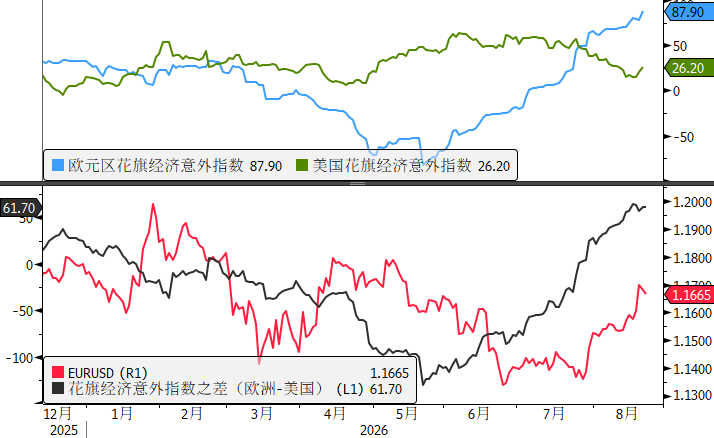
First, the widening difference in economic expectations between Europe and the US continues, providing fundamental support for the euro. Economic data in the eurozone for August rebounded across the board: Manufacturing PMI preliminary value rose to 52.8, the highest since May 2022; Services PMI held at 51.7; Composite PMI recorded 52.1, reaching a nine-month high. In contrast, core US data such as non-farm payrolls and retail sales continue to weaken, and the gap in the Citigroup Economic Surprise Index between Europe and the US is increasing.
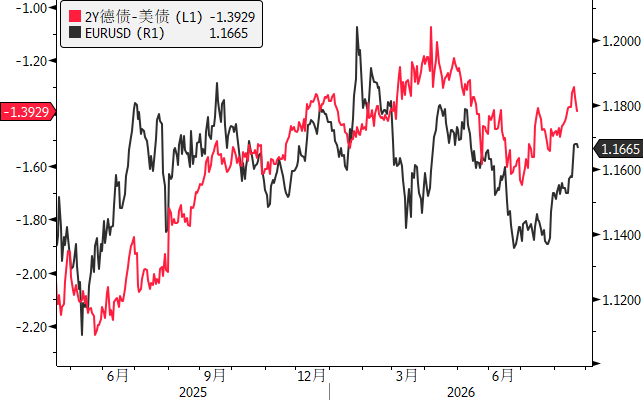
Second, the Euro-US yield differential favors the euro, with the 2-year German-US spread rising by 30bp since July, driving EURUSD upward. The rate market currently prices the probability of an ECB rate hike in September at 95%, meaning a hike is almost certain. The probability of a Fed rate hike in September is only 35%, and with US economic data continuing to weaken, it's highly likely the Fed will pause rate hikes in September. Due to the November midterm elections, if the Fed does not raise rates in September, it is very unlikely to start a hike cycle in October. Historically, the Fed has never started a rate hike cycle at the meeting preceding the Congressional elections.
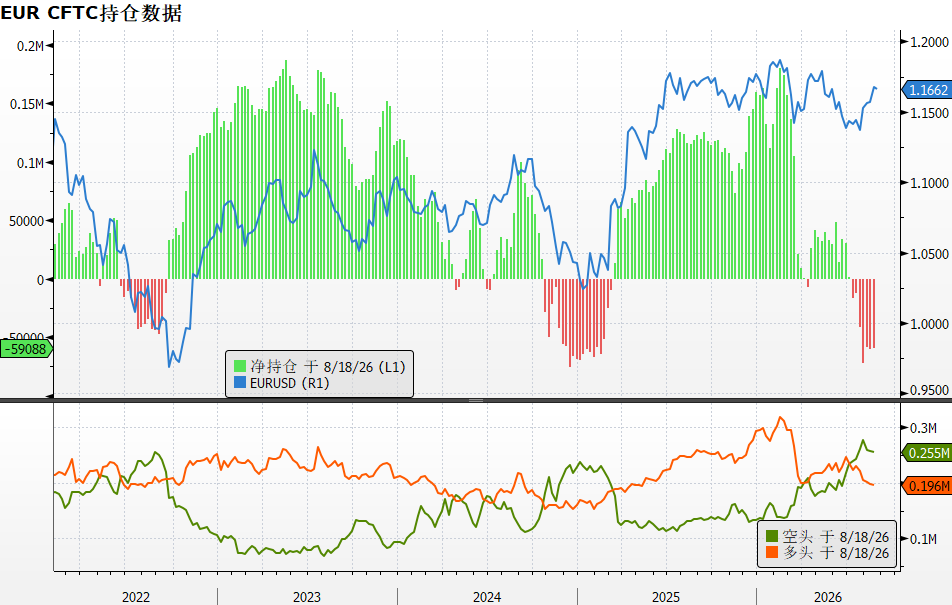
Third, concerns over US dollar credit are rising, and dollar bulls are continuously retreating. The catalyst for this euro rally above the 200-day moving average was the US Treasury's announcement to double long-term debt buybacks. This move raised market concerns about US debt risks and the dollar’s credit system, triggering crowded euro short positions to unwind.
2. Can the rally continue?
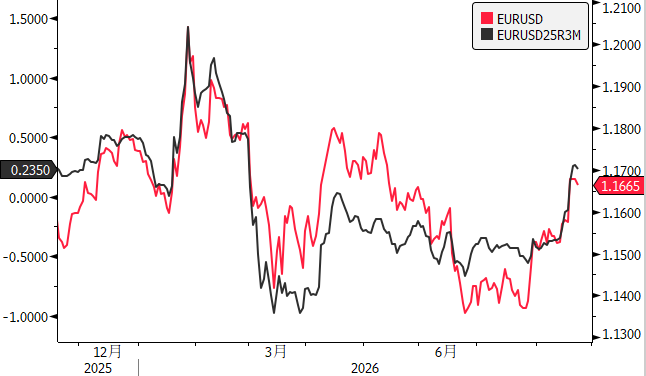
The above euro-positive factors are expected to continue supporting the euro’s rise in the medium to long term. From options market pricing, EURUSD RR has increased, with 3M 25D RR reaching its highest level since March this year, signaling the market remains bullish on the euro.
However, in the short term, the risk of a euro pullback is rising, as several upper resistance factors include:
On one hand, energy prices remain elevated, which is negative for eurozone trade conditions. Brent crude prices are still above $90, and European natural gas prices remain high. The risk of the Iran situation escalating further before the midterm elections cannot be ruled out in the medium term.
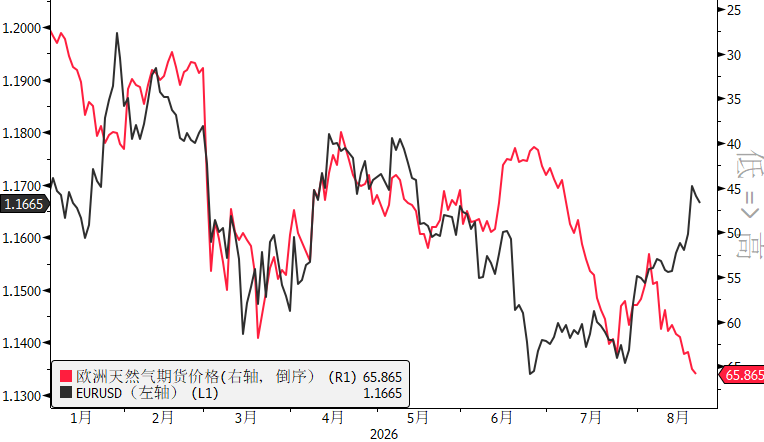
On the other hand, German political uncertainty limits upside potential. In September, Germany will hold autumn state elections. If the Alternative for Germany (AfD) performs better than expected, it will raise European political risk and negatively impact the euro.
3. Summary
1. Although the medium-term bullish logic for the euro remains unchanged (European economic outperformance, ECB rate hike, and concerns over US debt affecting dollar credibility), in the short term, these positives may have been largely priced in, and the euro lacks further drivers to break above 1.18 in a unilateral move.
2. Continuously high energy prices will be a cap for the euro’s upside. Technically, EURUSD may need to retest the area around 1.16-1.1630 first. It is advised to wait for a pullback before taking long positions.
3. The main event to focus on this week is the Jackson Hole meeting, with the theme of “Financial Innovation: Impacts on Payments and Policy.” Fed Chair Walsh (speaking at 10 PM Beijing time, August 28) is unlikely to signal anything for the September meeting, so market volatility may be limited. It is expected that markets may continue with a low-volatility pattern this week.
Disclaimer: The content of this article solely reflects the author's opinion and does not represent the platform in any capacity. This article is not intended to serve as a reference for making investment decisions.
You may also like
New York gold prices rose on the 24th

RBA Minutes: Board ready to raise rates if upside risks materialise
Macro policy shift sparks a broad rebound in crypto assets; bitcoin surges more than 20% in three days, marking its biggest gain since 2023.
On Monday, Bitcoin and cryptocurrency-related stocks continued last week’s rally. Amid growing investor concerns over inflation and fiscal deficits, the flagship cryptocurrency broke through its previous trading range, with its price continuing to climb.

Strong corporate earnings expectations and robust economic fundamentals! Cantor bets on the AI boom to drive further gains in US stocks
Cantor Fitzgerald analyst Eric Johnston remains bullish on the U.S. stock market heading into the end of the year, expecting tech stocks to lead the market higher.

Crypto prices
More


