
Jake Claver: If You Hold XRP With No Trust In Place, You Need to See This

Business leader Jake Claver recently urged XRP investors to think beyond market performance and consider how their holdings could affect their estates in the future.
Claver said investors who hold XRP without a trust in place may expose a significant portion of their wealth to federal estate taxes if the value of their assets exceeds the current exemption limits.
Claver stated that the federal estate tax exemption for 2026 stands at $15 million per individual and $30 million for married couples. He noted that any portion of an estate above those thresholds could face a federal estate tax rate of 40%. His comments focused on the importance of planning before an investment grows substantially in value rather than waiting until after significant appreciation has occurred.
Trusts Can Remove Future Appreciation From a Taxable Estate
Claver explained that placing XRP into a trust while the position remains relatively small can provide long-term estate planning benefits. He said a trust can move future appreciation outside of a person’s taxable estate while also making it easier for heirs to gain access to the digital assets after the owner’s death.
His comments reflect a common estate planning strategy involving irrevocable trusts. When assets are transferred into such a trust, the transfer uses the asset’s value at the time of the gift.
Any increase in value after the transfer generally remains outside the grantor’s taxable estate. As a result, investors who expect substantial long-term appreciation may reduce future estate tax exposure by acting before the asset’s value rises significantly.
Claver added that the tax code favors individuals who plan and encouraged investors to establish these arrangements while transferring the assets remains relatively straightforward.
Digital Asset Access Remains a Key Estate Planning Concern
Beyond taxation, Claver highlighted another issue that is unique to cryptocurrency ownership. He noted that trusts can help ensure beneficiaries can’t access wallet credentials and private keys when the original owner is no longer able to manage them.
Unlike traditional financial accounts, cryptocurrencies often rely on private keys, seed phrases, or hardware wallets that cannot be recovered through standard banking procedures. Without clear legal instructions and secure succession planning, heirs may permanently lose access to digital assets even if they are legally entitled to inherit them.
While Claver focused on federal estate taxes, estate planning professionals also note that several U.S. states impose separate estate or inheritance taxes with exemption thresholds that are considerably lower than the federal limit. They also emphasize that irrevocable trusts require individuals to give up direct ownership of the transferred assets, making professional legal guidance essential before implementing such a strategy.
Claver’s message encouraged XRP holders to view estate planning as part of their overall investment strategy. Rather than concentrating solely on price appreciation, he suggested that preparing for taxation and succession early can help preserve more of an investment’s long-term value for future generations.
Disclaimer: The content of this article solely reflects the author's opinion and does not represent the platform in any capacity. This article is not intended to serve as a reference for making investment decisions.
You may also like
Negative Comments About Bitcoin Have Reached Record Levels: What Does This Mean?
Crypto Futures Liquidations Surpass $101 Million in One Hour as Market Volatility Spikes
Bitcoin World Live Feed Adjusts Weekend Hours: What Traders Need to Know
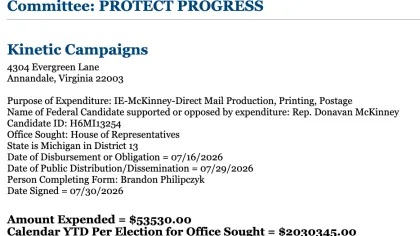
Crypto PAC pours another $1M into Michigan House race
Crypto prices
More


