
Bitcoin accumulation addresses absorb 67K BTC as miner-led selling falls: Data

Bitcoin (BTC) demand from long-term holders increased by 48.5% over the past seven days. This rise in accumulation coincided with a sharp decline in Bitcoin miners’ selling activity, as the Miners’ Position Index (MPI) dropped to levels last seen in 2024.
The development highlights a phase where long-term participants are steadily absorbing Bitcoin, while selling from the miners continues to decrease.
Bitcoin accumulators expand as miner outflows cool down
CryptoQuant data shows that the demand from accumulator addresses lifted holdings to roughly 205,000 BTC on March 30 from 138,000 BTC on March 23. The increase follows a drawdown from a March peak near 210,000 BTC, marking a renewed phase of demand from long-term participants.
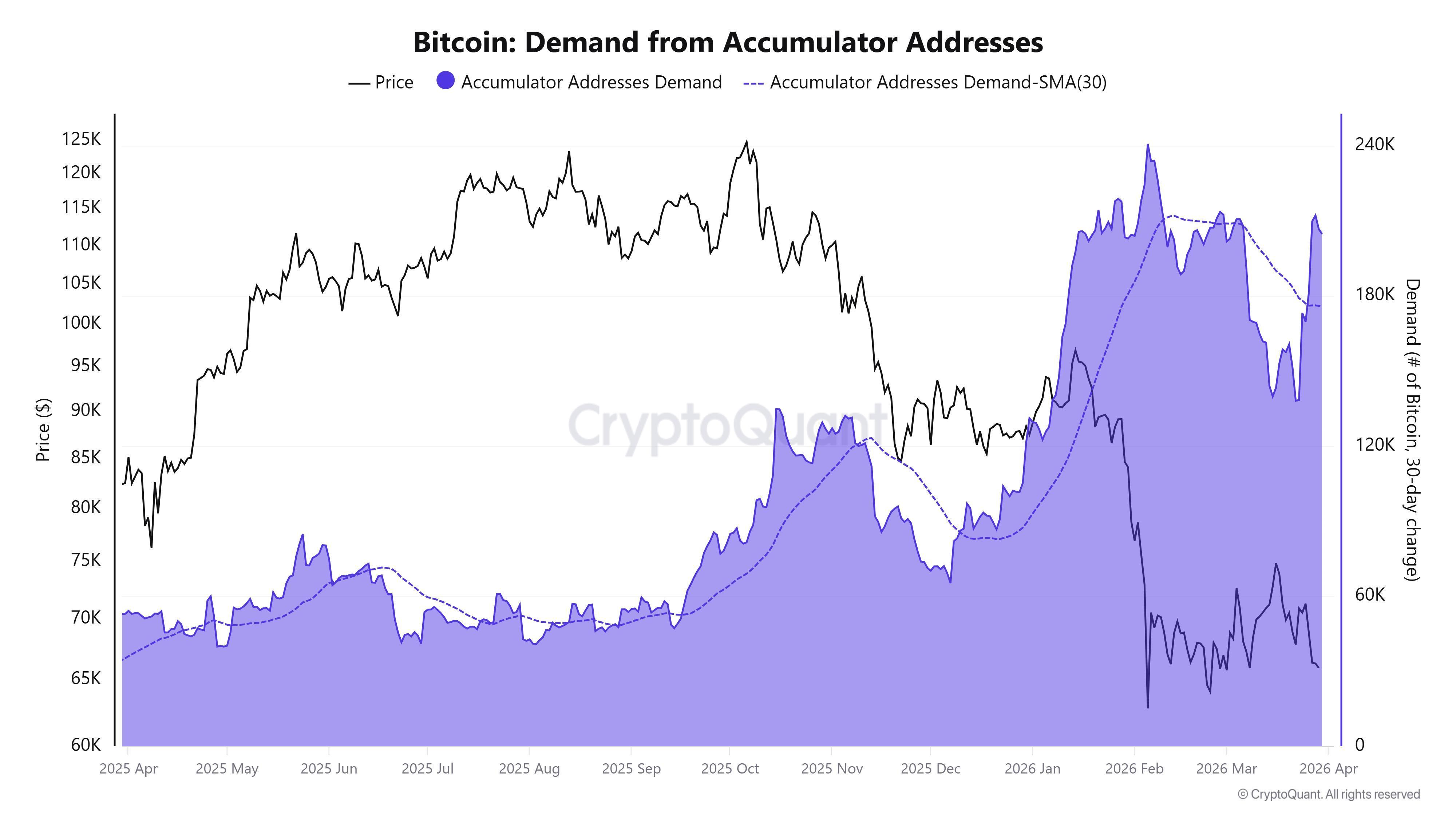 Bitcoin demand from accumulator addresses. Source: CryptoQuant
The BTC accumulation increased during the recent price decline, indicating an active absorption of available supply.
At the same time, Bitcoin miners' behavior has shifted. Crypto analyst Nino highlighted that the Miners’ Position Index (MPI) 30-day moving average has dropped to -1.042, a level last seen in 2024 lows.
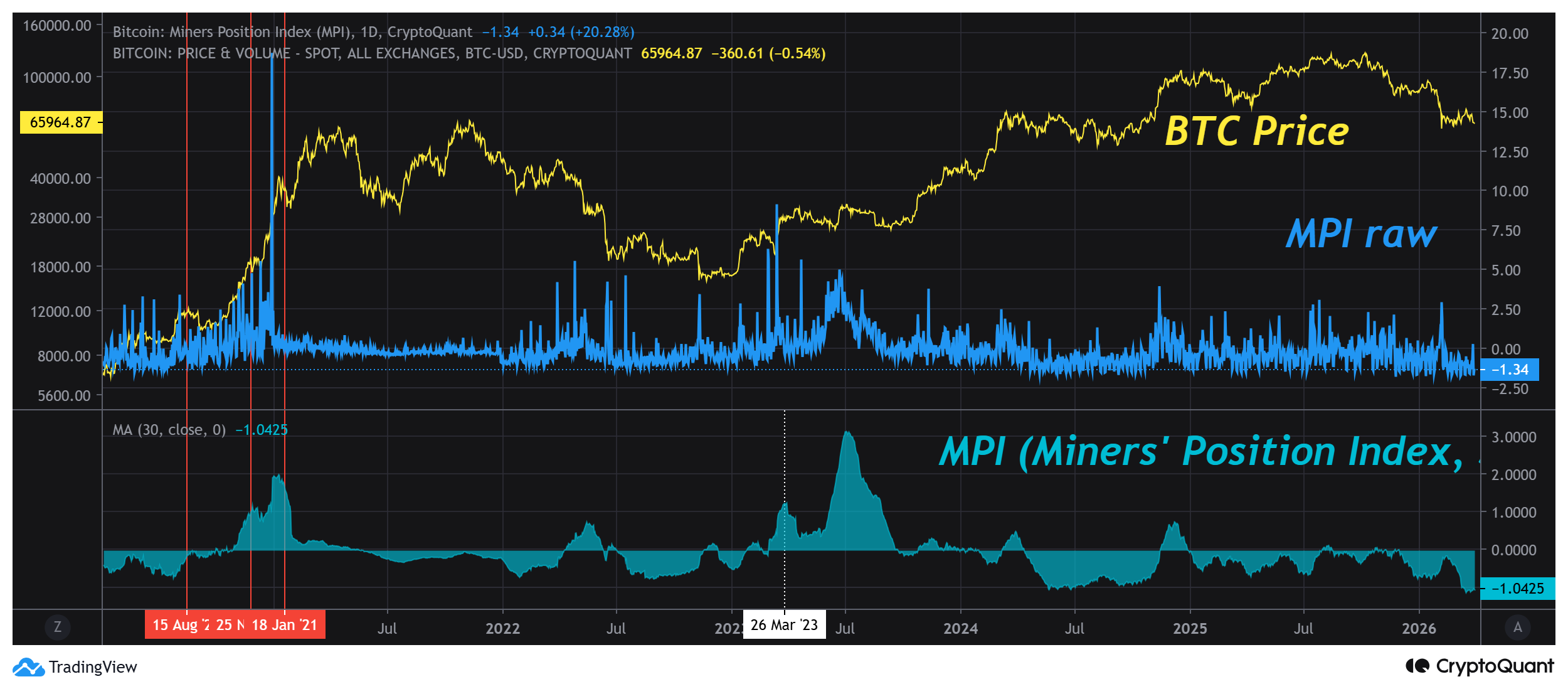 Bitcoin miner position index. Source: CryptoQuant
MPI measures the ratio of total miner outflow to its one-year average. Lower values imply reduced selling relative to historical norms. This indicates fewer coins are entering circulation from miners, easing immediate sell-side pressure.
The rising accumulator balances and lower miner selling reduce the amount of Bitcoin entering the market. This points to a phase where long-term holders are buying while miners are selling less.
BTC exchange flows signal fading demand
The short-term positioning on exchanges exhibits a different pattern. Binance’s seven-day net taker flow slipped to negative $1.2 billion on Monday, aligning with the recent downside pressure. Earlier in March, the same metric recorded a positive $3.28 billion flow on March 15. The reversal highlights an increase in aggressive sell pressure across derivatives markets.
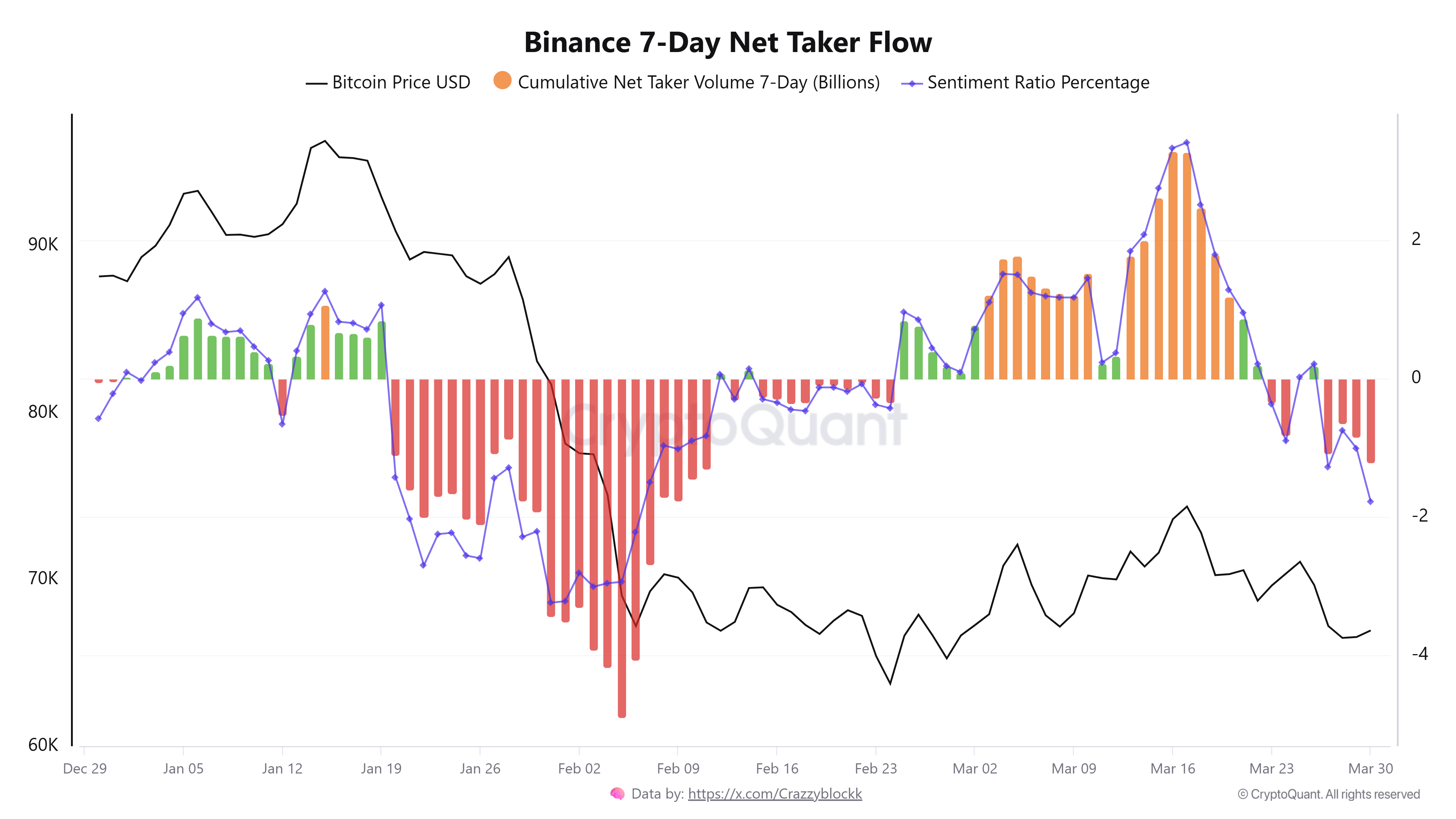 Bitcoin seven-day net taker flow on Binance. Source: CryptoQuant
The sentiment data reinforces this shift. The Bitcoin Unified Sentiment Index sits below the -50 threshold at -62.9%, compared with a near-neutral reading of -2.42 on March 15. The index combines derivatives positioning, volatility and volume signals to gauge directional bias. A reading below zero points to sustained sell-side dominance over recent sessions.
Even with the selling pressure visible on exchanges, the sentiment index moving back toward neutral territory marks a change from earlier extremes. Fear has eased while conviction on both sides stays limited, leaving the activity closely tied to liquidity flows around the current range between $75,000 and $60,000.
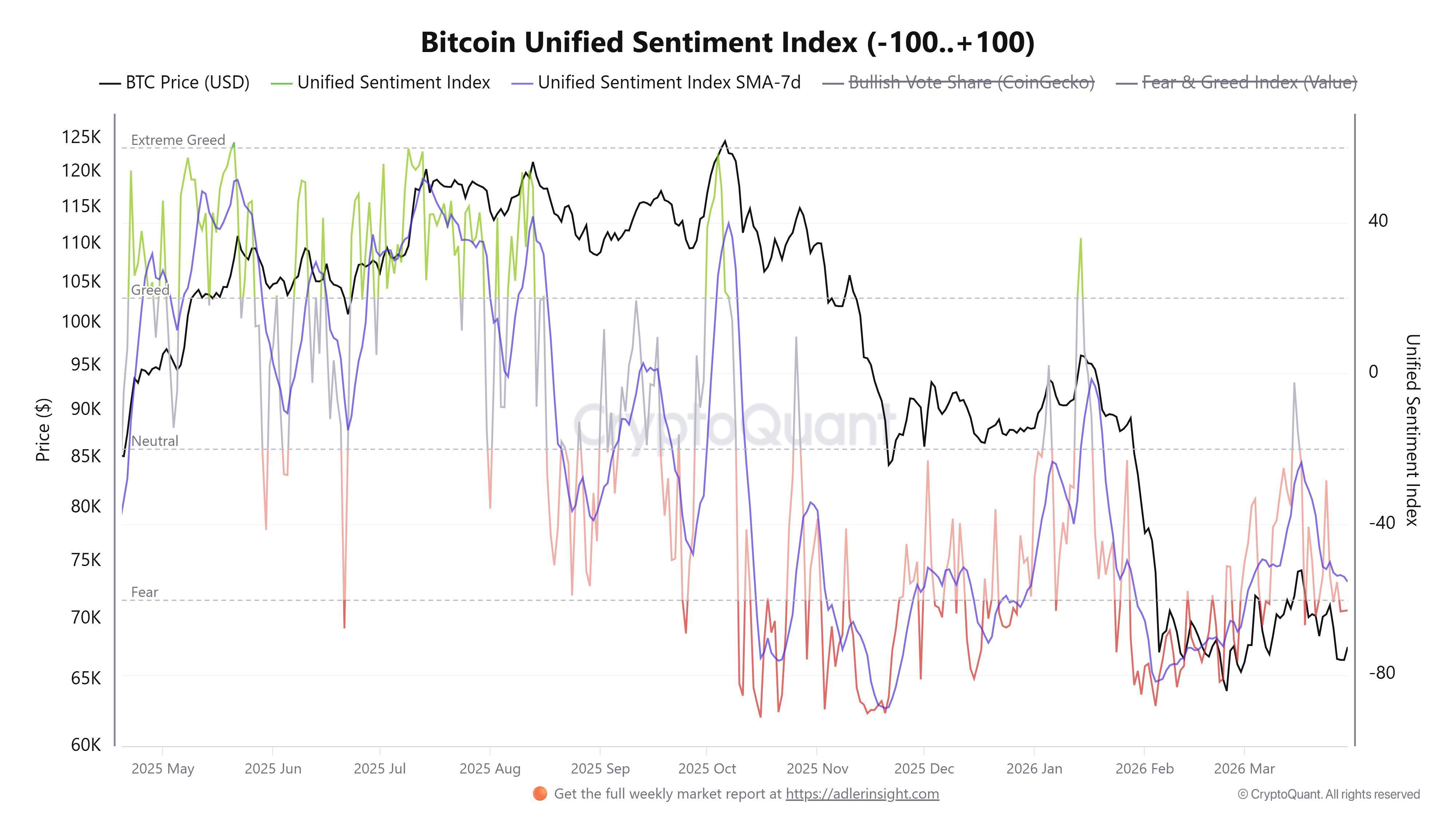 Bitcoin Unified Sentiment Index. Source: CryptoQuant
Disclaimer: The content of this article solely reflects the author's opinion and does not represent the platform in any capacity. This article is not intended to serve as a reference for making investment decisions.
You may also like
Bitcoin-Nasdaq ratio falls 62%, matching prior cycle lows as ETFs rebound
Sberbank to accept BTC, ETH, USDT as loan collateral under Russia’s new crypto rules
Ripple donates $300,000 to support Nepal, Tibet flood disaster relief
Krugman: What Walsh "didn't say" is more important than what he "said"
"We have a normal Federal Reserve Chair." Krugman believes that Waller did not signal a rate cut, did not mention balance sheet reduction, and abandoned alternative inflation metrics, demonstrating a traditionally hawkish stance unresponsive to political pressure. The biggest contradiction lies in the fact that while Waller emphasizes short-term interest rates as the core tool and opposes unconventional policies, at the same time, the Treasury's Besant is advancing a long-term bond purchase plan, which in essence is quantitative easing.
Crypto prices
More


