
Why Do We Need Bitcoin L2s?

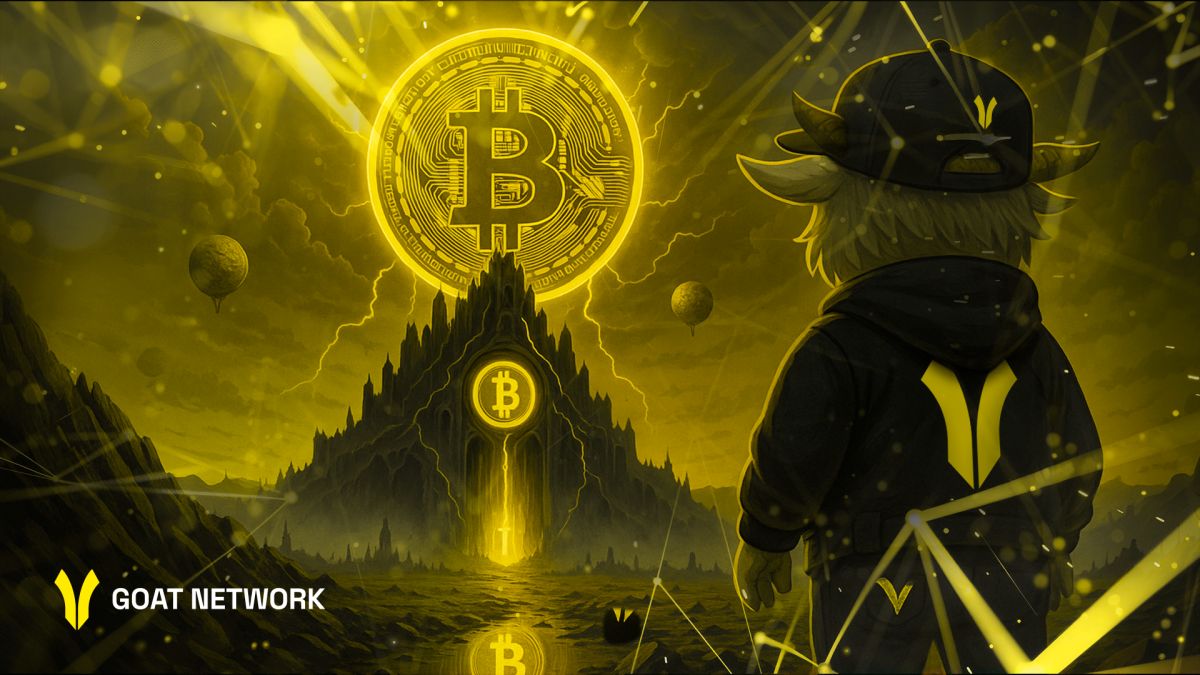
With bitcoin the asset smashing all-time highs every month, and its parent the Bitcoin network regarded by experts as the undisputed leader in blockchain security, it’s fair to ask: does Bitcoin need any help?
And diving even deeper: If the Bitcoin network is the pinnacle, why do we need Bitcoin L2s?
Layer 2 Networks: The Answer to Dwindling Miner Rewards
The biggest appeal of the Bitcoin mainnet is its security. But that security assumption depends largely on the economic incentive that Bitcoin miners get.
With Bitcoin halving events making mining rewards increasingly scarce, those incentives are at risk, with miners now only able to earn a sliver of transaction revenue.
That means the underlying security and health of the Bitcoin network depends on finding additional sources of rewards – such as rewards based on transaction fees, as seen on GOAT Network.
Generally speaking, the more transactions that happen on Layer 2, the more finality will be needed on the Bitcoin network…and miners will in turn benefit from all of those transactions. So a healthy and prosperous L2 ecosystem will bring in more transactions, and more revenue streams to incentivize security mechanisms.
That makes healthy and prosperous Layer 2 networks a must-have for the Bitcoin ecosystem.
Layer 2 Networks: The Key to Off-Chain Computations
Though it’s known as the gold standard for blockchain security, the Bitcoin network still has a lot of limitations. Most notably, it lacks the programmability of other blockchains, like Ethereum.
That means complex computations, such as the kind you would need to run robust decentralized finance (DeFi) apps, need to happen off-chain.
In the blockchain network, off-chain computations typically happen on Layer 2 networks. A Layer 2 network processes transactions for the Layer 1 parent chain, enabling faster and cheaper finality, with the Layer 1 network only needed for final verification and ledger recording.
Five years ago, networks known as side chains helped the Ethereum parent chain process transactions faster and cheaper than possible on Layer 1. But it wasn’t until Optimistic Rollup technology emerged that protocols could imbue that tech into their native bridge, and thus become true Layer 2 networks that inherited native Ethereum security.
The Bitcoin ecosystem today finds itself in the same situation as Ethereum was in five years ago, with numerous projects claiming to be Layer 2s, but none of them yet at the point of development to justifiably make that claim.
Bitcoin, ZK Proofs, and Native Bitcoin Security
If you want to offload computations from the Bitcoin network to an off-chain environment, the fastest, most efficient approach is to use zero-knowledge proofs.
Unfortunately, the development of zk proofs within the Bitcoin ecosystem has been fraught with challenges, as zero-knowledge technology in new sandboxes (such as within the Bitcoinsphere) can be bandwidth-intensive, and thus slow and clunky.
That’s where GOAT Network comes in.
GOAT Network is a Bitcoin zk Rollup that boasts one of the fastest zero-knowledge virtual machines in the industry. GOAT uses real-time zk proving , so that the same complex computations that can overwhelm Bitcoin mainnet happen in seconds on GOAT.
With that said, introducing off-chain computations raises security questions. If transactions occur off-chain, how can we be sure those transactions still benefit from native Bitcoin security, thus ensuring the security of your assets?
GOAT Network is building BitVM2 , an advanced form of technology that enables zk proofs to be verified and finalized on Bitcoin mainnet. If any disputes happen, Bitcoin miners can decide if that block or that transaction is valid or not.
In short, once a Bitcoin ecosystem chain imbues its native bridge with BitVM2 tech, it earns the right to be called a true Bitcoin Layer 2 network, one that can legitimately claim to inherit native Bitcoins security…the same way Optimistic Rollups earned the right to be called true L2s years ago.
Yield and Utility, Not Just Security
While we all want to know that our assets are secure, what many blockchain users crave the most is the ability to earn attractive yields.
GOAT Network enables BTC holders to earn yield in BTC. It does so in two key ways.
First, the network’s off-chain computation power enables the development of a lucrative and versatile suite of BTCFi dApps – from staking to restaking, borrowing and lending, yield and volatility markets, perpetuals trading, and more.
Second, GOAT’s proprietary economic model enables an architecture in which transactions on the network are paid in BTC, and that BTC transaction revenue is in turn shared with both sequencer node operators and stakers. The result is a flywheel effect, in which real network activity (not opaque Ponzinomics) fuels sustainable BTC yield. These types of opportunities could soon become essential for the health of the Bitcoin network.
Security, speed, yield opportunities – the future of Bitcoin will have all of the above. Its future depends on it.
"Bitcoin isn’t just about HODLing anymore."
— The Bitcoin Economy (@21RatesHQ) September 5, 2025
Kevin Liu @kevinliub CEO of @GOATRollup Network, explains how Bitcoin Layer 2 tech + zero-knowledge proofs (ZKPs) could unlock real yield for BTC holders:
Native security: Layer 2 inherits Bitcoin’s security assumptions.
Sustainable… pic.twitter.com/QmXyMurysc
Disclaimer: The content of this article solely reflects the author's opinion and does not represent the platform in any capacity. This article is not intended to serve as a reference for making investment decisions.
You may also like
While Meta and Alphabet raise concerns in the market over AI cash burn, Microsoft (MSFT.US) counters with over $10 billion in cash flow and leads AI commercialization from story to profit.
Microsoft released its financial results for the first quarter of fiscal year 2027 (ending September 30, 2026) after the U.S. stock market closed on Wednesday Eastern Time. Revenue, earnings per share, and Azure growth all exceeded market expectations.
Wall Street "ponders" Walsh's speech: suggests further rate hikes, but not by much
At a press conference, Walsh, backed by strong economic data (GDP over 3%, double-digit investment growth), refused to characterize current financial conditions as "tight," which the market interpreted as an indication that further rate hikes are still needed, although likely to a limited extent. Despite two internal dissenting votes, a hawkish committee member voted in favor, suggesting that most expect a catch-up hike in December. The futures market has already priced in one rate increase each in December and next March.
Six years of inflation pressure and two dissenting votes: Is the Federal Reserve poised for a December rate hike, with another possible in March next year?
The Federal Reserve holds rates steady; Waller hints at another possible rate hike in December, with additional hikes possible in early 2027. Inflation has failed to meet the target for six years, and futures have already priced in rate hikes for December and March.
Oracle Commits to AI Bet Yielding Returns Earlier Than Expected, Predicts Positive Free Cash Flow in Second Half of Fiscal 2028 and Reduced Capital Expenditures in Fiscal 2029
Hilary Maxson, Chief Financial Officer of Oracle, stated at Investor Day that Oracle expects its free cash flow to turn positive in the second half of fiscal year 2028, and to exceed $30 billion in fiscal year 2029—whereas the market previously expected this indicator to become positive only in fiscal year 2030. She also predicted that capital expenditures will decrease in fiscal year 2029, and set a cap of $20 billion for additional financing before fiscal year 2030. Following the news, Oracle’s stock price surged over 13%.
Crypto prices
More


