
PENGU vs. DOOD: Which Token is Winning the NFT Race?

PENGU vs. DOOD: A Tale of Two NFT Tokens
In the fast-evolving world of NFTs and crypto, two powerhouse projects have captured the spotlight: Pudgy Penguins and Doodles . Both launched their own native tokens—PENGU and DOOD—with ambitions to strengthen their ecosystems and reward their communities. But despite sharing similar goals, their strategies, market receptions, and token performances tell very different stories. In this article, we break down what’s common, what sets them apart, and how each token has performed since launch.
🔍 Overview
PENGU (Pudgy Penguins) DOOD (Doodles)| Launch Date | December 17, 2024 | May 8, 2025 |
| Blockchain | Solana | Solana |
| Total Supply | 88.88 billion | 10 billion |
| Community Allocation | ~25.9% via airdrop | 68% allocated to community growth |
| Initial Market Cap | ~$2.8 billion | Over $100 million |
| Current Price (as of May 13, 2025) | ~$0.0138 | ~$0.0057 |
| All-Time High (ATH) | $0.0692 on Dec 17, 2024 | $0.01314 on May 9, 2025 |
| Current Market Cap | ~$874 million | ~$45 million |
📈 Token Performance Since Launch
PENGU
- Launch Price: $0.05738
- All-Time High: $0.0692 on December 17, 2024
- All-Time Low: $0.003715 on April 9, 2025
- Current Price: ~$0.0138
- Performance: PENGU experienced heavy volatility after an initial surge, dropping over 50% shortly after launch. Despite this, it demonstrated resilience with a strong recovery early in 2025, including a notable 28% pump in January.
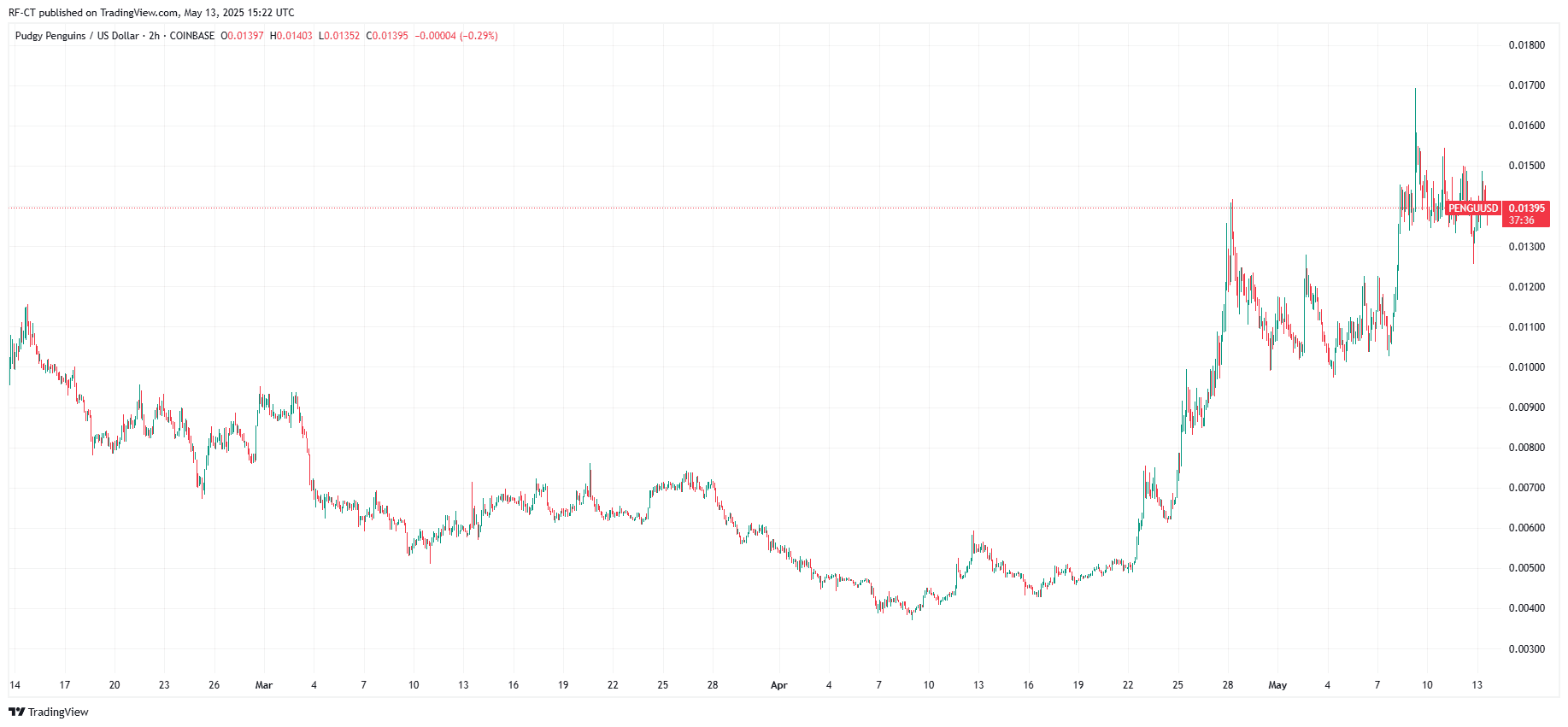 By TradingView - PENGUUSD_2025-05-13 (All)
DOOD
- Launch Date: May 8, 2025
- All-Time High: $0.00897 on May 9, 2025
- Current Price: ~$0.0057
- Performance: DOOD struggled to maintain its initial momentum. It faced an almost immediate drop of 40% in market cap, driven by confusion over its utility and the surprising choice of launching on Solana despite Doodles originally being an Ethereum-based collection.
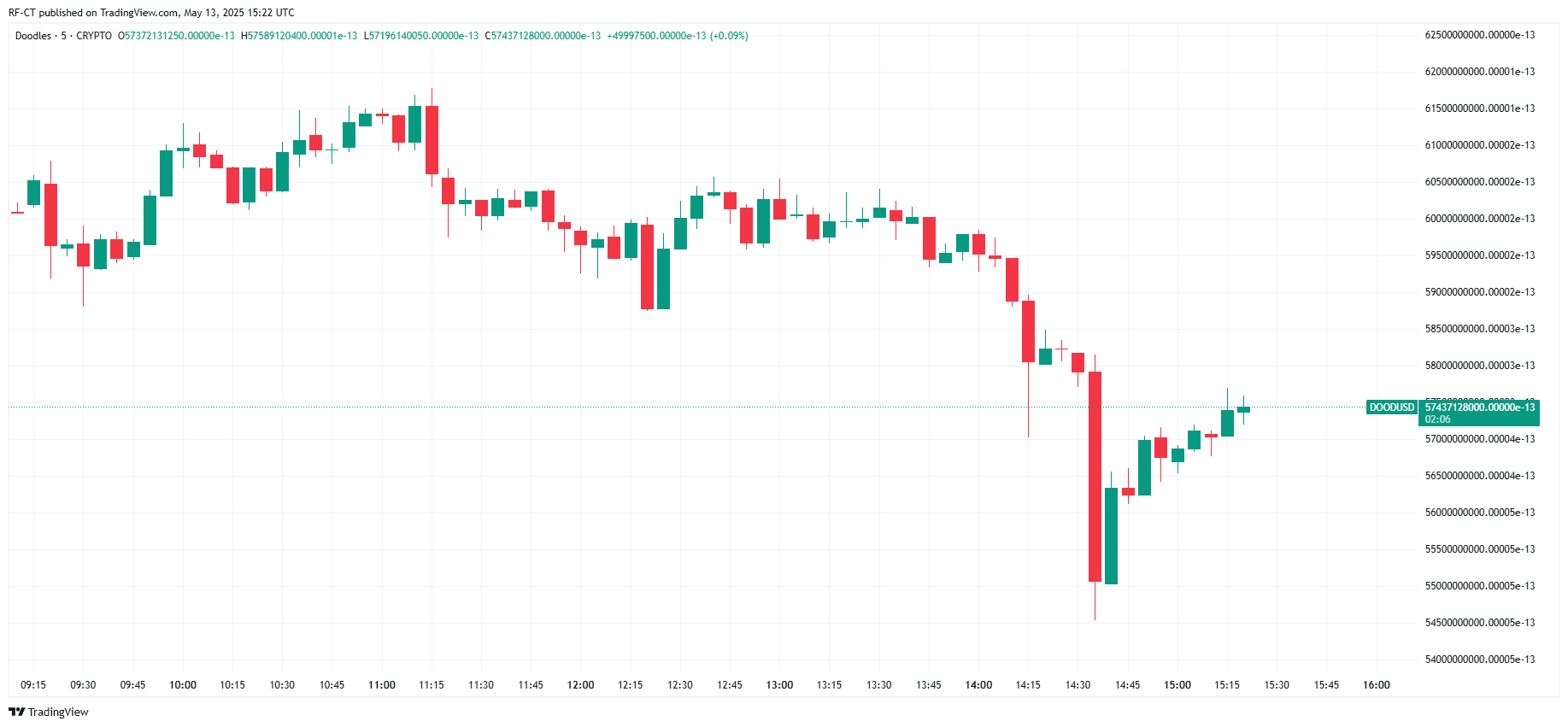 By TradingView - DOODUSD_2025-05-13 (All)
🔄 Commonalities
Blockchain: Both tokens launched on Solana , taking advantage of its speed and low transaction fees .
Community Focus: Both emphasized strong community involvement through significant token allocations.
NFT Ecosystem Expansion: PENGU and DOOD are both tied directly to their respective NFT projects, designed to reward holders and enhance ecosystem utility.
⚖️ Key Differences
Launch Timing: PENGU launched in December 2024, capitalizing on year-end market activity. DOOD launched in May 2025 but faced challenges from the start.
Token Utility: PENGU quickly integrated with physical products and brand partnerships like Walmart and Amazon. DOOD, however, is still in the early phases of defining its real-world utility.
Market Reception: PENGU has shown better resilience after initial volatility, while DOOD is still finding its footing in the market.
📊 Token Performance Summary
| PENGU | $0.05738 | $0.0692 | $0.003715 | ~$0.0138 | ~$874 million |
| DOOD | $0.01314 | $0.00897 | $0.005476 | ~$0.0057 | ~$45 million |
🧠 Conclusion
Both PENGU and DOOD represent bold moves by their parent NFT projects to grow beyond digital art into full-fledged ecosystems. While PENGU appears to have found stronger footing through tangible product integrations and wider brand appeal, DOOD’s journey is just beginning , and its success will largely depend on how effectively the Doodles team delivers real-world utility.
For investors and collectors alike, keeping a close eye on the development of each ecosystem is crucial, as the NFT space continues to blend with mainstream consumer markets.
PENGU vs. DOOD: A Tale of Two NFT Tokens
In the fast-evolving world of NFTs and crypto, two powerhouse projects have captured the spotlight: Pudgy Penguins and Doodles . Both launched their own native tokens—PENGU and DOOD—with ambitions to strengthen their ecosystems and reward their communities. But despite sharing similar goals, their strategies, market receptions, and token performances tell very different stories. In this article, we break down what’s common, what sets them apart, and how each token has performed since launch.
🔍 Overview
PENGU (Pudgy Penguins) DOOD (Doodles)| Launch Date | December 17, 2024 | May 8, 2025 |
| Blockchain | Solana | Solana |
| Total Supply | 88.88 billion | 10 billion |
| Community Allocation | ~25.9% via airdrop | 68% allocated to community growth |
| Initial Market Cap | ~$2.8 billion | Over $100 million |
| Current Price (as of May 13, 2025) | ~$0.0138 | ~$0.0057 |
| All-Time High (ATH) | $0.0692 on Dec 17, 2024 | $0.01314 on May 9, 2025 |
| Current Market Cap | ~$874 million | ~$45 million |
📈 Token Performance Since Launch
PENGU
- Launch Price: $0.05738
- All-Time High: $0.0692 on December 17, 2024
- All-Time Low: $0.003715 on April 9, 2025
- Current Price: ~$0.0138
- Performance: PENGU experienced heavy volatility after an initial surge, dropping over 50% shortly after launch. Despite this, it demonstrated resilience with a strong recovery early in 2025, including a notable 28% pump in January.
By TradingView - PENGUUSD_2025-05-13 (All)
DOOD
- Launch Date: May 8, 2025
- All-Time High: $0.00897 on May 9, 2025
- Current Price: ~$0.0057
- Performance: DOOD struggled to maintain its initial momentum. It faced an almost immediate drop of 40% in market cap, driven by confusion over its utility and the surprising choice of launching on Solana despite Doodles originally being an Ethereum-based collection.
By TradingView - DOODUSD_2025-05-13 (All)
🔄 Commonalities
Blockchain: Both tokens launched on Solana , taking advantage of its speed and low transaction fees .
Community Focus: Both emphasized strong community involvement through significant token allocations.
NFT Ecosystem Expansion: PENGU and DOOD are both tied directly to their respective NFT projects, designed to reward holders and enhance ecosystem utility.
⚖️ Key Differences
Launch Timing: PENGU launched in December 2024, capitalizing on year-end market activity. DOOD launched in May 2025 but faced challenges from the start.
Token Utility: PENGU quickly integrated with physical products and brand partnerships like Walmart and Amazon. DOOD, however, is still in the early phases of defining its real-world utility.
Market Reception: PENGU has shown better resilience after initial volatility, while DOOD is still finding its footing in the market.
📊 Token Performance Summary
| PENGU | $0.05738 | $0.0692 | $0.003715 | ~$0.0138 | ~$874 million |
| DOOD | $0.01314 | $0.00897 | $0.005476 | ~$0.0057 | ~$45 million |
🧠 Conclusion
Both PENGU and DOOD represent bold moves by their parent NFT projects to grow beyond digital art into full-fledged ecosystems. While PENGU appears to have found stronger footing through tangible product integrations and wider brand appeal, DOOD’s journey is just beginning , and its success will largely depend on how effectively the Doodles team delivers real-world utility.
For investors and collectors alike, keeping a close eye on the development of each ecosystem is crucial, as the NFT space continues to blend with mainstream consumer markets.
Disclaimer: The content of this article solely reflects the author's opinion and does not represent the platform in any capacity. This article is not intended to serve as a reference for making investment decisions.
You may also like
Meta (META.US) teen protection measures only cover US users, global regulatory replication risks emerge
Meta's recent changes to Instagram and Facebook currently apply only to users in the United States. These include restrictions on the amount of time young users can spend on the apps, as well as limits on disabling safety settings. These changes are part of a series of landmark settlement agreements aimed at addressing allegations that the social media networks pose safety risks to children, and could cost the company up to $18 billion.

Bilibili Q2 Net Profit Surges 55%, Advertising Becomes Growth Engine, Gross Margin Improves for 16 Consecutive Quarters | Earnings Report Insights
Bilibili's Q2 revenue reached 7.94 billion yuan, an 8% year-on-year increase, with a net profit of 339 million yuan, up 55% year-on-year. Advertising revenue rose to 3.13 billion yuan, a 28% year-on-year increase, making it the primary growth engine; game revenue declined by 14% due to a high comparison base. Gross profit margin improved for the 16th consecutive quarter to 37.2%, and operating profit grew by 48%. Daily active users (DAU) reached 116.5 million, with an average daily usage time of 113 minutes.
India’s Crypto Law Delayed Again: What the Latest VDA Hearing Cancellation Means for Investors

Crypto prices
More


