
The Bitcoin volatility index dropped to 58.17 yesterday, hitting a nearly two-month low
The BitVol index, launched by financial index company T3 Index in partnership with Bitcoin options trading platform LedgerX, fell to 58.17 yesterday, a daily drop of 3.9%, hitting a nearly two-month low.
Note: The BitVol index measures the expected implied volatility derived from tradable Bitcoin option prices over 30 days. Implied volatility refers to the volatility implied by the actual option price. It is calculated using the B-S option pricing formula, substituting all parameters except for volatility σ into the formula.
The actual price of an option is formed through competition among many options traders. Therefore, implied volatility represents market participants' views and expectations about future market conditions and is considered to be closest to real-time volatility at that time.
Disclaimer: The content of this article solely reflects the author's opinion and does not represent the platform in any capacity. This article is not intended to serve as a reference for making investment decisions.
You may also like
Pi Network’s PI Defends a Critical Support, Bitcoin (BTC) Reclaims $78K: Weekend Watch
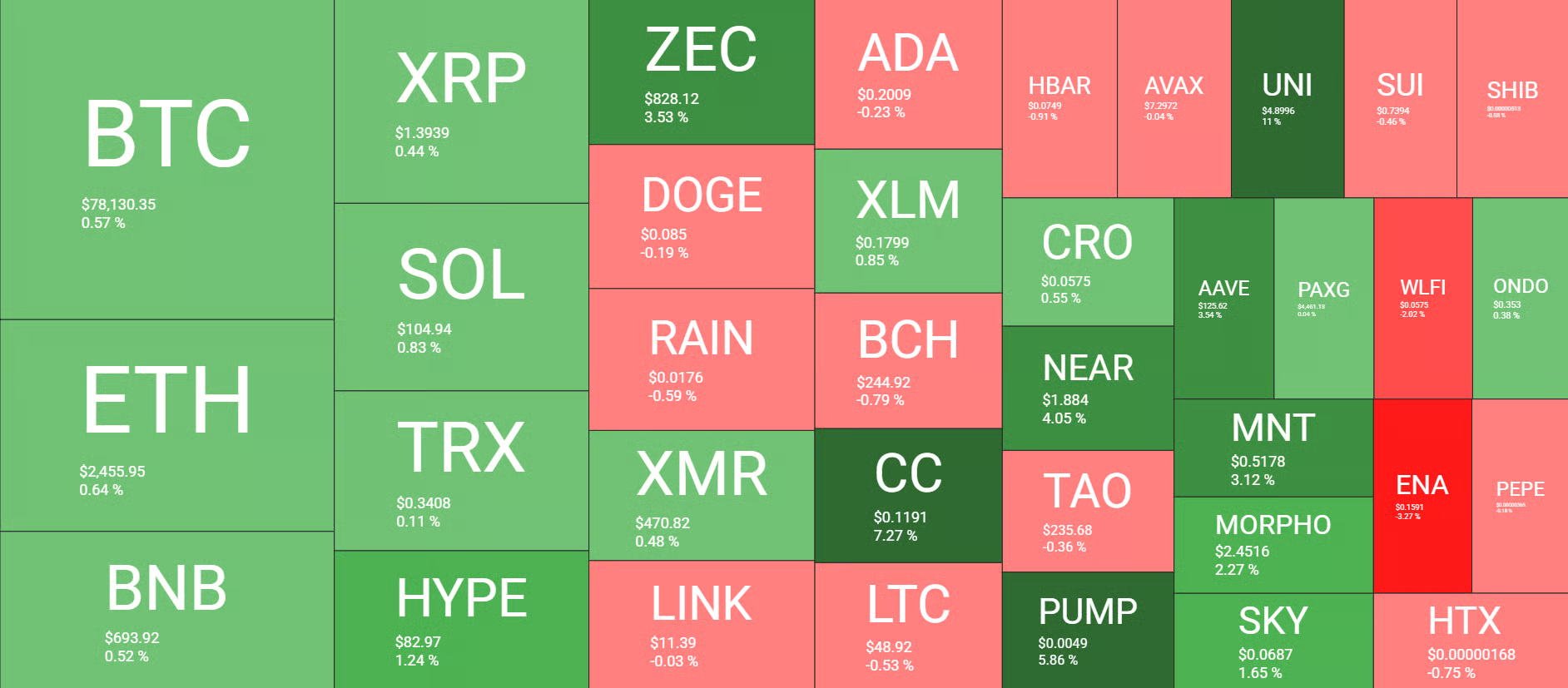
Pons: $20.93 million has been paid to token creators over the past 47 days
XRP’s Crazy August Is Almost Over – September Could Be Even Bigger
Crude oil is "coming back", but refined oil is "not coming back"; the global refining gap is widening.
According to Goldman Sachs, global refined oil exports have declined by about 6 million barrels per day year-on-year, with the Gulf region and Russia contributing three-quarters of the decrease. Unlike crude oil, which can be rerouted, damaged refineries cannot be relocated, and the Gulf region's refined oil exports have only recovered to 40% of pre-war levels. Goldman Sachs expects global refinery utilization rates to recover only by the second half of 2027; based on this, it has more than doubled its forecast for diesel profit margins in 2027.
Crypto prices
More


