
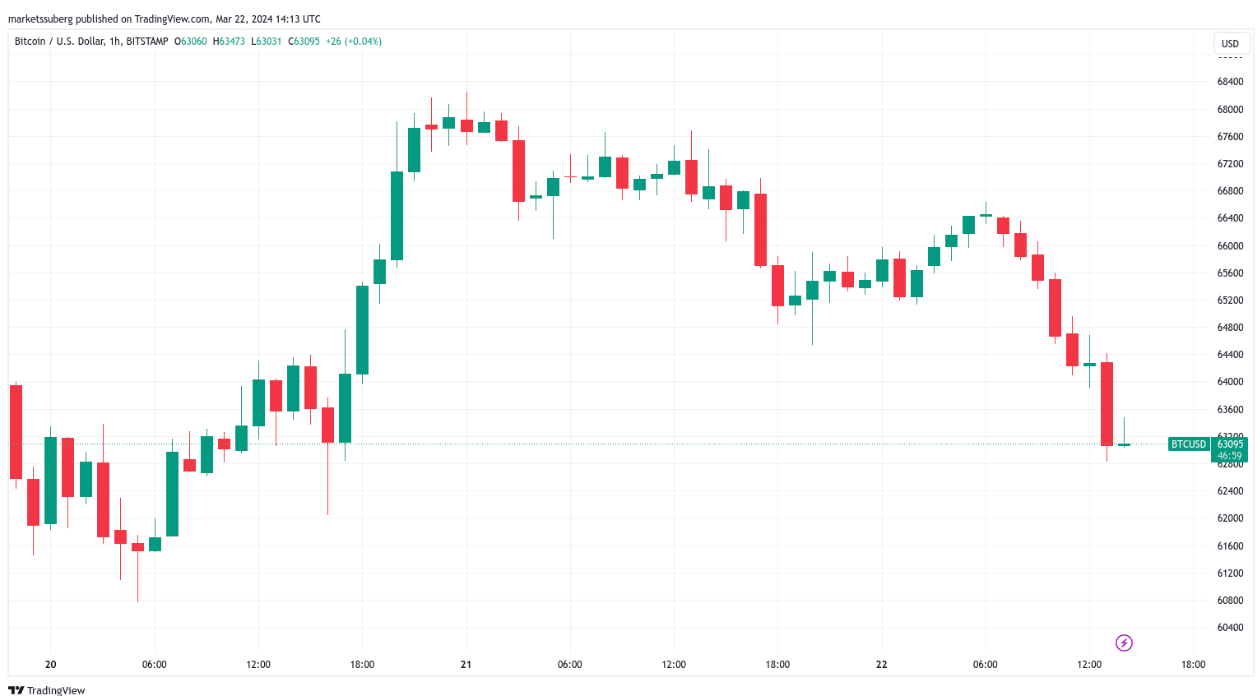
Bitcoin ( BTC ) plugged intraday lows at the March 22 Wall Street open despite lower outflows from the Grayscale Bitcoin Trust (GBTC).

Bitcoin bulls fail to catch a break as BTC price weakness defies a slowdown in GBTC offloading.
Bitcoin ( BTC ) plugged intraday lows at the March 22 Wall Street open despite lower outflows from the Grayscale Bitcoin Trust (GBTC).
Data from Cointelegraph Markets Pro and TradingView tracked limp BTC price performance as $63,000 returned to the radar.
The largest cryptocurrency failed to hold higher levels, which resulted from an earlier rebound , with its old 2021 all-time highs at $69,000 staying unchallenged.
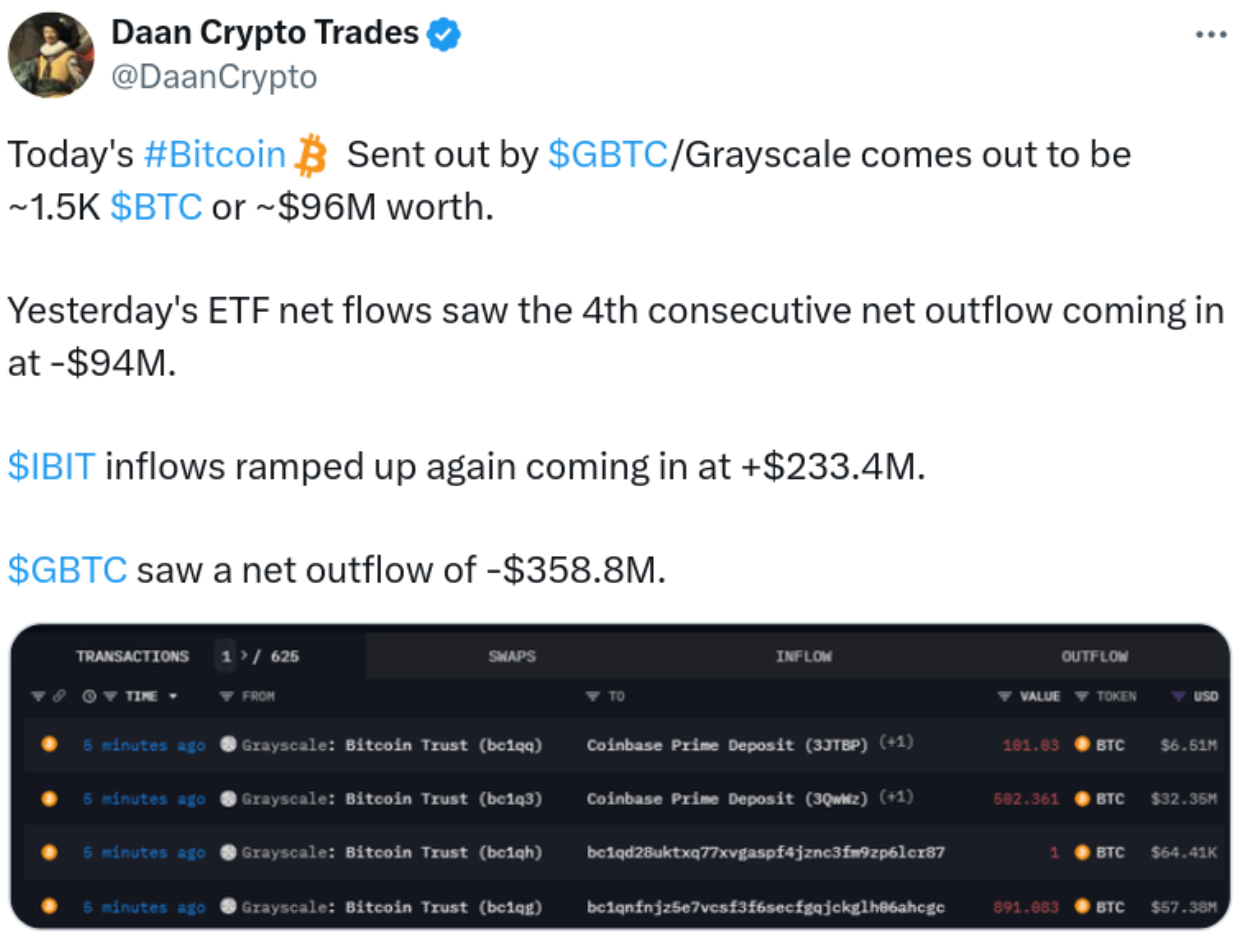
The day’s flows into and out of the United States spot Bitcoin exchange-traded funds (ETFs) began promisingly. GBTC saw just $96 million in outflows, per initial data from crypto intelligence firm Arkham — less than a third of the tally at the start of the week.
So far, every day this week has seen net outflows from the spot ETFs — a unique time in their short history.
Analyzing current BTC price action, popular trader Skew suspected deliberate moves to undermine bullish momentum.
“Looks like someone is trying to force a cascade here again during weak price action,” he commented in a post on X (formerly Twitter) about spot order book data from the world’s largest exchange by volume, Binance.
Skew added that it was “pretty clear” that certain traders were selling into price.
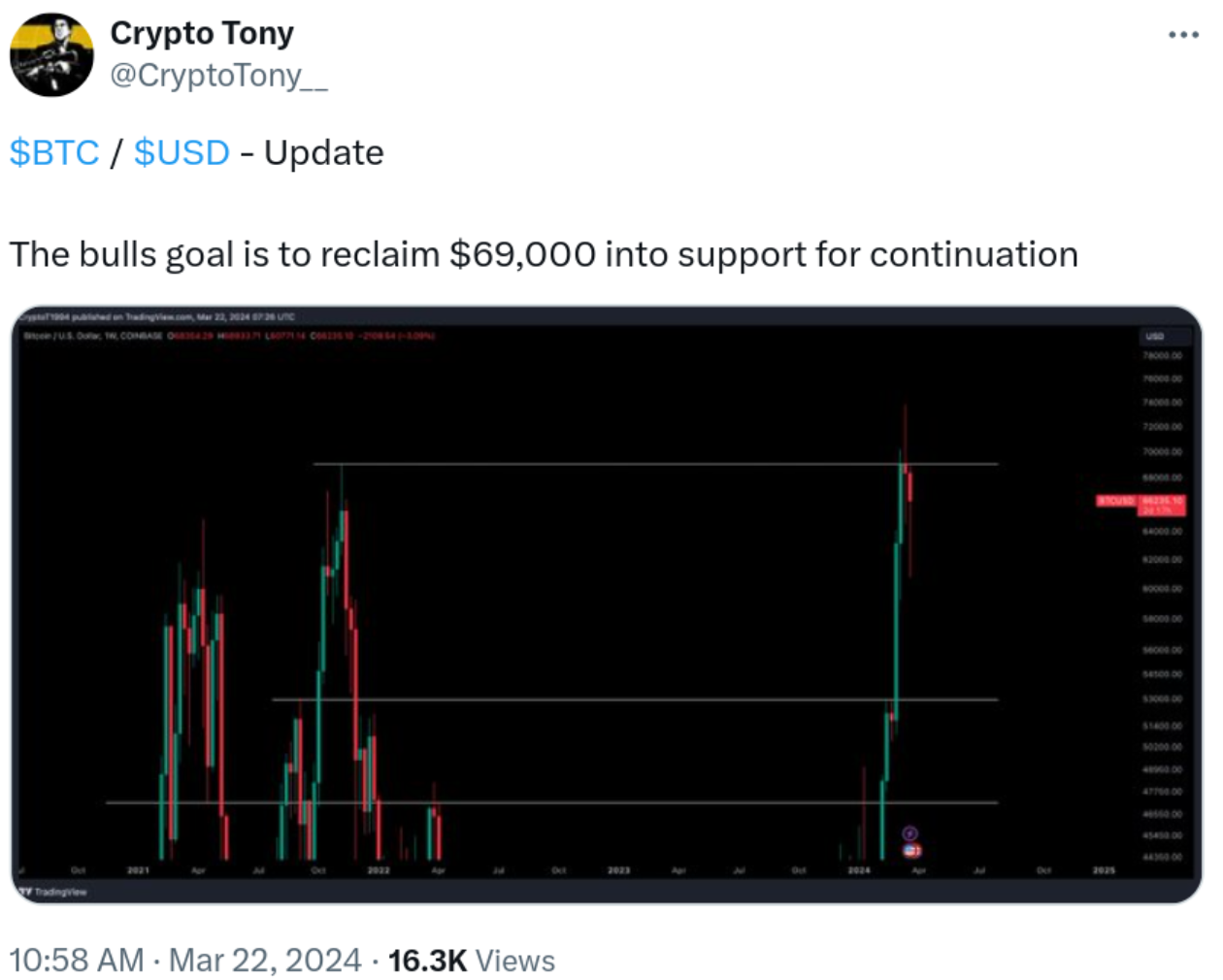
Fellow trader Crypto Tony joined those calling for a reclaim of $69,000 in order to ensure upside continuation.
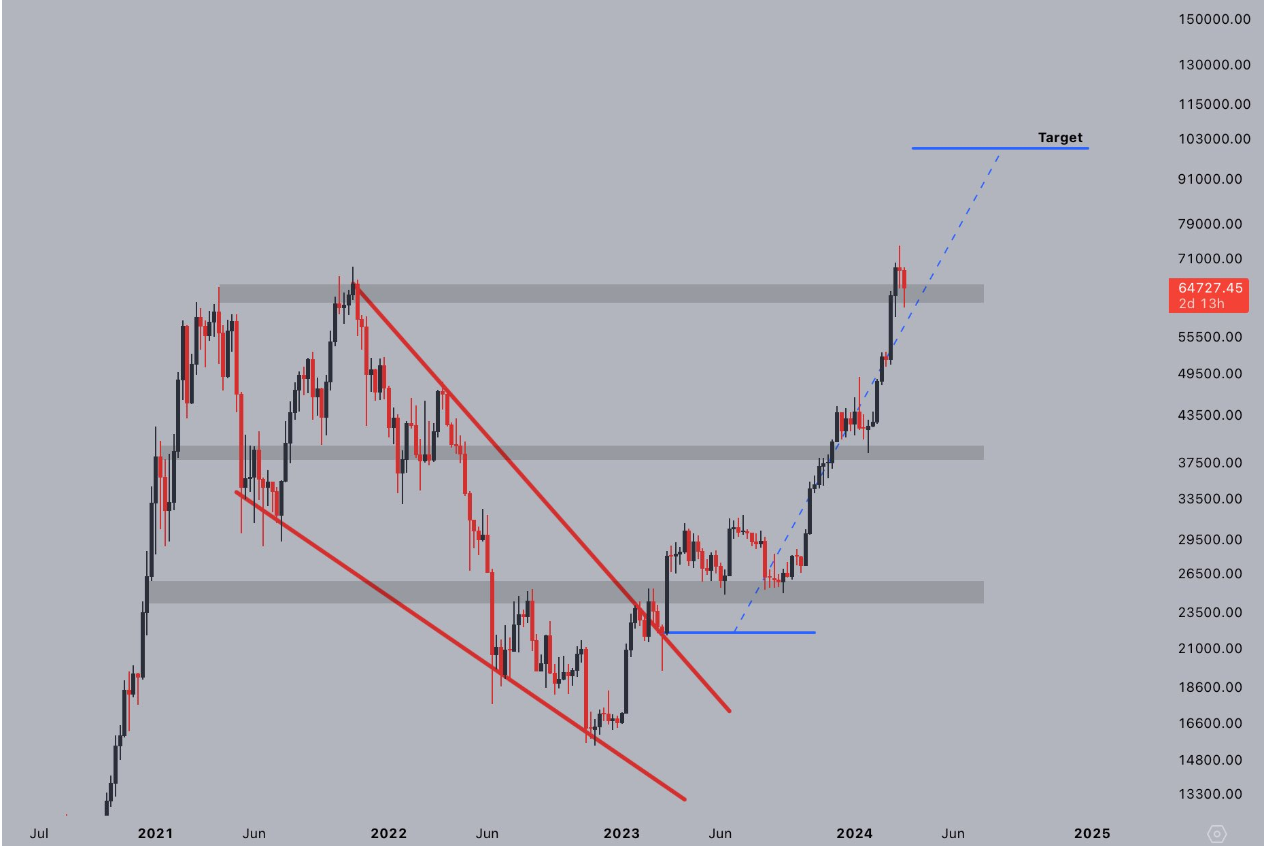
“All eyes on the weekly close,” trader Jelle continued.
Adopting a characteristically optimistic take on the market, Jelle outlined the upside potential if Bitcoin were able to flip the current range to support.
“If Bitcoin successfully flips this zone for support, there is very little standing in the way of price making its way towards the target of this falling wedge: $100,000,” he told X followers.
Eyeing downside, meanwhile, trader and analyst Rekt Capital drew comparisons to Bitcoin’s 2016 bull market.
Then, he noted, the period immediately before the block subsidy halving produced marked downside.
“Recently, Bitcoin has also produced a long downside wick on its Pre-Halving Retrace,” he explained .
“Bitcoin will need to continue to maintain these current highs to avoid a 2016-like fate where the initial reaction was strong but short-lived.”
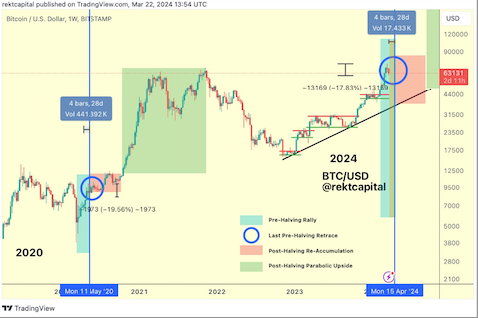
The next halving event is currently due to hit in mid-April .
This article does not contain investment advice or recommendations. Every investment and trading move involves risk, and readers should conduct their own research when making a decision.
Disclaimer: The content of this article solely reflects the author's opinion and does not represent the platform in any capacity. This article is not intended to serve as a reference for making investment decisions.
The most dangerous divergence in U.S. stocks: ordinary stocks have already plummeted, how much longer can AI giants hold on?
Significantly tightened financial conditions are heavily impacting ordinary stocks in the US stock market, with the median S&P 500 constituent falling 15% from its peak and the equity risk premium dropping below zero. Rising US Treasury yields and oil prices have pushed the financial conditions index sharply higher, resulting in a severe deterioration in breadth beneath the apparent calm of the index. Market divergence is intensifying, raising the core uncertainty of whether ordinary stocks will catch up or the index will converge downward.

Will APT’s price clear $0.87 after Aptos’s launch of Block-STM v2 upgrade?

Sui integrates Alibaba Cloud for AI payments, price eyes $1.40 target

Wall Street sets the midterm election price: Democratic Party factors surge 20%, but the market remains in a "blind zone"
The "Democratic Factor" built by JPMorgan has risen by about 20% since August, while the S&P 500 has only increased by 2.6% over the same period. Prediction platforms show that the probability of Democrats winning both chambers has surged from 23% in August to 64%. Historical data from Goldman Sachs indicates that this probability typically falls by about 5 percentage points on average before Election Day. There is a clear split among institutions: JPMorgan advocates buying on dips, while Bank of America warns that a Democratic sweep could lead to a drop of more than 10% in the stock market.


