
Bitcoin Slumps to 10-Day Lows, DOGE and SHIB Among the Double-Digit Losers (Weekend Watch)

Avalanche, Cardano, and Polygon have also dropped by double digits in the past 24 hours.
This weekend doesn’t resemble the previous few, which were a lot less volatile, as the primary cryptocurrency has dumped hard to a ten-day low of under $65,000.
The alternative coins are also well in the red, and the total crypto market cap has lost over $100 billion daily and more than $300 billion in the past few days.
BTC Dumps Hard
Monday began on a high note as BTC soared from $67,000 after retracing on Sunday evening to over $70,000 to register a new all-time high. The asset kept climbing in the following days and peaked at $73,800, which is the current ATH as of now.
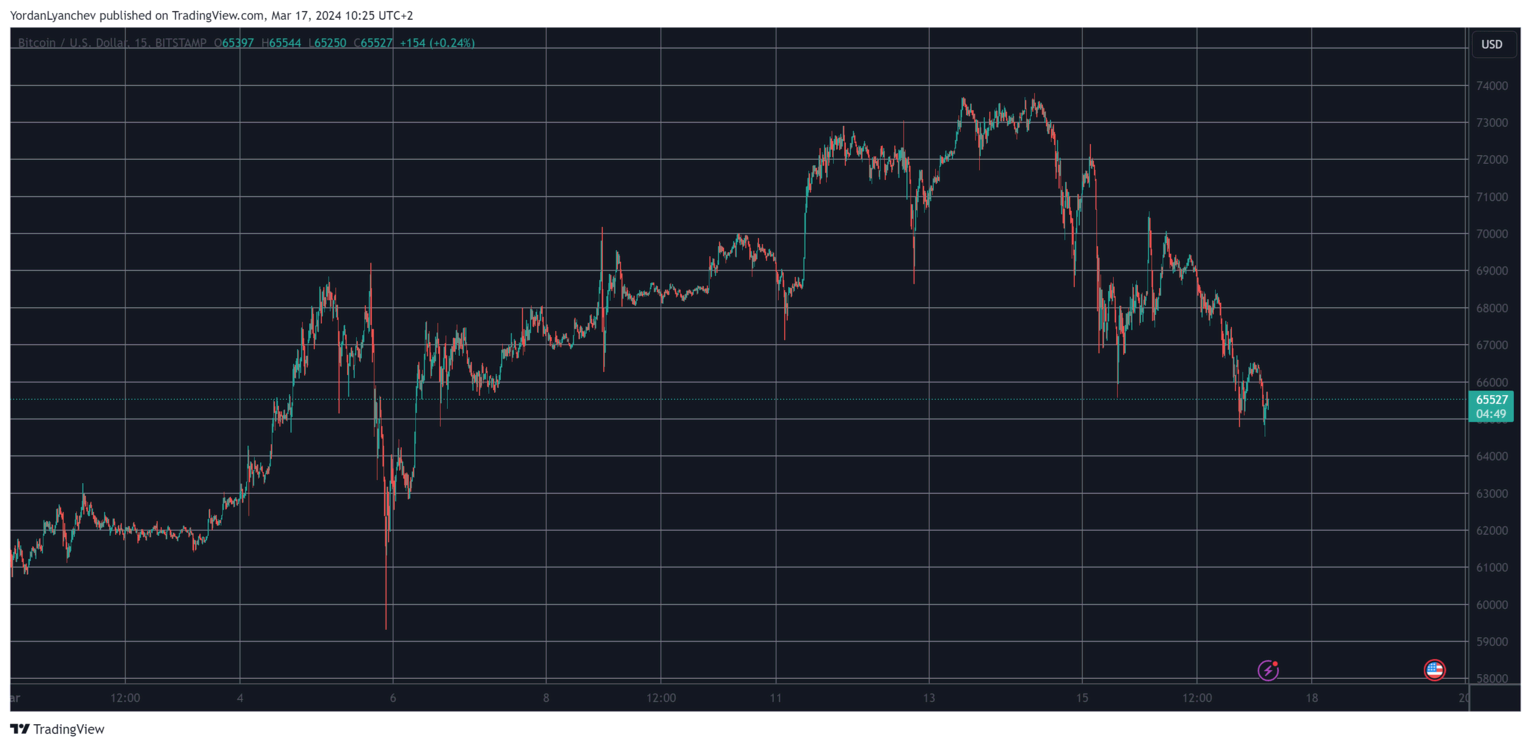
It was reached on Thursday but was followed by a massive rejection . The bears finally took control of the market and pushed Bitcoin south to under $66,000 on Friday. BTC recovered some ground on Saturday and even challenged $70,000.
However, it didn’t see much success there and was quickly driven back down to $68,000. The last 12 hours or so saw another decline that led to BTC charting a ten-day low of $64,500 (on Bitstamp). Despite recovering around a grand since that low, Bitcoin is still more than 5% down on the day.
Its market capitalization has plunged to under $1.3 trillion, but its dominance over the alts has gained 0.5% daily.
Alts in Red Again
The altcoins have followed BTC on the way down with massive declines. Ethereum had been gaining a lot of traction until the Friday rejection and had exceeded $4,000. However, ETH lost that level two days ago and is now under $3,500 after another 7% daily drop.
Similar declines are evident from Binance Coin, Solana, and Ripple. Even more losses come from the likes of Avalanche (-15%), Shiba Inu (-15%), Dogecoin (-14%), Polygon (-11%), and Polkadot (-10%).
The mid- and lower-cap alts have also bled out in the past day. This has resulted in another decline of more than $100 billion for the total market cap, which is now down to under $2.6 trillion. This means that the metric has shed over $300 billion since Friday.

Disclaimer: The content of this article solely reflects the author's opinion and does not represent the platform in any capacity. This article is not intended to serve as a reference for making investment decisions.
You may also like
The U.S. 2026 fiscal year budget deficit is $1.99 trillion, up 12%, with interest expenses reaching a record high.
U.S. fiscal year 2026 expenditures are projected to grow by 6% to $7.4 trillion, while revenues are expected to increase by 3% to $5.4 trillion, resulting in a widening fiscal gap. Net interest spending will rise by $81.4 billion to $1.05 trillion, marking a new record high. The Trump tax cuts have caused corporate income tax revenue to decrease by more than $70 billion. Besant has identified tariff refunds as one of the key factors contributing to the expanding deficit. The IMF, European Central Bank, and CBO have all questioned the logic of “growth to solve deficits.”

Gold looks to housing, PMI and consumer sentiment data for direction next week

Inflation Shocks Wall Street as Selling Pressure Builds: 5 Altcoins to Try Before the Next Major Rally

Analytics Firm Says, “There’s a 90% Chance We’re at the Start of a Bull Market,” and Reveals Its Favorite Altcoins
Crypto prices
More


