
SEC Delays Decision on Invesco-Galaxy Spot Ethereum ETF Proposal

May 23 continues to be a significant date for the approval of spot Ethereum ETFs, representing VanEck’s final deadline for approval.
The United States Securities and Exchange Commission (SEC) has again delayed its decision on whether to approve or not a joint spot Ethereum exchange-traded fund (ETF) proposed by Invesco and Galaxy Digital.
This marks the second postponement after a similar delay in December and aligns with the SEC’s recent trend of pushing back deadlines for Ethereum ETF proposals.
SEC to Institute Proceedings
According to a Tuesday filing, the SEC indicated that it was “instituting proceedings,” delaying the decision-making process on the proposed ETF.
“Institution of proceedings is appropriate at this time in view of the legal and policy issues raised by the proposed rule change,” the filing stated.
The agency has also extended deadlines for other spot Ethereum ETF proposals, including one from Grayscale Investments. Similar to its inquiry with Grayscale, the SEC raised questions regarding Ethereum’s proof-of-stake mechanism and the potential for concentration of control or influence by a few entities. These factors could pose unique concerns related to fraud and manipulation.
The SEC can extend the Invesco-Galaxy spot Ethereum ETF review period for up to 240 days before reaching a final decision. Invesco filed the proposal with the commission in October 2023, and it was published in the Federal Register in November, setting the deadline for the SEC’s decision to July 2024.
Meanwhile, stakeholders have a limited time to submit their comments on the Invesco-Galaxy Ethereum ETF proposal. Comments are due within 21 days, followed by a 35-day rebuttal period, according to the SEC.
Market Analysts Remain Uncertain
The delay in approving spot Ethereum ETFs has left market analysts uncertain when such investment vehicles might gain approval.
While some analysts at Standard Chartered suggest that approval could come as soon as May 23, others, like Bloomberg Intelligence analyst James Seyffart, anticipated the recent delay, stating, “100% expected, and more delays will continue to happen in coming months.”
SEC just delayed @InvescoUS @galaxyhq ‘s #Ethereum ETF. 100% expected and more delays will continue to happen in coming months.
The only date that matters for spot #ethereum ETFs at this time is May 23rd. Which is @vaneck_us ‘s final deadline date pic.twitter.com/gkVZL2QuPK
— James Seyffart (@JSeyff) February 6, 2024
Seyffart emphasized that the critical date for spot Ethereum ETFs remains May 23, which is VanEck’s final deadline for approval.
The SEC’s recent decision to approve several spot Bitcoin ETFs prompted speculation about a similar approach toward Ethereum-based investment vehicles. However, Gensler clarified in a statement that the SEC’s move last month was specific to that cryptocurrency and should not be interpreted as a broader endorsement of cryptocurrency ETFs.
Disclaimer: The content of this article solely reflects the author's opinion and does not represent the platform in any capacity. This article is not intended to serve as a reference for making investment decisions.
You may also like
They boosted the Yen but failed to hold U.S. Treasury bonds! Is Basent a "weak teammate" for U.S. stocks?
This week, Besant made high-profile calls to suppress yen short positions and raised the US Treasury repo limit to $6 billion. As a result, the yen strengthened, but US Treasuries declined—10-year yields hit their highest level since October 2023, and 30-year yields approached a twenty-year peak. Analysts noted that the combination of a stronger yen and rising US Treasury yields is simultaneously impacting carry trades and stock valuations, posing a dual threat to the US stock market bull run. This is described as "the greatest risk facing the bull market."
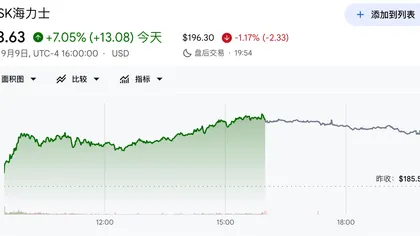
SK hynix US stocks surge to new highs, storage sector strengthens across the board! Goldman Sachs declares: The worst days are over
A Goldman Sachs research report ignited the storage sector, with SK Hynix soaring 7% on the US stock market in a single day to a record high. Micron and SanDisk also rose in tandem, outperforming the broader market. Goldman Sachs pointed out that a technical breakout in the storage sector, combined with low hedge fund positions, has shifted the "pain trade" direction upward. However, on the same day, the CEO of Kioxia poured cold water on the rally, stating bluntly that NAND "prices have risen enough." Amid this tug-of-war between bulls and bears, Micron's September 30 earnings report will be a key deciding factor.
Report: OpenAI expected to spend $750 billion on computing power by 2030! The company still states that "computing power is extremely insufficient"
OpenAI has raised its 2030 computing power expenditure forecast to $750 billion, an increase of more than 25% compared to the previous estimate of around $600 billion. Bottlenecks exist in multiple supply chain segments such as chips, electricity, and land. Whether massive orders can be converted into usable computing power on schedule has become a key test for the AI infrastructure sector.
Crypto prices
More


