Bitcoin ( BTC ) fell to intraday lows prior to the Jan. 17 Wall Street open as the World Economic Forum (WEF) offered fresh mainstream criticism.
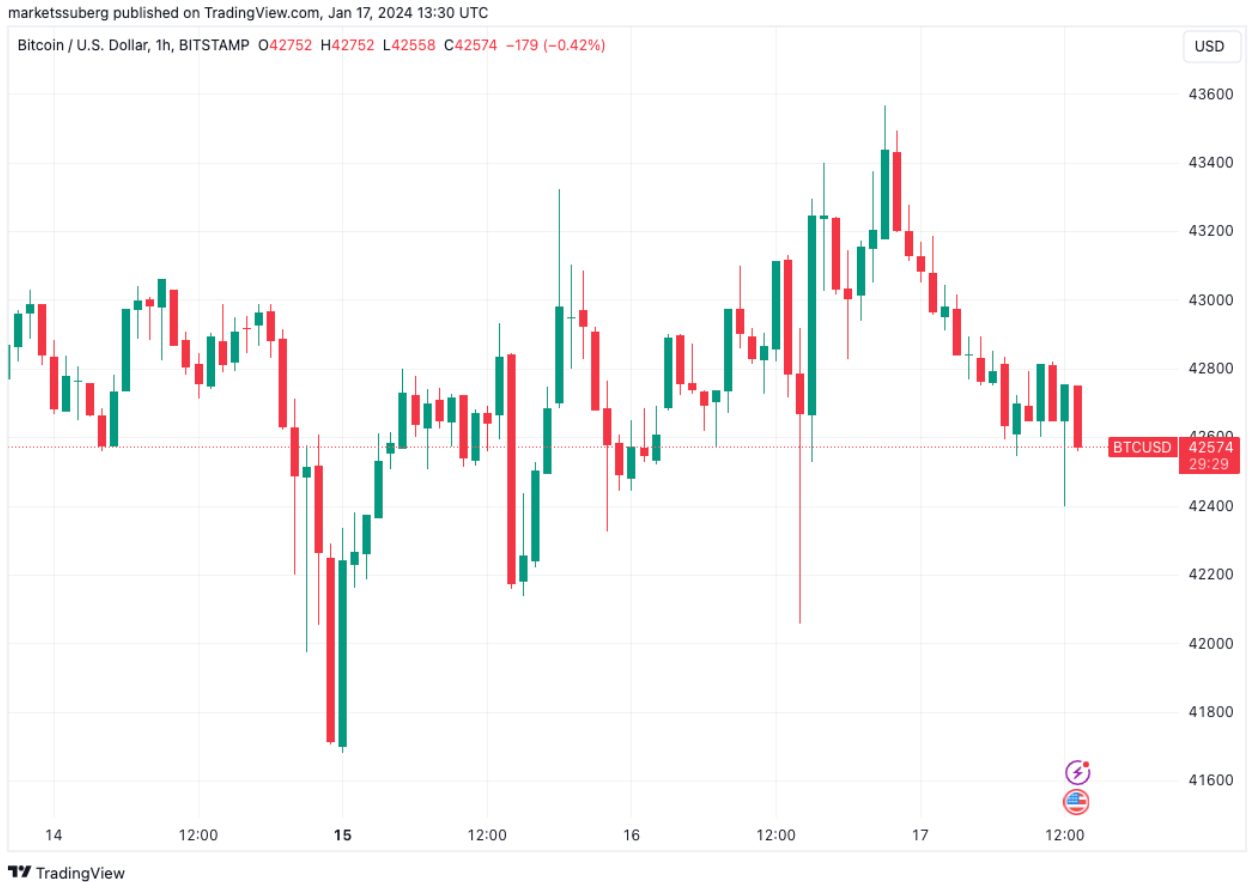

Bitcoin ( BTC ) fell to intraday lows prior to the Jan. 17 Wall Street open as the World Economic Forum (WEF) offered fresh mainstream criticism.
Data from Cointelegraph markets Pro and TradingView confirmed a BTC price dip to $42,400 on Bitstamp.
The largest cryptocurrency, still tightly rangebound after last week’s spate of volatility, repeatedly failed to sustain $43,000 as support amid a broad absence of liquidity.
The mood was not helped by JPMorgan Chase CEO Jamie Dimon, who, at the WEF annual gathering in Davos, Switzerland, told CNBC that Bitcoin “does nothing.”
“I’m not trying to make a joke here; there are use cases: AML, fraud, Anti-Money Laundering, tax avoidance, sex trafficking,” he claimed, repeating age-old, widely debunked criticisms of Bitcoin.
“Those are real use cases and you see it being used for hundreds — maybe $50-$100 billion a year for that. That is the end use case.”
Dimon additionally proclaimed that he would not mention Bitcoin on the network again, asking presenters to “stop talking” about it. As Cointelegraph reported , Dimon has himself repeatedly promised to stop mentioning it through the years.
Asked on his stance regarding last week’s slew of spot Bitcoin exchange-traded fund (ETF) launches, he insisted that he was ambivalent to competitors embracing Bitcoin.
“I don’t know what he would say about Blockchain versus currencies that do something versus Bitcoin that does nothing; it may be a lot different than me,” he concluded, referencing Larry Fink, CEO of BlackRock, whose iShares Bitcoin Trust (IBIT) ETF saw more than $700 million in inflows in its first three days.
“But this is what makes a market — people have opinions, and this is the last time I’m ever going to state my opinion.”
Updating their angle on short-term BTC price performance, popular traders warned of testing times ahead.
For Daan Crypto Trades, the days of simple trading environments were now over, as BTC/USD remained impossible to second-guess.
“After last week's drop, $BTC is just ranging and chopping people up. I am in no rush to take any actions and happy just waiting for clear opportunities,” he told X subscribers on the day.
“Easy mode was the past weeks/months. Not now.”
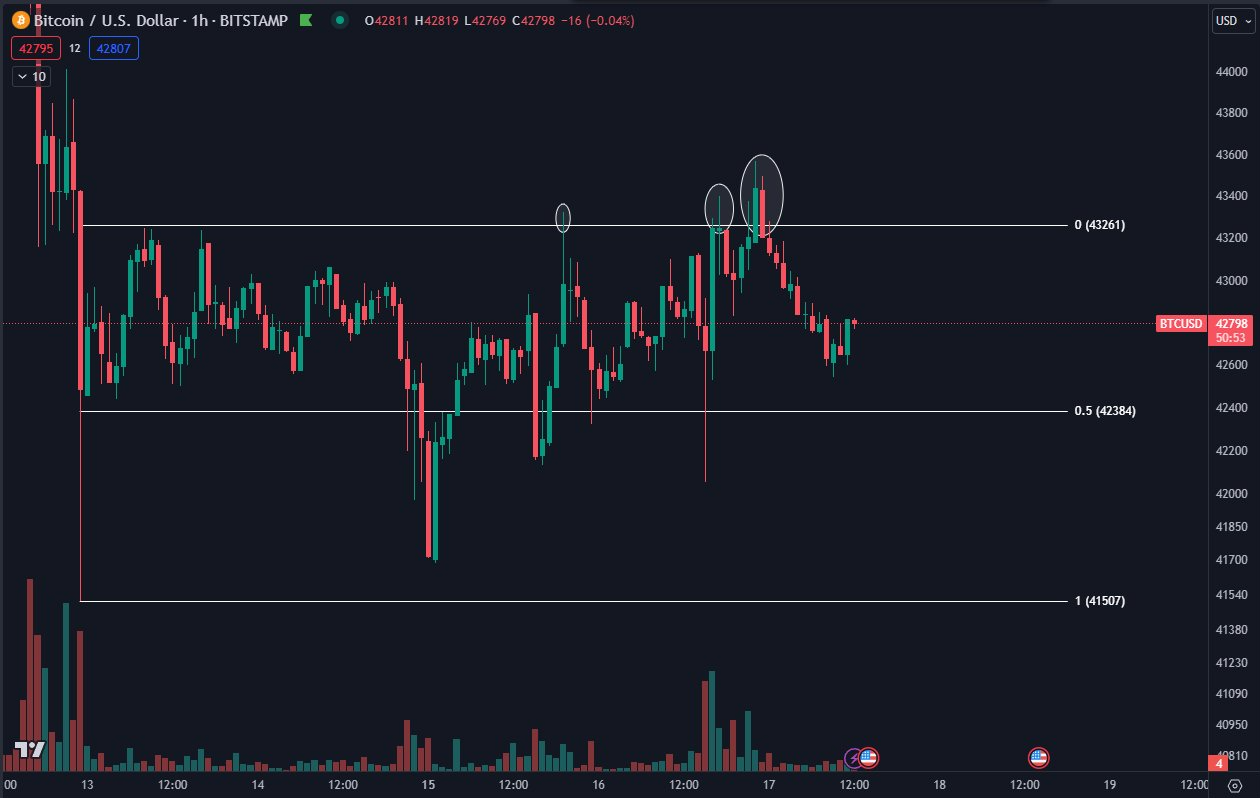
An accompanying chart showed the range high, low and midpoint currently in play.
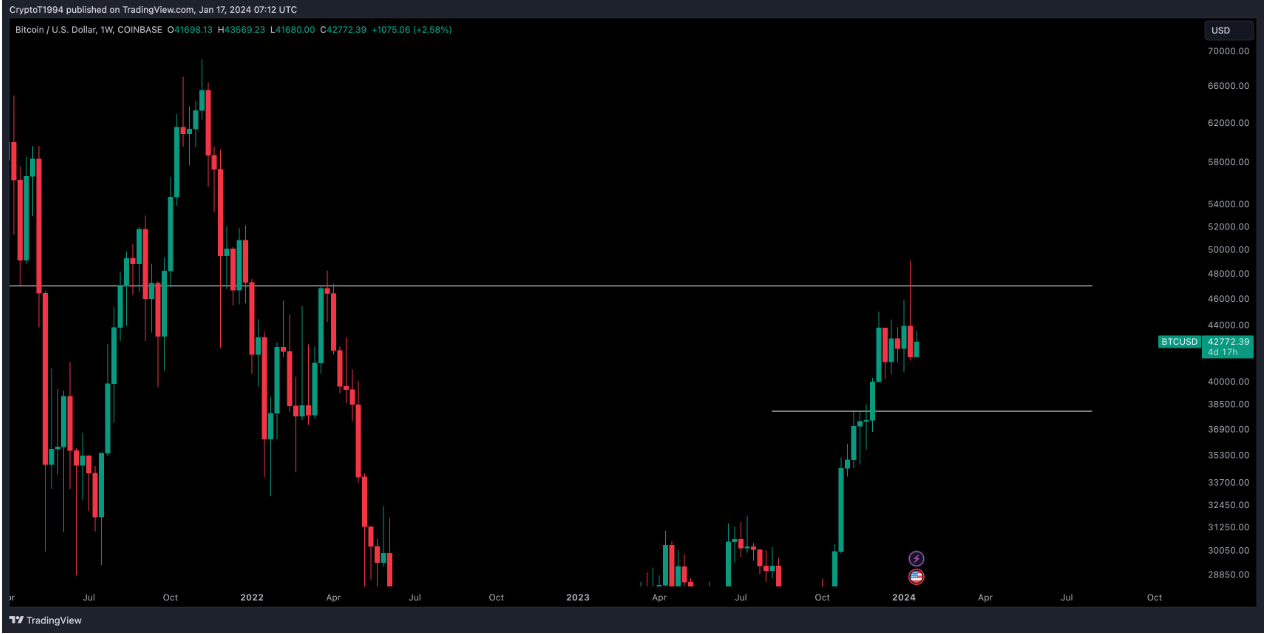
Fellow trader Crypto Tony meanwhile predicted the range continuing, possibly with a floor in the upper $30,000 area.
“I expect Bitcoin to range between $47,000 and $38,000 over the next few months. More attention to Altcoins to come,” he summarized .
This article does not contain investment advice or recommendations. Every investment and trading move involves risk, and readers should conduct their own research when making a decision.
Disclaimer: The content of this article solely reflects the author's opinion and does not represent the platform in any capacity. This article is not intended to serve as a reference for making investment decisions.
The "Eye of the Storm" in the Global Economy: Debt Crisis in Developed Countries
The IMF warns that developed economies are becoming the "eye of the storm" for global debt risks. Countries such as the United States and France accumulated high levels of debt during periods of low interest rates, but now rising interest rates are pushing up repayment costs, and fiscal consolidation faces political resistance. BofA Securities points out that the United States is facing declining tax revenues, France has structural income decline issues, and the UK and Japan are also under pressure. The deteriorating debt sustainability of developed countries may impact global financial markets through shocks in interest rates and capital flows.

The US market narrative undergoes a "dramatic reversal": shifting from "AI-driven deflation and controllable US debt" to "AI squeezing the bond market, and Bassen unable to control long-term interest rates"
Deutsche Bank points out that the market narrative regarding the U.S. economy has shifted from "AI drives down inflation" to "AI-related bond issuance pushes up U.S. Treasury yields," but pessimism may be overdone. The bank believes that the real risks underestimated by the market are security incidents in the AI ecosystem, failed IPOs, or underwhelming revenues, which could undermine the dollar and support the bond market. In addition, France's fiscal difficulties are putting new pressure on the euro.