News>
Waller Reviews Federal Reserve Policy, Says Stubborn Inflation Still Requires Rate Hikes
By: 汇通财经
FX168 Financial News, October 13—— Waller, a Federal Reserve governor nominated by Trump, previously supported rate cuts but turned hawkish by 2026; he openly stated that tariff policies bring inflation risks, and his statements after turning hawkish focus on fundamentals and are relatively objective.
Christopher Waller delivered a speech at the Istanbul Economic Forum hosted by the Central Bank of Turkey on October 8, systematically reviewing the complete policy logic from the Fed’s rate cuts in 2025 to the resumption of rate hikes in September 2026, while also explaining the Fed’s current communication framework and future rate path thinking.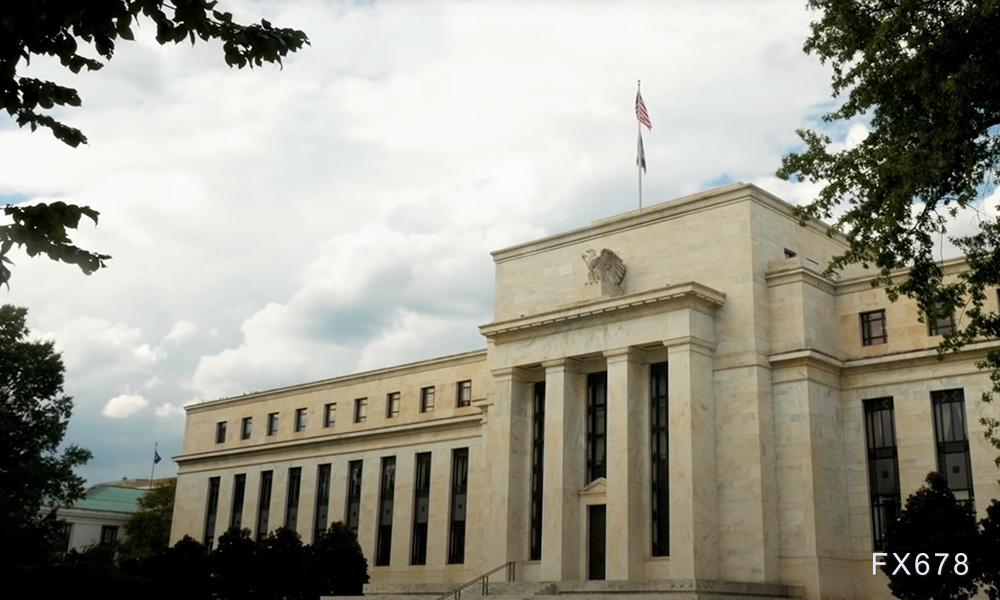
Review: Rate Cuts in 2025, a Preventive Move Against Economic Downturn
Waller recalled that during the second half of 2025, the Fed cut rates three times in a row, totaling 75 basis points.
The main background for the rate cut decision was: after excluding tariff effects, inflation was close to the 2% target, the labor market clearly weakened, unemployment rose, job creation was sluggish, and employment risks became the primary issue. The essence of the rate cuts was a preventive measure to guard against an economic stall.
Fundamental Reversal: Multiple Factors Suppress Inflation Decline, Policy Environment Changes
Entering the first half of 2026, the economic fundamentals underwent structural change: the labor market stabilized, but the inflation decline process stalled.
The Middle East conflict drove oil prices higher, becoming a key disruptive factor.
Waller originally hoped for a quick resolution to the conflict, with rising oil prices not leading to sustained inflation shocks. During this period, some inflation indicators showed temporary relief; core PCE registered 0.1% in June, the initial reading in early July was 0.2%, later revised to 0.1%.
But multiple persistent inflationary pressures gradually outweighed these brief improvements in inflation signals.
First, the continuing Middle East conflict, coupled with low crude oil inventories and damaged energy infrastructure, could keep oil prices elevated through 2027;
Second, the large-scale expansion of AI infrastructure continues to push up prices of high-tech consumer goods, with the estimated scale of related capital expenditures continuously revised upward;
Third, ongoing trade frictions further stoke the risk of new tariffs, which could again push up prices at any time. By the time the August inflation data was released, inflation had heated up again, making it impossible to deny there was still a significant gap from the 2% target.
Second, the large-scale expansion of AI infrastructure continues to push up prices of high-tech consumer goods, with the estimated scale of related capital expenditures continuously revised upward;
Third, ongoing trade frictions further stoke the risk of new tariffs, which could again push up prices at any time. By the time the August inflation data was released, inflation had heated up again, making it impossible to deny there was still a significant gap from the 2% target.
Waller specifically clarified that the rate hike in September was not a hasty decision based solely on a single month’s August CPI data, but rather the result of multiple months of evidence all pointing to a shift in policy risks: labor market resilience was on the rise, compounded by a series of persistent inflation drivers.
Core Judgment: Current Interest Rates Insufficient to Quickly Bring Down Inflation, Biggest Concern is Inflation Expectation Risk
Waller judged that the rate level maintained from December 2025 to September 2026 was no longer sufficient to bring inflation down to 2% in a timely manner.
Given the uptick in U.S. economic activity in the second half of the year, he was not concerned that tighter monetary policy would trigger a deep recession;
But the biggest risk is that inflation has run consistently above target for five and a half years. If inflation accelerates further, it could lead households, investors, and businesses to revise long-term inflation expectations upward. Once inflation expectations become unanchored, the cost of bringing inflation under control will rise dramatically.
According to the augmented expectations-Phillips curve: inflation = expected inflation – a × unemployment gap + supply shock.
Once inflation expectations rise too high and become unanchored, contractionary policy must increase the unemployment gap even more to bring inflation down, greatly increasing economic pain and the cost of control.
Once inflation expectations rise too high and become unanchored, contractionary policy must increase the unemployment gap even more to bring inflation down, greatly increasing economic pain and the cost of control.
With the latest economic data, Waller believes the current economic landscape is largely consistent with the situation at the time of the September FOMC meeting: September employment data showed the job market remains solid, unemployment remains low, non-farm payrolls are within a range that keeps the unemployment rate stable; August core PCE month-over-month was 0.25%, year-over-year 3%. Since spring 2024, core inflation has hovered in the 2.5%-3.0% range, with insufficient progress in declining.
In the short term, the Fed’s policy focus will prioritize the inflation target.
New Policy Communication Approach: Signal-Based Communication Between “No Guidance” and “Rigid Forward Guidance”
In the second half of his speech, Waller mainly explained the Fed’s policy communication paradigm, proposing a signaling framework positioned between two extremes.
If the Fed discloses nothing about its policy path, market expectations can become highly dispersed, asset prices may fluctuate sharply, and the tightening of financial conditions could deviate significantly.
But if the Fed uses strong forward guidance to lock in a fixed pace of rate hikes in advance, while this can eliminate short-term uncertainty, its drawback is rigidity—it cannot adjust the pace and magnitude of hikes in response to new economic data, easily causing policy mistakes in a highly uncertain macro environment.
The Fed has now opted for a signaling communication approach between these two options: releasing an approximate target range and terminal level for rates, but without pre-committing to a specific pace or magnitude of rate hikes. It is clear that policy is not preset—everything depends on how economic data impacts the Fed’s dual mandate.
This means pointing to the general direction, but retaining flexibility that depends on data.
The Fed’s Summary of Economic Projections (SEP, dot plot) is the core medium for this signaling mechanism.
The September dot plot showed that the vast majority of FOMC members see at least one more rate hike needed this year; 16 out of 18 members submitting forecasts expected at least one more hike at the remaining two meetings this year, with 4 members expecting two more hikes.
When interpreting the 2027 dot plot, it’s important to note that some members’ forecasts include a combination of “rate hikes early in the year and cuts late in the year”, and 8 members expect end-2027 rates to be higher than current levels.
The market has also absorbed these signals: as of the time before the speech, federal funds futures pricing showed an 85% probability of at least one rate hike before the December FOMC, with nearly a 20% probability for two hikes;
By the March 2027 meeting, the probability of at least two hikes was close to 80%, with a 33% probability for three or more hikes.
This approach both anchors short-term rate expectations and retains flexibility for policy adjustment in response to data.
Future Rate Path: Further Hikes Needed, But Timing is Flexible
Waller’s final policy outlook: if subsequent economic data is consistent with the current forecast, the Fed will still need to raise rates further to bring inflation back to the 2% target more quickly.
However, there is flexibility on the timing of rate hikes: it’s not necessary to implement hikes at consecutive meetings, just to complete necessary tightening in a reasonable time window.
Disclaimer: The content of this article solely reflects the author's opinion and does not represent the platform in any capacity. This article is not intended to serve as a reference for making investment decisions.
Trade now!
You may also like
Crypto prices
More





Become a trader now?A welcome pack worth 6200 USDT for new users!
Sign up now