Institutions: Gold prices weather U.S. Treasury storm in Q3, Q4 volatility risks cannot be ignored
FX168 October 13th—— Invesco has released its latest quarterly outlook, showing that gold rose 3.7% in Q3 to $4,157, defying a climb in US Treasury yields to more than two-decade highs. High real yields have suppressed gold prices, but the relationship between gold and real interest rates has noticeably weakened since 2022. Central bank gold purchases and a rebound in gold ETF holdings are providing long-term support; however, price volatility risks in Q4 cannot be ignored, as there is a possibility of passive gold sell-offs during periods of intense market swings.
Gold continues to face multiple headwinds from high inflation, rising interest rates, and higher US Treasury yields, yet prices have demonstrated remarkable resilience, posting significant gains in Q3 even as long-term US Treasury yields climbed to their highest levels in 24 years.
Invesco market analysts state in the latest quarterly outlook that while inflation pressure, interest rates, and yields are climbing, structural central bank gold buying and gold ETF inflows remain opposing forces that are expected to continue shaping gold’s trajectory in the final three months of 2023. Short-term suppression from high yields coexists with long-term structural support, placing gold at a pivotal stage of intense tug-of-war between bulls and bears.
Gold Prices Rise Against the Trend in Q3 as US Bond Turbulence Fails to Shake Market
Invesco analysts note that gold closed at $4,157 per ounce at the end of September, up 3.7% in Q3. This positive return was hard-earned: over the same period, global bond markets suffered major sell-offs, and long-term US Treasury yields soared to over 20-year highs. The 10-year US Treasury yield ended September at 5.28%, and the 30-year yield at 5.63%, both reaching their highest closing levels since 2002.
Analysts explain that rising bond yields, especially higher real yields, increase the opportunity cost of holding non-yielding assets like gold. However, they also point out that the historic correlation between gold and real rates has clearly weakened in recent years. According to analysts, since 2022, the historical link between gold and real yields has diminished significantly. That year, Russia’s reserve assets were frozen, which prompted central banks around the world to persistently buy gold regardless of its price, reshaping the traditional pricing logic between gold and interest rates.

Inflation Remains the Biggest Near-term Risk as the Fed Maintains a Hawkish Stance
Looking ahead, Invesco believes that persistently high inflation remains the most notable short-term risk facing gold, especially with the economy still exhibiting some resilience. The report notes that the Federal Reserve raised rates by 25 basis points in September, bringing the policy target range to 3.75%–4%. The Fed’s latest economic projections also signal at least one more hike before year-end.
However, Invesco points out that the personal consumption expenditures (PCE) inflation data released at the end of September came in weaker than expected, significantly reducing market expectations for a rate hike in October. According to the CME FedWatch Tool, the market currently assigns only a 21% probability to a rate hike later this month. The Fed is likely to keep rates unchanged at its October meeting and wait for more economic data before assessing whether to raise in December. Analysts judge that persistent inflationary pressure will compel the Fed to uphold its hawkish stance; at the same time, Invesco notes that stronger economic growth is pushing up bond yields, adding another challenge for gold investors.
Fiscal Risks Heat Up, US Treasury Supply Pressure May Push Yields Higher
Invesco also notes that concerns over US federal government borrowing continue to intensify, with the size of outstanding US Treasuries surpassing $40 trillion in Q3.
As fiscal risks accumulate, investors may demand more risk compensation for holding long-term government bonds, which could further drive up yields. Although rising term premiums are typically viewed as a headwind for gold prices, concerns about fiscal sustainability may lead some investors to reexamine the status of sovereign bonds as safe-haven assets, indirectly benefitting the appeal of gold as a hedging asset.
ETF Holdings Rebound, Central Bank Gold Purchases Hit Record Highs Again
Despite numerous challenges, Invesco emphasizes that the underlying investment rationale for gold remains solid. The report indicates that for most of 2023, global physical gold ETF holdings declined, as high gold prices combined with strong equity markets weakened gold’s appeal for portfolio diversification. However, this trend sharply reversed in Q3, with global gold ETF holdings at their highest level in 12 months by the end of September.
Central bank demand has also provided significant support. Invesco, citing data from the World Gold Council, points out that in Q2 2023, central bank gold purchases hit a record high for the period. Reserve managers place increasing emphasis on geopolitical risk and the security of gold holdings—a structural demand likely to persist into Q4. Invesco judges that reserve diversification, geopolitical uncertainty, and revived investment demand will continue to support gold prices, even if high rates and yields present clear short-term challenges.
Q4 Volatility Risks Persist, Watch Out for Liquidity Crunches
Invesco remains bullish on the long-term outlook for gold but cautions investors to prepare for ongoing volatility in Q4. Analysts note that if financial markets remain highly volatile, price swings in gold would not be surprising and may be unrelated to gold’s fundamental outlook.
During periods of significant market stress, investors might be forced to sell their gold holdings to meet margin calls or cover losses in other parts of their portfolio, even if they are bullish on gold in the long term. For those who have accumulated substantial unrealized gains during gold’s rally in recent years, this is a particularly important risk to monitor. Still, Invesco maintains that ongoing central bank gold buying aimed at reserve diversification will continue to provide structural support for gold.
Conclusion
Overall, gold is at a crossroads between short-term macro headwinds and long-term structural support. High inflation, high interest rates, and high bond yields will continue to weigh on gold prices in Q4, but persistent central bank buying, gold ETF inflows, and fiscal and geopolitical uncertainty constitute powerful long-term buying forces. Invesco advises investors to remain confident yet vigilant, as gold may not always be immune during episodes of market turmoil. The direction of gold prices in the short term will be largely determined by inflation data and Fed policy paths, while true support comes from deeper trends—in particular, the ongoing reconstruction of the global reserve system.
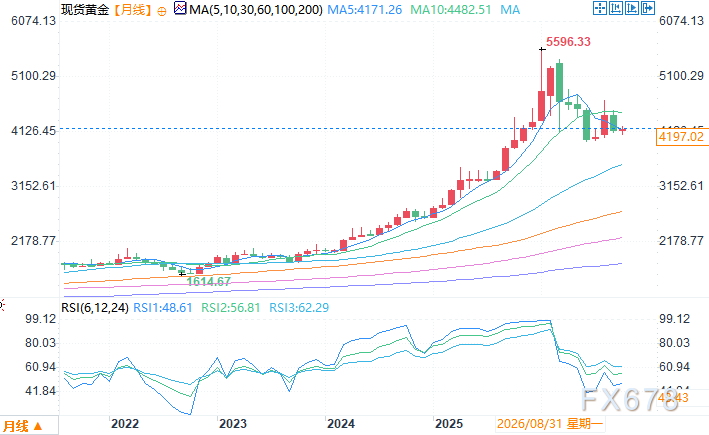
Spot gold monthly chart, source: FX168
GMT+8 October 13th 13:21 Spot gold quoted at $4,197.42 per ounce





