
Microsoft teams up with NVIDIA—whose business are they targeting?

If large models can run directly on PCs, will some AI tasks still require pay-per-use cloud services? The cooperation between Microsoft and Nvidia has made this issue much more concrete, forcing US equity investors to reconsider:Where does the money from AI ultimately end up?
On October 7, Microsoft announced the latest updates to Windows local AI and started pre-orders for the Surface Laptop Ultra equipped with the Nvidia RTX Spark, starting at $2,599 and with up to 128GB of unified memory.
Microsoft officially confirmed that the DeepSeek V4 Flash with 284 billion parameters is part of its local model deployment. The launch showed that, after 1.6-bit quantization, the model can run within about 60GB of memory.
DeepSeek provides the model, Nvidia offers the computing hardware, and Microsoft integrates them into the PC and software environment.
According to US Stocks Investment Network, the value of this move for Microsoft is that no matter which large model the user chooses, work can be done within Windows—giving Microsoft ongoing opportunities to earn revenue through software and services.
You can switch models, but files, apps, development tools, and enterprise management systems still need someone to connect them together.
Previously, users often had to first visit an AI website, upload documents, wait for answers, and then move the results back to their work software. Microsoft aims to further connect AI to PC tasks, so that after authorization, it can read files, call tools, and perform operations directly.
Whoever enables AI to directly help users accomplish routine work will have a better chance of retaining paid users.
This is where Microsoft’s advantage lies: it already owns Windows, the Office suite, development tools, and enterprise customers. As models like DeepSeek improve, Microsoft gains another capability it can integrate, without always having to bear the cost of training from scratch on its own.
Therefore,what I value most in this arrangement is the support it provides for Microsoft's software ecosystem, not the number of Surface units sold.
However, merely being able to run the model solves only the first step. For enterprises to truly deploy it, they need to know what the agent can access, what it can modify, and how its actions can be tracked.
Microsoft has launched the MXC runtime environment, allowing enterprises to specify which files and networks agents can access and enforce these rules during operation. At the same time, it schedules tasks between local and cloud models.
These capabilities are directly linked to whether AI can become part of daily enterprise operations. The models themselves can keep changing, but permissions, management, and workflows require ongoing maintenance. If Microsoft can get this layer right, it will develop deeper customer relationships, as well as further opportunities to sell software and management services.
Now, let’s look at Nvidia.
Improvements made by DeepSeek are often interpreted by the market as “expensive computing power will no longer be needed.” But in this case, the model runs on RTX Spark, and local AI still needs hardware.
Nvidia is bringing the CUDA computing software ecosystem to more Windows devices, enabling developers to use similar tools across both local and large-scale computing platforms.
In my view,local AI expands Nvidia’s role in the inference market. Some tasks leaving the cloud does not mean that hardware demand naturally leaves Nvidia as well.
Of course, the pricing and profit structure of local PC chips differs from those in data centers, so you can’t convert PC sales into equivalent data center revenue. This cooperation reinforces the product lineup, but financial contribution still depends on actual sales.
What truly needs to be reassessed are those businesses lacking differentiation and primarily making money by selling model access or generic cloud inference.
If a user can complete a task on their own computer at an acceptable speed, why continue to pay per use? Cloud services then need to provide stronger models, better collaboration, or a more convenient user experience to justify their fees.
This pressure will put some downward competitive force on cloud inference pricing and drive service providers to become more efficient.But large-scale training, complex tasks, and shared multiuser services will still need the cloud. You cannot conclude from a single local demonstration that overall data center demand will decline drastically.
This shift is especially noteworthy for Microsoft: partial local computation may reduce some cloud calls, but cheaper, more convenient AI may increase the use of software overall.
Azure revenues and the commercial value of Windows, Copilot, and other software should be considered separately; you can’t judge winners and losers just by monitoring a single metric like model usage.
For PC manufacturers, they now have a much more concrete reason for upgrades: developers, creators, and some enterprises can keep high-frequency tasks local.
In this partnership, the platform value for Microsoft is my top focus, followed by the localized compute opportunities added for Nvidia. How much computer manufacturers can profit remains to be proven by sales and profit margins.
The integration of DeepSeek models into Windows shows that AI has become much more accessible.For the US stock market, as models get ever cheaper, companies who can organize these models, connect them to real work, and keep charging for their use will be the ones worth investigating.
Enter the US stock ticker symbols you’re following to create your own stock watchlist. Our quantitative AI system will continuously track:
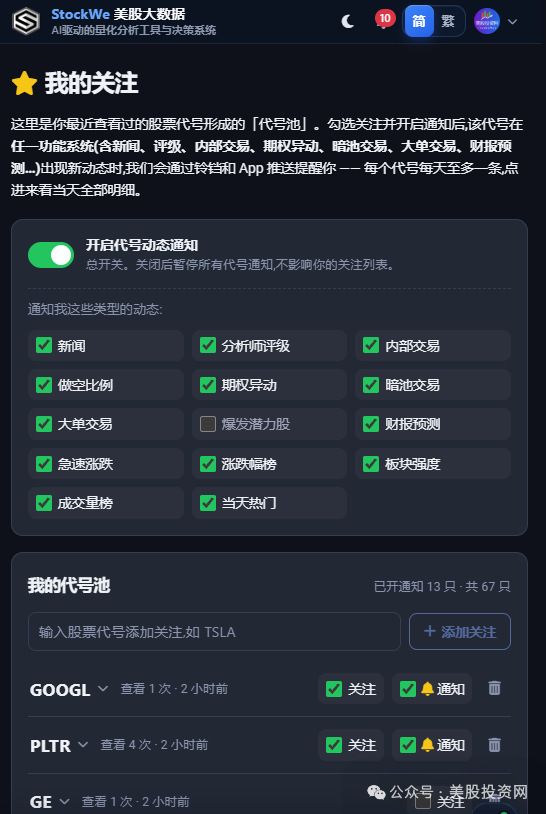
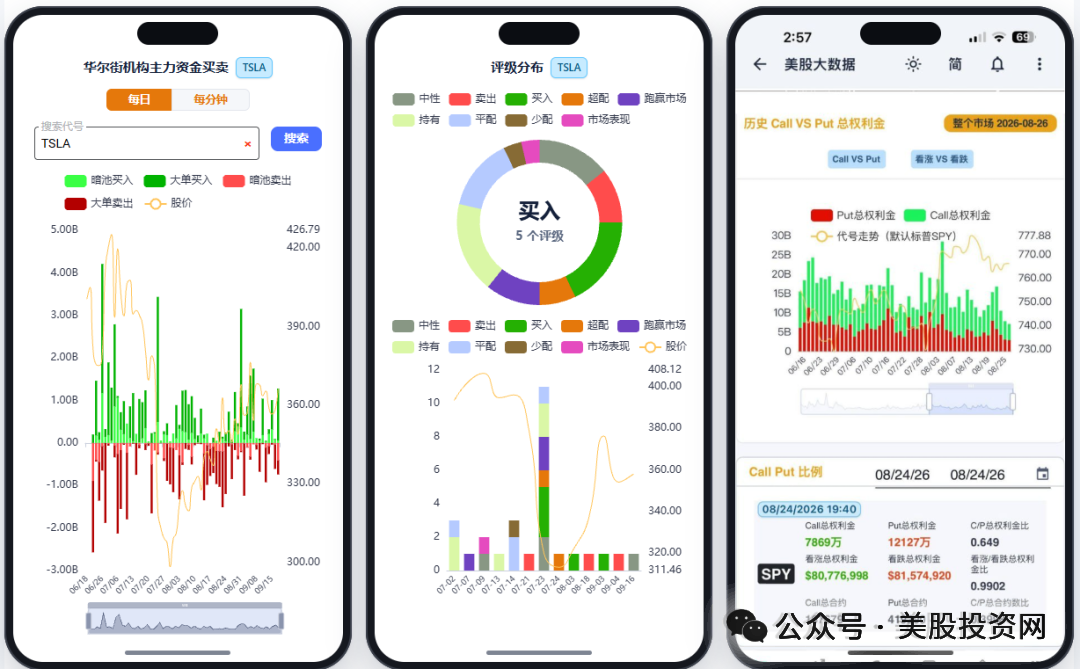
News, analyst ratings, insider trades, short interest, unusual options activity, dark pool trades, block trades, earnings forecasts, sudden price moves, and other key developments.
For example, if you’re following NVDA, you can instantly see how many news items came out today, whether there was unusual options activity or any changes in dark pool or block trades, just by clicking in.
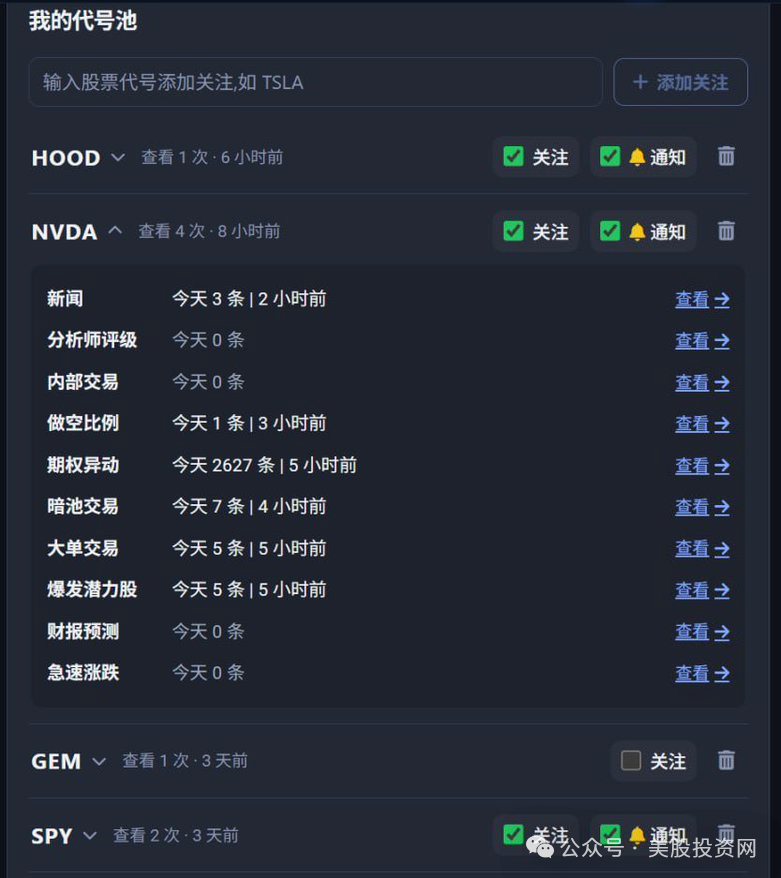
More importantly, once in-app notifications are enabled, you’ll be alerted immediately whenever news breaks about a stock you follow.
In the past you’d have to hunt down information yourself; now, let the system track your stocks 24/7.
For long-term investors, this is a personalized alert system;
for swing traders and options traders, this is a real-time volatility radar.
Enter the ticker and never miss another important development.
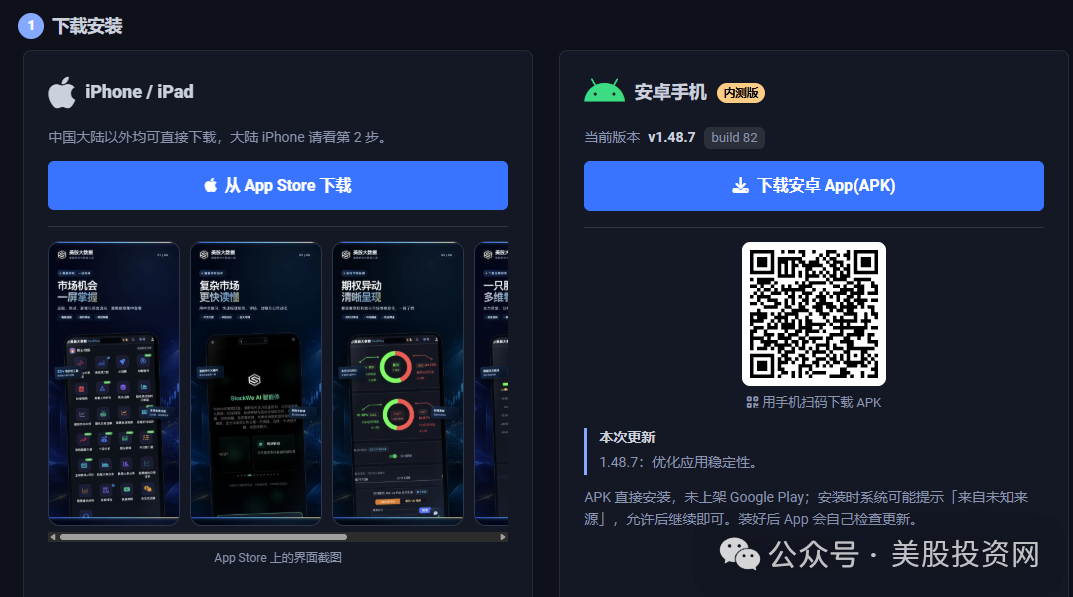
Click the original link to download the app.




Disclaimer: The content of this article solely reflects the author's opinion and does not represent the platform in any capacity. This article is not intended to serve as a reference for making investment decisions.
You may also like
Is a major reversal in stock-bond allocation approaching? Bank of America issues rare signal: Bonds compete with stocks for capital for the first time in decades, S&P 500's return over the next ten years may be less than 5%
Savita Subramanian, Head of US Equity and Quantitative Strategy at Bank of America, said in an interview on Wednesday that the bond market is becoming attractive again and has, for the first time in decades, become a real competitor to the stock market.

Stop Using the Consumer Cycle to Analyze Micron (MU.US)! AI is Redefining NAND Logic, Enterprise SSDs Have Taken Over Pricing Power
Eudaemon Research previously assessed that within Micron's business structure, DRAM is more resilient than NAND, and that NAND prices and demand would return to normal faster. However, Micron's latest Q4 financial data has led them to revise this view: NAND is no longer a homogeneous market, and the supply-demand and pricing dynamics of consumer-grade NAND and enterprise-level data center SSDs are clearly diverging.
Micron's target price is significantly raised by investment banks, with a maximum of 3,000 USD
DA Davidson has raised Micron's target price to $3,000, implying a 176% upside from the current share price. The core logic is that the AI-driven memory supercycle will continue until 2028, with the supply-demand gap widening further. The key variable lies in the shift of demand—buyers are transitioning from smaller, high-default-risk clients to tech giants such as Amazon, Microsoft, and Google. Micron has already secured $150 billion in remaining contractual obligations.
Oil prices continue to surge, triggering inflation concerns; global stock markets under pressure, Korean stocks close down 2.6%, US Treasury yields rise
Brent crude oil rose about 2.5% on Thursday, surpassing the $102 per barrel mark. Driven by this surge, the U.S. 10-year Treasury yield climbed 3 basis points to 5.31%, approaching its highest level since 2002. Asian stock markets followed the downward trend of U.S. stocks on Wednesday, with an overall decline of 1.2%. Japan's Nikkei 225 closed down 1.4%, and South Korea's Seoul Composite Index plunged 2.6%.


