From CPI Release to Surging Interest Rates: Analyzing the Causes of Gold's Decline

FXStreet, September 15—— Multiple factors are driving up real U.S. Treasury yields. Gold remains under pressure, and any turning point in the market closely depends on U.S. data.
On Tuesday (September 15) during the Asian and European sessions, spot gold continued its decline and is currently trading at $4,276, down 0.52%.
Recently, real yields have surged continuously. Right after the CPI release, it was expected that real yields would briefly decline, but they only saw a small intraday drop before rebounding sharply—even more than the nominal yield represented by the 10-year U.S. Treasury.
Based on the formula, nominal yield = real yield + inflation expectations + inflation risk premium (IRP). Usually, inflation expectations and IRP are grouped together as general inflation expectations; however, to understand rallies upon favorable news, these need to be broken out separately. The day CPI was released, the market's reaction drew on the IRP component.
On that day, the nominal yield dropped because IRP plunged momentarily—markets believed that although inflation slightly exceeded expectations, serious worsening fears subsided. However, the endogenous rise of real yields is the real reason rates eventually moved higher and is also why gold prices have recently fallen.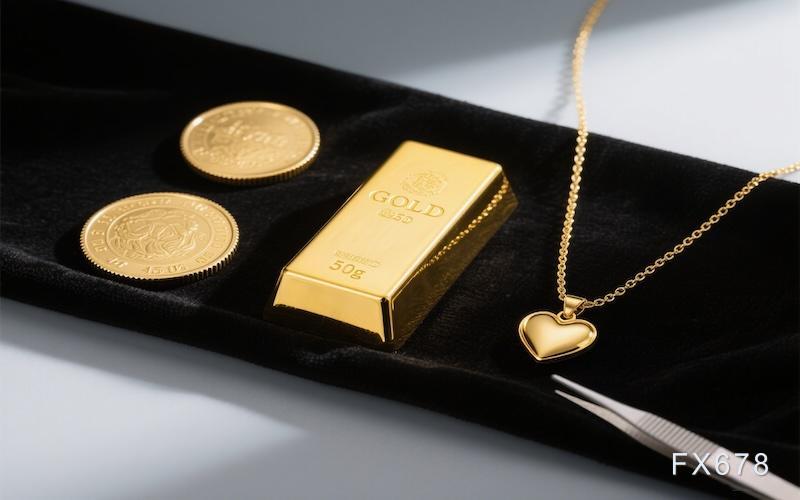
Sticky Inflation: High Rates Extended for Longer
U.S. inflation hasn't exploded, but its decline is far slower than expected. Core services inflation and rents display considerable stickiness.
If inflation doesn't fall, the Fed has no room for rapid rate cuts. The market is forced to continually price in "how long rates will stay high," even leaving open the possibility of an additional hike.
Using the rate decomposition framework, real yield equals nominal yield minus inflation expectations. Sticky inflation supports inflation expectations, and nominal yields can't fall. Both jointly push real yields higher, and TIPS yields rise as a result.
This has been the most fundamental and persistent driver of this round of real yield increases.
Economic Resilience: The Equilibrium Real Rate Itself Is Moving Up
The U.S. economy has not fallen into recession; consumption and employment remain stronger than expected, and the economy can withstand current high rates.
According to the classical Fisher framework, the real rate captures the real return of physical capital, determined by the equilibrium of savings supply and investment demand: Robust demand, strong corporate investment intentions, and high returns on capital all mean the real cost of money naturally rises, so the equilibrium real rate shifts higher.
The market no longer believes "the Fed will soon be forced to cut to save the economy." The disappearance of this expectation pushes forward policy rates higher. Together with sticky inflation, this has amplified the central level of real yields.
The current cycle isn't about rate hikes breaking the economy, but rather the economy being strong enough to endure high rates—which is the basic context of this rate uptrend.
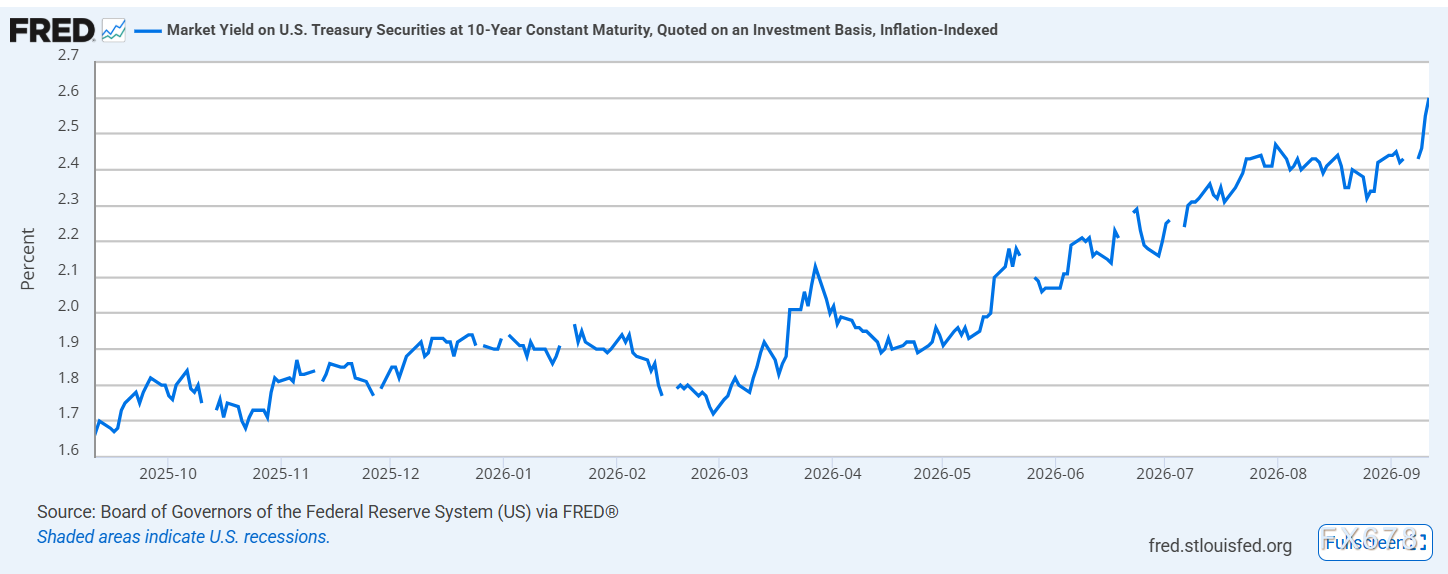
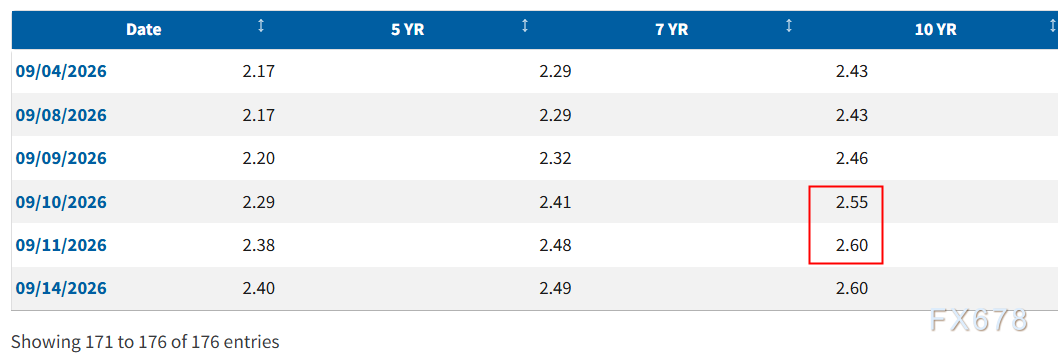
(10-year TIPS yields overview; source: Federal Reserve)
Comparing the 10-year U.S. Treasury yield, after the CPI release, the 10-year nominal yield rose by 0.12 bp but TIPS increased by 0.5 bp. The main factor was IRP, which fell sharply by 0.48 bp after extreme inflation worries were resolved.
Oil Price Volatility: Reinforcing Expectations for Prolonged High Rates
Continued volatility in international oil prices is a critical supply-side disruption behind sticky inflation.
Multiple factors such as geopolitical conflicts and global supply-demand mismatches have made it difficult for oil prices to trend downward; instead, they repeatedly spike at key levels.
As the most central commodity, oil's rise transmits cost pressures to end-user inflation through sectors such as transportation, chemicals, and consumer goods, creating imported inflation.
From the interest rate decomposition perspective, oil shocks have a dual impact on real yields.
On one hand, repeated oil spikes reinforce uncertainty about the inflation path, supporting or even boosting inflation expectations, making it harder for the Fed to start a rate-cutting cycle; on the other, oil is a supply-side shock that drives cost-push (not demand-pull) inflation. This "stagflationary" pressure will force the Fed to lean more toward fighting inflation than supporting growth, extending the period of high rates and pushing up real yields.
At the same time, oil price uncertainty can temporarily lift the inflation risk premium (IRP).
When the market fears oil-driven secondary inflation effects, IRP is pushed higher. Nominal Treasury yields gain additional inflation risk compensation atop rising real yields. Together with heightened supply-induced term premiums, this intensifies upward pressure on long-term yields—making it one of the culprits behind the surge in 10-year sovereign yields worldwide.
U.S. Treasury Supply Pressure: Term Premium Upside and Policy Backstop Disappointments
The U.S. federal budget deficit remains high, and the Treasury continues to issue a large volume of long-term bonds. Markets are concerned about long-end supply gluts, so investors demand a higher term premium to absorb duration risk, which raises nominal Treasuries from the supply side.
Meanwhile, market sentiment on the effectiveness of the Treasury Department’s buyback plans remains largely pessimistic.
Nearly half of fund managers expect buybacks to have almost no effect on yields; nearly a third believe it will actually push yields higher. Policy backstop hopes dashed, government bonds lose a “safety cushion”—long bond pricing becomes fragile, and if concentrated sell-offs occur, rapid yield spikes can result from negative feedback loops.
Summary and Technical Analysis:
Gold is a zero-yield, long-duration asset. Its pricing heavily depends on real rates as the prime discounting factor.
Rising real yields mean the opportunity cost of holding gold increases, its future (zero) cash flows get discounted more heavily, and thus gold remains persistently pressured.
This round of real yield surge has multiple trend supports: sticky inflation extending high-rate periods, economic resilience raising the equilibrium real rate, persistent oil-driven supply-side inflation expectations, and the supply-induced rise in term premiums for Treasuries.
These forces form a strong foundation for the uptrend in real rates, not merely short-term sentiment.
IRP-driven short bursts in gold price are essentially one-off reactions to tail risk fading—weak forces, unable to counter the persistent trend-driven gold headwinds from rising real yields.
Thus, unless the real rate centerline shows a clear turning point, the mid-term pressured pattern for gold will be difficult to reverse.
This article mainly analyzes the interest rate dimension, but gold’s pricing is not solely determined by rates. Central bank purchases, U.S. dollar credibility/currency devaluation trades, and safe-haven demand also constitute independent demand drivers that can at times partly offset gold’s rate pressure. Due to this article's focus, these will be discussed in future analyses.
Technically: Spot gold is currently consolidating at a low, supported by a small head-and-shoulders neckline, forming a minor top pattern. However, a top at the bottom often creates a bear trap, so bullish investors need not panic.
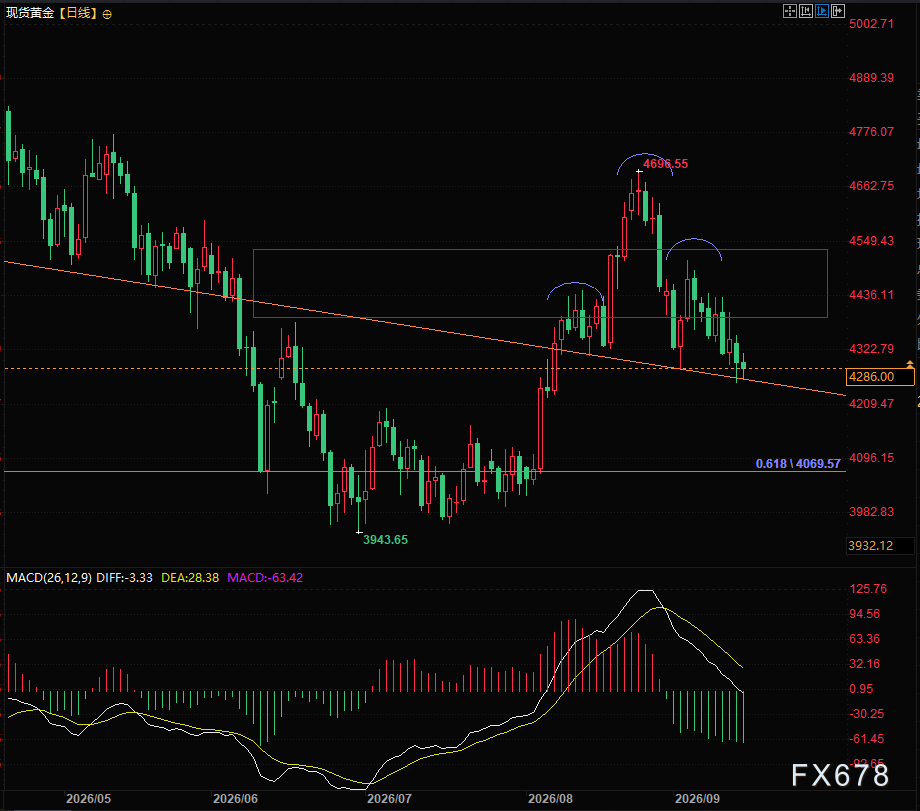
(Spot gold daily chart; source: EasyFX)
Beijing time 21:22, spot gold is now quoted at 4285.99
Disclaimer: The content of this article solely reflects the author's opinion and does not represent the platform in any capacity. This article is not intended to serve as a reference for making investment decisions.
You may also like
Machi Big Brother Cuts ETH Long After $5M Loss — 20,000 ETH at Risk

Tether’s USDT used in failed $230 million Venezuela oil deal, Orlen faces losses
XRP futures activity surges, driving volatility and shifting market sentiment
3 Best Altcoins to Buy as ETH Holds $2.5K and BNB Leads Majors