
Meeting postponed, gold price drops rapidly

Fxstreet News, September 15—— Gold prices are currently close to the neckline of the head-and-shoulders pattern, with prices continuing to decline and all gains from the previous two days' rebound being erased. For gold futures, a confirmed daily close below the neckline is needed for the head-and-shoulders pattern to be officially confirmed. The neckline is downward sloping, with the pattern's downside target corresponding to below $4,000.
On Sunday, the Foreign Minister of Oman announced that the Salalah meeting was postponed indefinitely, citing that all sides still needed time to seek consensus, and therefore, the diplomatic negotiations could not proceed as originally planned.
Just one trading day prior, Saudi officials confirmed the emergency shutdown of the country’s east-west oil pipeline following consecutive drone attacks originating from Iraq. The pipeline, with a daily capacity of 4-5 million barrels, is a core alternative route for Saudi Arabia to bypass the Strait of Hormuz to export crude oil to Yanbu Port on the Red Sea.
During the early trading session, WTI crude oil once again rose above $102. The market-implied probability of a Federal Reserve rate hike on Wednesday reached 90%, and gold fell about $77 during trading, hovering near $4,331. The previous rebound fueled by expectations of diplomatic easing was quickly invalidated after the meeting cancellation was confirmed. Last Friday, WTI closed at $100.05 per barrel, down 2.4% amid positive expectations for the meeting; with the reversal of news in this week’s early session, oil prices rebounded 2.4%, immediately returning to pre-news levels. The foundation of previous rebounds in the stock and gold markets based on diplomatic optimism has disappeared.
Alternative Oil Transportation Routes Suspended
Since February this year, Saudi Arabia’s east-west oil pipeline has taken up the responsibility of bypassing the Strait of Hormuz for crude exports, and there is currently no other pipeline able to handle this volume. Following repeated drone strikes and damage to supporting facilities, the Saudi Ministry of Energy shut down the pipeline due to safety concerns, with satellite imagery showing thick smoke rising from the southern Medina section.
According to data from the International Energy Agency (IEA), Saudi crude oil supply has fallen to its lowest level in over 30 years. Agencies have revised up their expectations for global crude supply contraction from 4% to 6%, or 5.7 million barrels per day less on average. As of early trading, Asian refiners docking at Yanbu Port have yet to receive formal notification from Saudi Arabia.
The drones in this round of attacks were traced back to Iraq. After verifying the source, the Iraqi Prime Minister’s office dismissed a military commander and closed two border crossings adjacent to Iran. Simultaneously, maritime risks are escalating, with Houthi forces advancing along Yemen’s Red Sea coast, occupying Perim Island at the Bab el-Mandeb Strait entrance, and openly stating intentions to blockade the strait. On the US side, Houthi forces have communicated a request wanting the US not to intervene in the conflict; just one hour before Oman announced the meeting’s cancellation, US officials reiterated that Iran has no control over navigation in the Strait of Hormuz.
As a result, Saudi Arabia’s two major crude export routes are both under pressure: one route is affected by geopolitical disturbances, while the alternative land pipeline has been attacked and shut down. With multiple factors resonating, gold prices tumbled quickly early in the session.
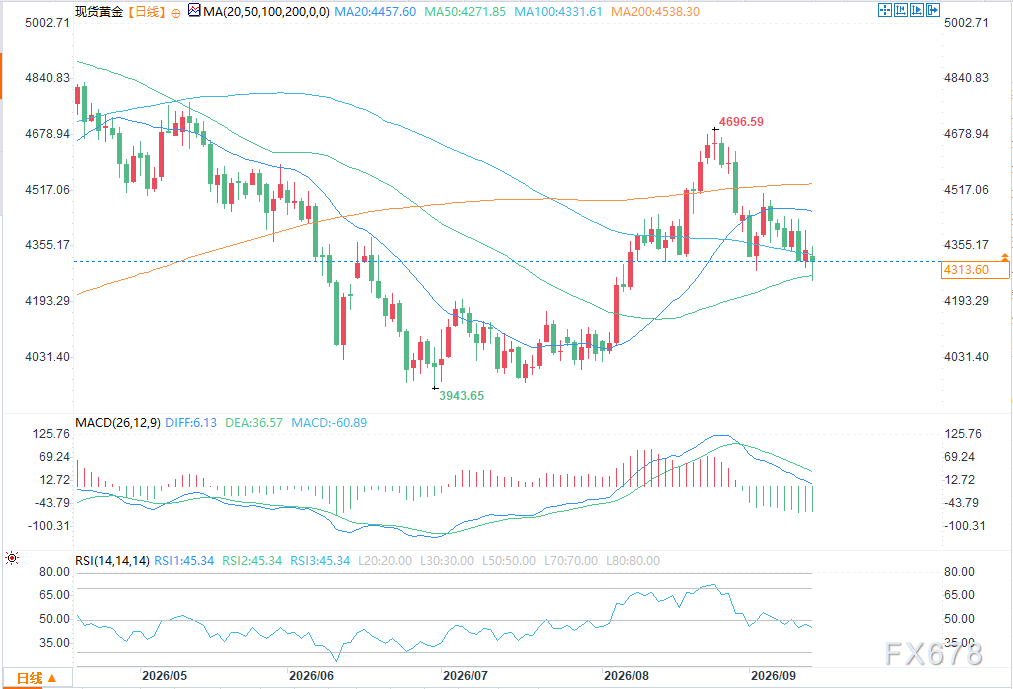
Gold prices are currently close to the neckline of a head-and-shoulders pattern, falling further and erasing all gains from the previous two days' rebound. A valid daily close below the neckline is required for gold futures to confirm the head-and-shoulders pattern. The neckline is sloping downward, with the corresponding downside target aiming below $4,000.
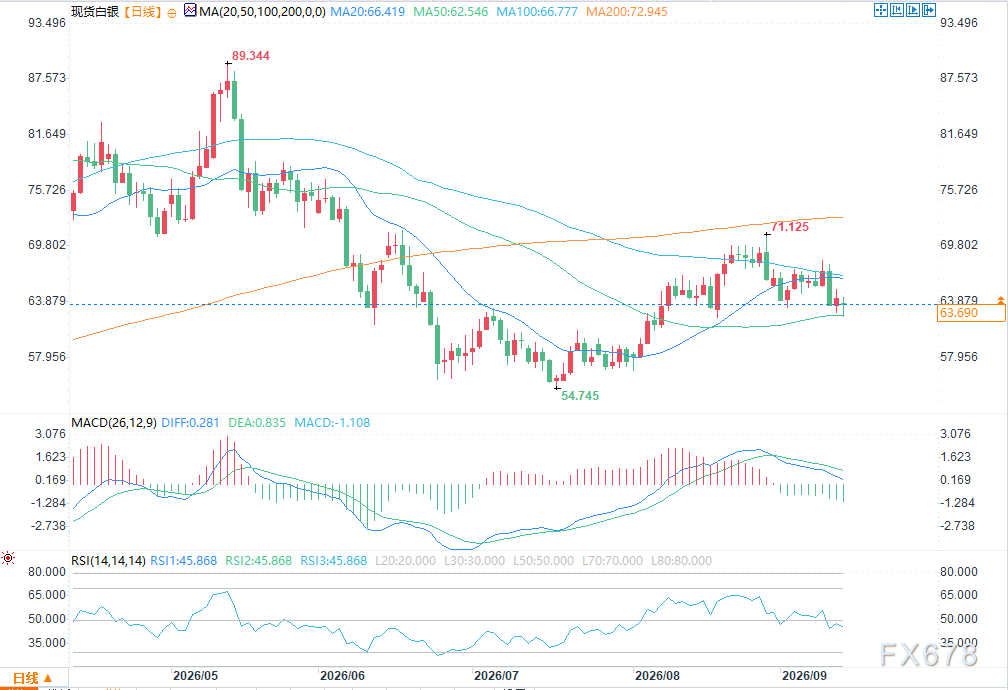
Silver’s volatility has been significantly higher than gold’s in this round, becoming the leading decliner. Silver fell from last Friday’s close of $65.19 to below $64. This pattern has appeared multiple times in the past six trading days: during upswings, silver outperforms gold, but once it peaks and reverses, its declines are steeper than gold.
From a technical standpoint, silver's head-and-shoulders structure has already formed. Last Friday’s rebound was weak, and the current downturn has opened up more room for further decline. Prices are now testing the downtrend line that acted as support in late August; if this support fails, silver may enter a deeper correction. Wednesday’s Federal Reserve interest rate decision, or a strengthening US Dollar Index, could be potential catalysts for a breakdown.
The US Dollar Index has formed a double-bottom pattern, similar to previous moves that led to a notable upward trend, making repetition of this pattern possible in the current market context. Prices are facing evident resistance at the 50% Fibonacci retracement level.
Wednesday: FOMC announces interest rate decision, market-implied probability of a rate hike about 90%, and Walsh holds a press conference afterward
Tuesday: US August Retail Sales figures released
Thursday: Bank of England interest rate decision; UN Security Council votes on Iran sanctions
Friday: Bank of Japan interest rate decision, with market expectations for a possible rate hike; coincides with quadruple witching expiration day
Diplomatic meetings shelved, Saudi alternative pipeline suspended, underwhelming repo operations, and high probability of a Federal Reserve rate hike—all negative factors hit simultaneously. Precious metals are close to confirming technical breakdowns, with silver weakening first. Risks in Middle East energy and shipping are rising again, pushing oil’s geopolitical risk premium up, while tightening expectations weigh on precious metal prices.
Disclaimer: The content of this article solely reflects the author's opinion and does not represent the platform in any capacity. This article is not intended to serve as a reference for making investment decisions.
You may also like
UK weighs tokenized gold reforms – Here’s why the timing matters for crypto
As Anthropic proposes the "AI slowdown theory," AI commercialization is accelerating! From model development to financial advisory, the benefits of AI agents are being realized at a faster pace.
Anthropic is simultaneously advancing frontier AI risk governance and the commercialization of enterprise AI applications, competing with leading AI application rivals such as OpenAI for AI monetization.

BTC, ETH, XRP, ZEC consolidate near highs as breakout levels approach


