
PPI and CPI: How Inflation Data Can Move Markets
After a strong jobs report, this week’s inflation reports could affect stocks, bonds, the dollar, gold and oil.
With PPI (Producer Price Index) and CPI (Consumer Price Index) data due this week, a stronger-than-expected August payrolls report has put inflation back at the centre of the market debate.
U.S. nonfarm payrolls rose by 162,000 in August, above expectations of roughly 53,000–56,000. Unemployment held at 4.1%, while average hourly earnings increased 0.3% month on month and 3.1% year on year.
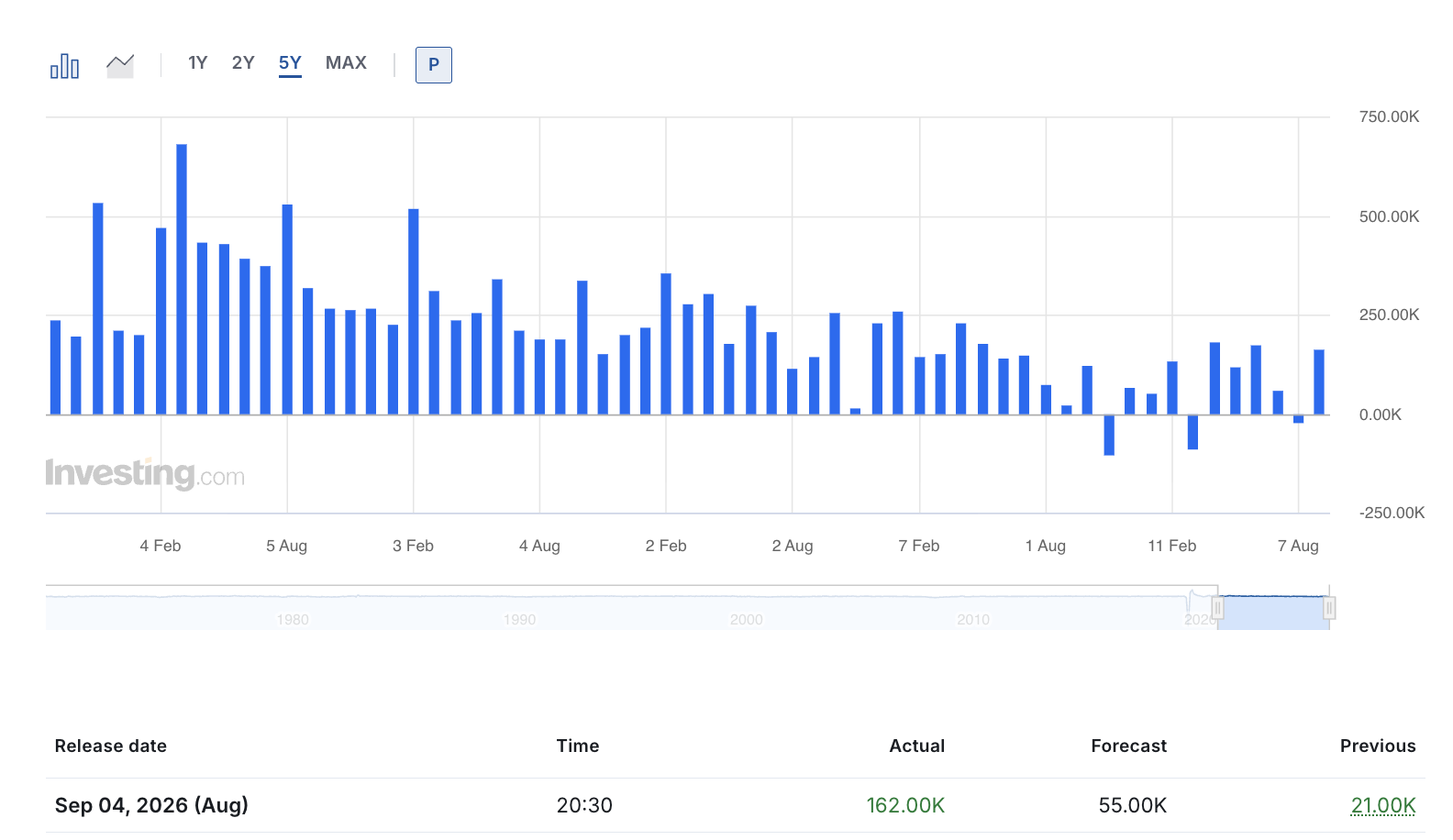
The initial reaction followed a familiar pattern: Treasury yields and the U.S. dollar moved higher, while gold and U.S. equity futures came under pressure.
Strong payroll growth does not make a Fed rate hike certain. While job creation was firm, unemployment remained stable and wage growth was still moderate. The key question is whether resilient employment is also translating into persistent inflation pressure.
That makes this week’s PPI and CPI reports important.
The Chain: Inflation, Rates and Markets
PPI and CPI can influence expectations for interest rates.
If inflation comes hotter than expected, markets may expect the Fed to keep rates high for longer. That can push Treasury yields and the U.S. dollar higher.
If inflation cools more than expected, markets may see less pressure for further tightening. Yields and the dollar may fall.
Those moves can affect many assets at once:
-
Higher yields can pressure growth stocks and long-term bonds;
-
A stronger dollar can weigh on gold and other dollar-priced commodities;
-
Lower yields can support Nasdaq-linked markets, gold and long-duration Treasury exposure.
Inflation data can change rate expectations. Rate expectations can move yields and the dollar. Those moves can then affect stocks, bonds, currencies and commodities.
Inflation Scenarios: A Cross-Asset Market Framework
| Inflation Outcome |
Possible Market Focus |
Bitget TradFi Markets to Watch |
| Above expectations |
Higher-for-longer expectations may strengthen. Yields and the dollar may rise. |
XAU, CL, NATGAS, COPPER, SGOV |
| In line with expectations |
Markets may focus on core inflation, services prices and Fed commentary. |
MSFT, AAPL, COST, SPY |
| Below expectations |
Rate-hike concerns may ease. Yields and the dollar could soften. |
QQQ, ORCL, NVDA, AMD, AMZN, TLT |
Note: These are markets to monitor, not guaranteed outcomes or trade recommendations. The same inflation result can produce different reactions depending on Treasury yields, the U.S. dollar, growth expectations and asset-specific factors such as oil supply or industrial demand.
How Key Markets May React
Nasdaq and Growth Stocks
Technology and growth stocks are especially sensitive to Treasury yields because much of their valuation depends on expected future earnings.
If the 10-year Treasury yield rises after inflation data, Nasdaq-linked markets may face pressure. If yields stabilise or fall, that valuation pressure may ease.
For traders, the inflation headline matters—but the reaction in the Treasury yield can matter just as much.
Gold
Gold is often sensitive to real yields and the U.S. dollar.
Higher yields and a stronger dollar can create pressure for gold. Lower yields and a softer dollar can provide support.
Gold can also respond to safe-haven demand, geopolitical events and broader market volatility, so it does not always move only with interest-rate expectations.
Oil and Commodities
Oil and industrial metals are influenced by inflation, but also by supply and demand.
-
Crude oil: Watch supply decisions, inventories, energy demand and geopolitical risk;
-
Industrial metals: Watch manufacturing activity, infrastructure spending and major-economy demand.
A stronger dollar can weigh on commodity prices, while improving growth expectations can support energy and industrial metals. Rising oil prices can also add to inflation concerns, creating another source of volatility across markets.
Over a longer horizon, broader liquidity conditions can support interest in real assets such as gold, crude oil and industrial metals. But for the immediate CPI/PPI reaction, rate expectations, the U.S. dollar and asset-specific supply-and-demand conditions are likely to matter more.
What to Watch After PPI or CPI
The first move after a release is not always the final move. Markets may reassess the data once they distinguish between temporary price changes and more persistent inflation pressure.
Key points to watch include:
-
How the result compares with market expectations;
-
Monthly inflation versus annual inflation;
-
Core CPI or core PPI, not only the headline figure;
-
Goods prices versus services prices;
-
The reaction in the U.S. dollar and 10-year Treasury yield;
-
Order-book liquidity, potential slippage and position size.
Managing Macro Exposure With Bitget TradFi
Traditional access to U.S. stocks, ETFs, bonds and commodities can involve separate accounts, fiat transfers, FX conversion and limited trading hours.
Bitget TradFi offers traders access to selected traditional-market exposure through Stock Perps and rTokens. You can monitor selected markets—including U.S. equity indices, gold, crude oil and ETF-linked products—within a crypto-native trading environment.
PPI and CPI are more than inflation reports. They can trigger rapid capital rotation across equities, bonds, currencies and commodities. Understanding that connection can help traders follow market moves more clearly when major macro data arrives.
Disclaimer: This article is for informational purposes only and does not constitute investment, financial or trading advice. Economic data and market reactions can be volatile, and historical relationships may not hold in future conditions. Trading involves risk, including the potential loss of capital. Please consult a qualified professional before making financial decisions.


- The Chain: Inflation, Rates and Markets
- Inflation Scenarios: A Cross-Asset Market Framework
- How Key Markets May React
- What to Watch After PPI or CPI
- Managing Macro Exposure With Bitget TradFi

 Beginner’s Guide: How to Place Your First CFD Demo Trade2026-09-09 | 15m
 Bitget Compute Perpetuals Explained2026-09-09 | 5m